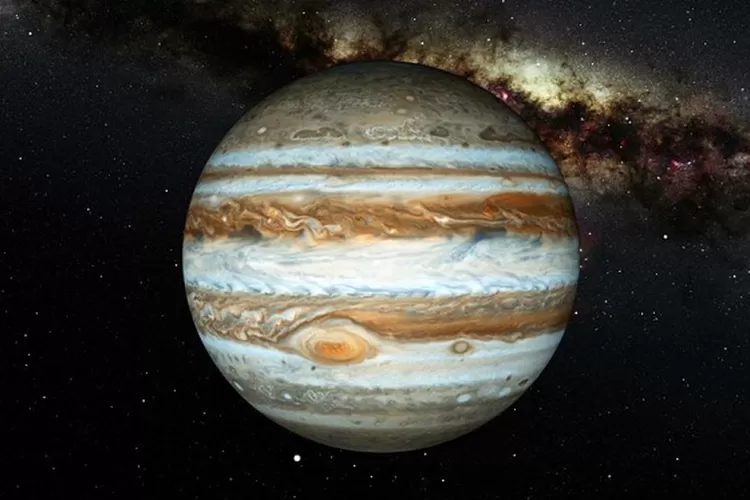
Jupiter: The Oldest Giant in Our Solar System
Our solar system is home to a diverse collection of planets, ranging from rocky terrestrial worlds to gas giants that dwarf everything else. Among these behemoths – Jupiter, Saturn, Uranus, and Neptune – Jupiter stands out not only for its immense size but also for its age. These four planets, all gas giants located far from the Sun, represent some of the earliest formations in our cosmic neighborhood, arising from the leftover dust and gas following the Sun’s birth. While not solid like Mercury, Venus, Earth, and Mars, these gas giants hold crucial clues to understanding the early evolution of our solar system.
Determining the precise age of planets is a complex undertaking, relying on models of planetary formation and analysis of their composition. However, current scientific understanding suggests that Jupiter is the oldest and largest of these gas giants, rapidly accumulating mass – reaching 20 times the mass of Earth within its first million years of existence. This rapid growth likely played a significant role in shaping the entire solar system, influencing the orbits of other planets and even contributing to the Late Heavy Bombardment period, a time of intense asteroid impacts early in the solar system’s history. Understanding the age of these planets provides a crucial timeline for understanding the conditions present during the solar system’s formative years.
The Formation of the Gas Giants
The prevailing theory suggests that the gas giants formed relatively quickly after the Sun ignited, within the first 1 to 3 million years. This rapid formation was possible due to the abundance of gas and dust in the protoplanetary disk surrounding the young Sun. NASA’s Science website explains that planets form from this disk, with gas giants accumulating massive atmospheres of hydrogen and helium. The core accretion model posits that a solid core formed first, providing a gravitational anchor for the surrounding gas to coalesce. Jupiter, being the most massive, likely formed its core first, rapidly attracting gas and becoming the dominant gravitational force in the outer solar system.
The timing of this formation is critical. The protoplanetary disk was not a stable environment. Over time, the Sun’s radiation pressure and stellar winds would have dispersed the gas and dust, making it increasingly demanding for planets to grow. The gas giants had to form quickly to reach their current sizes. The fact that they did form so rapidly suggests that the conditions in the early solar system were particularly favorable for gas giant formation.
Age Estimates for Jupiter and its Neighbors
Scientists estimate Jupiter’s age to be approximately 4.6 billion years old, aligning with the accepted age of the solar system itself. AstroBackyard.com notes that our solar system is located in the Orion spiral arm of the Milky Way Galaxy. This estimate is based on radiometric dating of meteorites, which are considered remnants from the early solar system, and on models of planetary accretion. Following Jupiter, Saturn is estimated to be around 4.5 billion years old. Uranus and Neptune, being further from the Sun and forming more slowly, are thought to be approximately 4 billion years old.
These age estimates are not without their uncertainties. Determining the exact age of a planet is challenging, and different methods can yield slightly different results. However, the consensus among scientists is that Jupiter is the oldest of the four gas giants, having formed earliest in the solar system’s history. The differences in age between the planets likely reflect variations in the density of the protoplanetary disk and the rate at which they were able to accrete mass.
Jupiter’s Dominance and Influence
Jupiter’s early formation and rapid growth had a profound impact on the rest of the solar system. Its immense gravity sculpted the asteroid belt, preventing the formation of a planet in that region. It also played a role in scattering icy planetesimals outwards, contributing to the formation of the Kuiper Belt and the Oort Cloud, reservoirs of comets and other icy bodies.
Jupiter’s gravitational influence has protected the inner solar system from frequent impacts by asteroids and comets. By acting as a gravitational “shield,” Jupiter deflects many of these objects, reducing the risk of catastrophic collisions with Earth and other terrestrial planets. Without Jupiter, the history of life on Earth might have been very different.
Comparing the Gas Giants
While all four gas giants formed early in the solar system’s history, they exhibit distinct characteristics. Saturn, slightly smaller than Jupiter, is famous for its spectacular ring system, composed of ice particles and rocky debris. Uranus and Neptune, often referred to as “ice giants” due to their higher concentrations of heavier elements like oxygen, carbon, and nitrogen, are smaller and denser than Jupiter and Saturn.
The differences in composition and structure between these planets likely reflect their different formation environments. Uranus and Neptune formed further from the Sun, where temperatures were colder and the abundance of volatile elements was higher. This resulted in their icy compositions and smaller sizes. Studying these differences provides valuable insights into the conditions that prevailed in different regions of the protoplanetary disk.
Key Takeaways
- Jupiter is the oldest and largest planet in our solar system, estimated to be around 4.6 billion years old.
- The gas giants – Jupiter, Saturn, Uranus, and Neptune – formed rapidly within the first few million years after the Sun’s birth.
- Jupiter’s gravity has significantly shaped the solar system, influencing the asteroid belt and protecting the inner planets from impacts.
- Differences in composition and structure between the gas giants reflect their different formation environments.
Ongoing research, including missions like NASA’s Juno spacecraft currently orbiting Jupiter, continues to refine our understanding of these giant planets and their role in the evolution of our solar system. Juno’s detailed observations of Jupiter’s atmosphere, magnetic field, and internal structure are providing unprecedented insights into the planet’s formation and evolution. These findings will undoubtedly contribute to a more complete picture of our cosmic origins.
As our technology advances and we continue to explore the solar system, we can expect even more discoveries about the age and formation of these fascinating worlds. The study of Jupiter and its fellow gas giants is not only crucial for understanding our own solar system but also for gaining insights into the formation of exoplanets – planets orbiting other stars – and the potential for life beyond Earth.
The next major step in understanding the outer solar system will be the European Space Agency’s Jupiter Icy Moons Explorer (JUICE) mission, scheduled to launch in April 2023. This mission will explore Jupiter’s icy moons – Ganymede, Callisto, and Europa – which are believed to harbor subsurface oceans and may potentially support life. You can find more information about the JUICE mission on the ESA website.
What questions do you have about the formation of our solar system? Share your thoughts in the comments below, and don’t forget to share this article with anyone interested in learning more about the gas giants and their place in the cosmos.
Keep reading