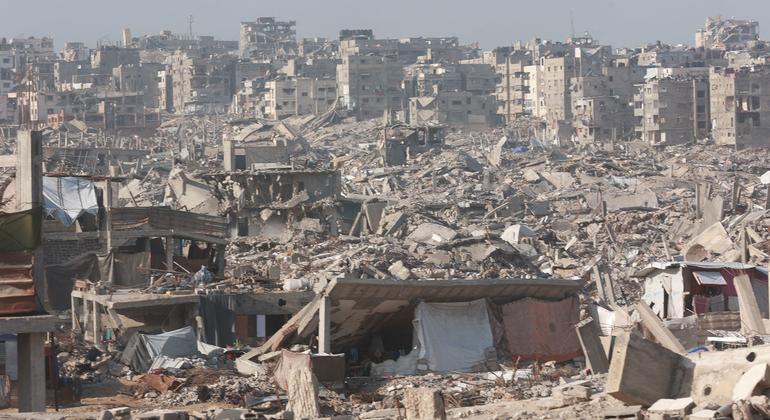
Gaza Crisis Deepens Despite Ceasefire: Children Bear the Brunt of Ongoing Violence and Humanitarian Collapse
The fragile pause in hostilities between Israel and Hamas has failed to stem the devastating toll on civilians in Gaza, particularly children.Despite the ceasefire announced on October 10th,a disturbing pattern of violence continues,coupled with a rapidly deteriorating humanitarian situation that threatens the lives of countless Gazans. This report details the ongoing crisis, drawing on insights from UN agencies, NGOs, and firsthand accounts from within the enclave.
A Ceasefire in Name Only?
While a formal ceasefire is in place, the reality on the ground paints a grim picture. UNICEF reports that at least 67 children have been killed in “conflict-related incidents” as October 11th – a harrowing rate of two children per day.This stark statistic underscores a critical point, as highlighted by UNICEF spokesperson James Pires: “There’s only one party to the conflict in Gaza with the firepower to do airstrikes.” This statement, delivered to journalists, implicitly points to the continued presence of aerial attacks despite the agreed-upon pause.
The violence isn’t limited to airstrikes. Doctors Without Borders recently reported treating a nine-year-old girl for facial wounds sustained from gunfire originating from quadcopter drones. Dr.Rik Peeperkorn, a veteran aid worker with the World health Association (WHO), echoes the concern, stating plainly, “although there’s a ceasefire, people still get killed.” Official data from the Gaza Ministry of Health confirms this, revealing that 280 Gazans have been killed and 672 injured since the ceasefire began, alongside the recovery of 571 bodies from rubble.
Humanitarian Crisis Reaches Breaking Point
Beyond the immediate threat of violence, Gaza is grappling with a catastrophic humanitarian crisis. The World Food Program (WFP) is working to increase aid deliveries, now reaching approximately 100 trucks per day – almost two-thirds of the daily target. Abeer Etefa, WFP Senior Spokesperson, describes this as “a step in the right direction,” but warns of notable logistical challenges. “A lot of these food supplies stay in border crossing points for long days…the possibility of them going bad is high.”
the situation inside Gaza is desperate.Martin Penner, WFP Head of Communications in Palestine, paints a heartbreaking picture of exhausted families struggling to survive after years of conflict. He recounts a woman expressing a profound longing for variety in her diet, beyond the constant reliance on canned goods and dry rations.
The economic impact is equally devastating. Markets are slowly restocking, but prices are exorbitant. “A chicken costs $25, a kilo of meat $20,” Penner reports. This economic reality forces families to make impossible choices. One mother deliberately avoids taking her children to the market “so that they won’t see all the food that’s available…If they go near the market, she tells them to cover thier eyes.” Another mother divides a single apple between her four children.
Healthcare System Collapses, leaving Children Vulnerable
The healthcare system in Gaza has been decimated, leaving it unable to cope with the influx of trauma victims and those requiring specialized care. Pires details the agonizing reality faced by Gaza’s doctors: “children they know how to save but cannot.” He cites cases of children with severe burns, shrapnel wounds, spinal injuries, traumatic brain injuries, cancer patients whose treatment has been interrupted, and premature babies needing intensive care – all beyond the capacity of the crippled healthcare infrastructure.
The plight of two-year-old Omyma is particularly poignant. She suffers from a congenital heart defect requiring urgent surgery that cannot be performed in Gaza.”She needs surgery urgently to save her life,” Pires emphasizes, highlighting that around 4,000 children are currently awaiting evacuation for critical medical treatment.
Looking Ahead: Urgent Action Needed
The situation in Gaza demands immediate and sustained attention. While increased aid deliveries are a positive step, they are insufficient to address the scale of the crisis. Greater access for humanitarian organizations is crucial, as is a renewed commitment to protecting civilians, especially children.The continued violence, even under the guise of a ceasefire, is unacceptable and underscores the urgent need for a lasting resolution to the conflict.The international community must prioritize the well-being of Gaza’s population and work towards a future where children can live without fear and have access to the basic necessities of life.
Resources:
* UNICEF: [https://wwwuniceforg[https://wwwuniceforg[https://wwwuniceforg[https://wwwuniceforg