Gaza‘s Humanitarian Crisis Deepens: Winter Storms, infrastructure Collapse, and threat to aid Operations
The humanitarian situation in Gaza is rapidly deteriorating, compounded by severe winter weather, widespread infrastructure damage, and escalating restrictions on aid organizations. Recent storms have exacerbated the plight of displaced Palestinians, while a controversial new Israeli registration system threatens to cripple vital humanitarian operations, leaving a vulnerable population at even greater risk.
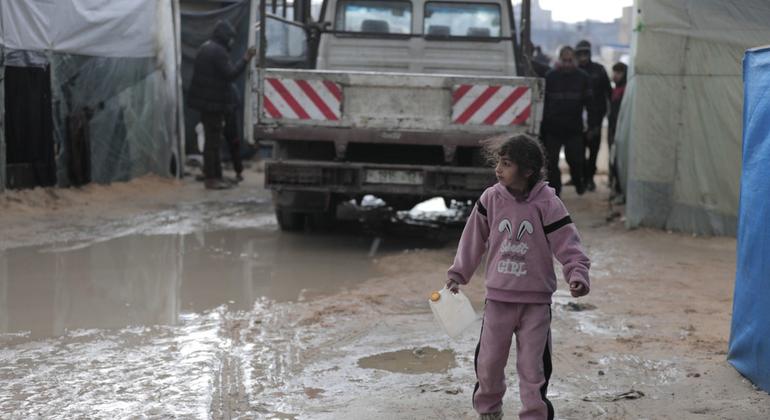
For months, Gaza has been reeling from conflict, leaving a trail of devastation in its wake. Now, a week of heavy rainfall, strong winds, and freezing temperatures has inflicted further suffering on an already exhausted population. The United Nations Office for the Coordination of Humanitarian Affairs (OCHA) reports that the storms have destroyed or severely damaged numerous tents and makeshift shelters, leaving thousands exposed to the elements. This comes on top of the collapse of 18 residential buildings since early December, resulting in significant loss of life and property.Over 110 additional buildings are now dangerously unstable, posing an immediate threat to residents in surrounding areas.
A Crisis for Children and families
The impact is particularly acute for children. UNICEF has underscored the extreme vulnerability of children in Gaza’s hardest-hit areas, where the near-total destruction of homes and essential infrastructure – including water and sewage systems – has created a life-threatening habitat. Families are struggling to survive amidst unsanitary conditions and the constant threat of disease.
“This tragedy underscores the extreme vulnerability of children in Gaza’s hardest-hit areas, where the near-total destruction of homes and water and sewage infrastructure has left families exposed to the elements,” stated UNICEF.
The approaching winter weather promises to worsen the situation. Rising water levels at the Sheikh Radwan lagoon – now at 2.2 meters, up from 1.8 meters – are increasing the demand for fuel to operate vital sewage pumping and stormwater drainage systems. Currently,7,000 litres of fuel are required daily to prevent the lagoon from overflowing,a critical need that strains already limited resources.
UNICEF’s Response: A Race Against Time
Despite the immense challenges, UNICEF and its partners are working tirelessly to provide critical assistance. Current efforts include:
* Water and Sanitation: Installing temporary water pipelines, ensuring access to latrines, and working to clear and reopen sewage pipelines and stormwater inlets.
* Essential Supplies: Distributing hygiene items, tarpaulins, blankets, and dignity kits to affected families.
* Flood Mitigation: Protecting existing shelters from flooding.
However, these efforts are increasingly hampered by logistical difficulties and the looming threat to the broader humanitarian response.
A Looming Catastrophe: Aid Operations on the Brink
A new Israeli registration system for international aid organizations operating in Gaza is poised to trigger a massive disruption of humanitarian aid. As of January 1st, 37 international NGOs risk losing their operating licenses, potentially forcing a large-scale suspension of critical programs.
UN agencies and partners warn that this could lead to the closure of one in three health facilities in Gaza. “If INGOs are forced to stop operations, one in three health facilities in Gaza will close,” thay stated in a recent joint statement.
The new system is widely criticized for relying on “vague, arbitrary, and highly politicized criteria” and imposing requirements that are incompatible with international humanitarian law and core principles. Aid organizations argue that compliance with these requirements would effectively compromise their ability to deliver impartial assistance to those in need. Unless Israel reconsiders, these organizations face deregistration by December 31st, 2025, with operations forced to cease within 60 days.
International Condemnation and Calls for Action
The international community is voicing growing concern over the potential consequences of these restrictions. UN High Commissioner for Human Rights, Volker Türk, has condemned Israel’s suspension of aid agencies as “outrageous,” characterizing it as part of a pattern of unlawful restrictions on humanitarian access.
“Such arbitrary suspensions make an already intolerable situation even worse for the people of Gaza,” Mr. Türk stated,urging nations with influence to pressure Israel to allow unhindered access for humanitarian aid. He emphasized Israel’s obligations under international law to ensure the provision of essential supplies to the Gazan population.
Mr. Türk also highlighted Israel’s previous restrictions, including the ban on UNRWA and broader constraints on UN agencies, Israeli, and Palestinian NGOs.
The Path Forward: Urgent Action Needed
The situation in Gaza demands immediate and sustained attention. The convergence of winter storms, infrastructure collapse, and threats to aid operations creates a perfect storm of suffering. A essential shift in approach is needed, prioritizing the protection
- Spokane Wildfires 2026: Devastating Images of the Old Trails Fire Destruction
- Colleagues Honor Deceased Lawyer in Emotional Tribute
- Trump Slams Iran’s Duplicity and Warns Blockade Will Remain Amid Stalled Talks (world-today-news.com)
- Baton Rouge Grocery Store Employee Pleads Guilty to Child Pornography Charges (news-usa.today)