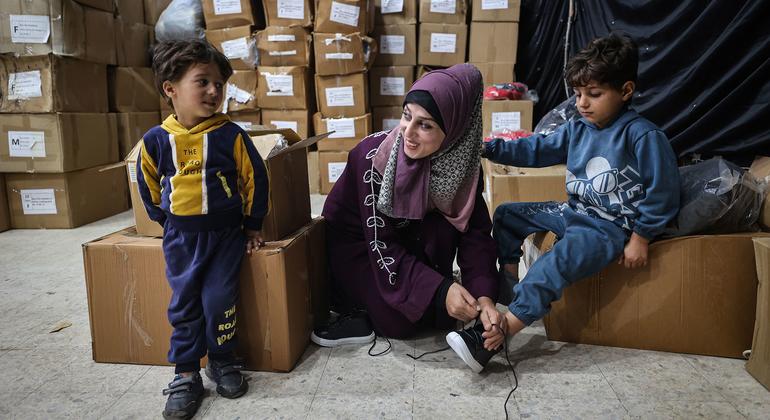
Gaza Humanitarian Crisis Deepens: New Israeli regulations Threaten Collapse of Aid Operations
As winter descends and a fragile ceasefire hangs in the balance, the humanitarian situation in Gaza is facing a possibly catastrophic turning point. A newly implemented Israeli registration system for international NGOs is sparking widespread alarm, with aid organizations warning of an imminent collapse in vital services if dozens are forced to cease operations by the end of December.
The Humanitarian Country Team – a collective of senior UN officials and over 200 local and international aid groups – issued a stark warning this Tuesday, urgently calling on the international community to pressure Israeli authorities to reverse course. the core of the crisis lies in a registration process deemed vague, politicized, and fundamentally incompatible with established humanitarian principles.
What’s Happening? A System Designed to Fail
Introduced earlier this year, the new regulations require international non-governmental organizations (INGOs) to navigate a complex and opaque registration process.aid groups report the criteria are ill-defined, leaving them unable to demonstrate compliance without compromising their core humanitarian mandates.The consequences are severe: dozens of organizations are facing deregistration, effectively forcing them to shut down operations within weeks.
This isn’t simply a bureaucratic hurdle. The Humanitarian Country Team unequivocally states: “These organizations are not optional extras. If they are pushed out, the humanitarian response will not survive.” The scale of assistance provided by these INGOs is immense – approximately $1 billion annually – and their potential loss represents an unbearable strain on an already overwhelmed system.
The Ripple Effect: A Looming Humanitarian Disaster
Currently, millions of dollars worth of essential supplies – food, medicine, hygiene products, and shelter materials – are stranded outside of Gaza, unable to reach the families desperately in need. This blockage is occurring at a notably vulnerable time, as winter conditions exacerbate existing hardships and fears mount that further restrictions could unravel the current ceasefire.
The impact extends far beyond immediate supply shortages. International NGOs play a critical role in sustaining Gaza’s basic infrastructure. They operate and support:
* healthcare: Field hospitals and primary health clinics rely heavily on INGO support. the closure of these facilities would instantly cut off care to tens of thousands of patients, with one in three health facilities in Gaza projected to close.
* Water & Sanitation: Clean water and sanitation services, essential for preventing disease outbreaks, are largely underpinned by NGO initiatives.
* Shelter: Emergency shelter provision, vital for families displaced by conflict, is significantly dependent on international aid.
* Nutrition: INGOs are on the front lines of treating severe malnutrition, particularly among children, a growing concern in Gaza.
UNRWA Limitations & The Unsustainable Burden on Local Actors
The impending loss of INGOs comes at a particularly precarious moment, following increased restrictions placed on the United Nations Relief and Works Agency for Palestine Refugees in the Near East (UNRWA). These limitations have already stretched the humanitarian response to its breaking point. Aid agencies emphasize that the UN and local organizations simply lack the capacity to absorb the workload and expertise that would be lost if international NGOs are forced to withdraw.
A Legal and Moral Imperative: Unimpeded Humanitarian Access
Humanitarian leaders have repeatedly engaged with Israeli authorities, seeking viable solutions to maintain operations. However, these efforts have been met with inaction. the Humanitarian Country Team stresses that unimpeded humanitarian access is not a matter of political discretion, but a fundamental legal obligation.
“lifesaving assistance must be allowed to reach Palestinians without further delay,” the statement asserts,urging Israel to facilitate rapid and unrestricted aid deliveries and to guarantee the safety and independence of humanitarian organizations. Without immediate action, the consequences for civilians in Gaza will be nothing short of catastrophic.
Evergreen Insights: The Fragility of Humanitarian Aid in Conflict Zones
The situation in Gaza highlights a recurring challenge in modern conflict: the increasing politicization of humanitarian aid. Neutrality, impartiality, and independence are the cornerstones of effective humanitarian response, yet these principles are increasingly under threat. Restrictions on access,bureaucratic obstacles,and the targeting of aid workers are becoming alarmingly common,hindering the delivery of life-saving assistance to those who need it most. This trend demands a renewed commitment from all stakeholders – governments, international organizations, and aid agencies – to uphold the fundamental principles of humanitarian law and ensure that aid reaches civilians without impediment. The long-term stability of fragile regions depends on it.
Frequently Asked Questions: Understanding the Gaza Aid Crisis
1. What is the main concern regarding the new Israeli regulations for NGOs in Gaza? The primary concern is that the new registration system is overly vague, politicized, and effectively unfeasible for many organizations to comply with without violating humanitarian principles, leading to widespread deregistration and operational closures.
**2.
Worth a look