Gaza‘s Economic Future: A generation Set Back, and the Path to Recovery
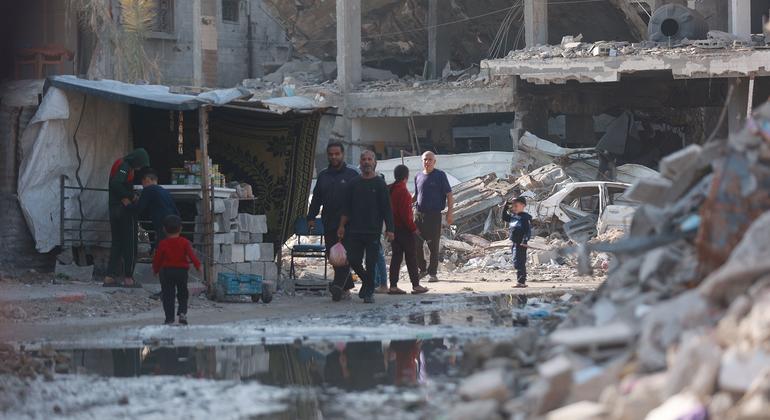
The recent conflict in Gaza has not just created a humanitarian crisis; it has delivered a devastating blow to the Palestinian economy, pushing it to its absolute breaking point. As experts at the United Nations Conference on Trade and Development (UNCTAD) recently detailed, the scale of destruction is unprecedented, and the road to recovery will be long and arduous – potentially spanning decades. This article breaks down the critical challenges facing Gaza,the immense rebuilding costs,and the essential steps needed to begin charting a path forward.
A Decades-Long economic Suppression
For years, the Palestinian economy has been substantially hampered. Restrictions on movement, access to land – currently 60% of the West bank is inaccessible – and ongoing political instability have suppressed economic growth. Now, the latest conflict has exacerbated these existing issues, creating a situation described by UNCTAD as “the worst in its history.”
The Palestinian government is facing a critical fiscal crisis. Collapsing revenues, coupled with withheld fiscal transfers (representing over two-thirds of Palestinian tax income), are crippling its ability to function. Without immediate and sustained support, the situation will only worsen.
The Devastating Impact on Key sectors
The destruction isn’t limited to infrastructure. it’s impacting the very foundations of Gazan society:
* Education: All schools and universities have been destroyed, leaving children out of education for over two years. This represents a loss of human capital that will harm society for generations. Experts estimate this setback equates to losing 25 years of human development, and some suggest a staggering 70-year regression in skills and overall development.
* Agriculture: Gaza’s agricultural sector is on the brink of collapse. consider these alarming statistics:
* 86% of cropland is damaged.
* 83% of water wells have been destroyed.
* 71% of greenhouses are damaged.
* Only 1.5% of farmland remains usable.
* 89% of water and sanitation facilities are destroyed.
* Soil contamination from explosives poses a significant, long-term threat.
* Overall Infrastructure: Rebuilding gaza will require over $70 billion, according to joint estimates from the UN, the European Union, and the World Bank. Even with optimistic projections – full access for reconstruction materials and considerable international aid - recovery to pre-conflict economic levels will take decades. Simply removing rubble could take 22 years, mirroring past reconstruction timelines. Clearing unexploded ordnance alone could take up to 10 years.
What Needs to Happen Now?
While the scale of the challenge is immense, a path to recovery is possible. However, it hinges on several critical factors. You need to understand that no economic progress can be made without a lasting ceasefire.
Here’s what’s essential:
- A Durable Ceasefire: this is the non-negotiable foundation for any recovery effort. The recent ceasefire agreement offers a critical chance, but time is of the essence.
- Immediate humanitarian Assistance: Aid cannot wait. Peopel need food, water, shelter, and medical care now.
- Unrestricted Access: For reconstruction to begin,humanitarian goods and rebuilding materials must be allowed to enter Gaza freely.
- Easing Movement and Access Restrictions: Long-term recovery requires easing restrictions on the movement of people and goods.
Recent improvements in access are positive, but they are slow and frustrating. A more significant and sustained shift in policy is crucial.
Looking Ahead: Rebuilding More Than Just Structures
rebuilding Gaza isn’t just about reconstructing buildings and infrastructure. It’s about restoring livelihoods,rebuilding the education system,and investing in the future of its people. It’s about creating an surroundings where businesses can thrive, and individuals can reach their full potential.
As a seasoned observer of international development, I can tell you that this will require a long-term commitment from the international community. It demands a holistic approach that addresses not only the immediate needs but also the underlying causes of the conflict and the economic vulnerabilities that have plagued Gaza for far too long.
Ultimately, the future of Gaza depends on a commitment to peace, justice, and sustainable development. It’s a challenge we must all embrace, for the sake of the people of Gaza and for
Worth a look