
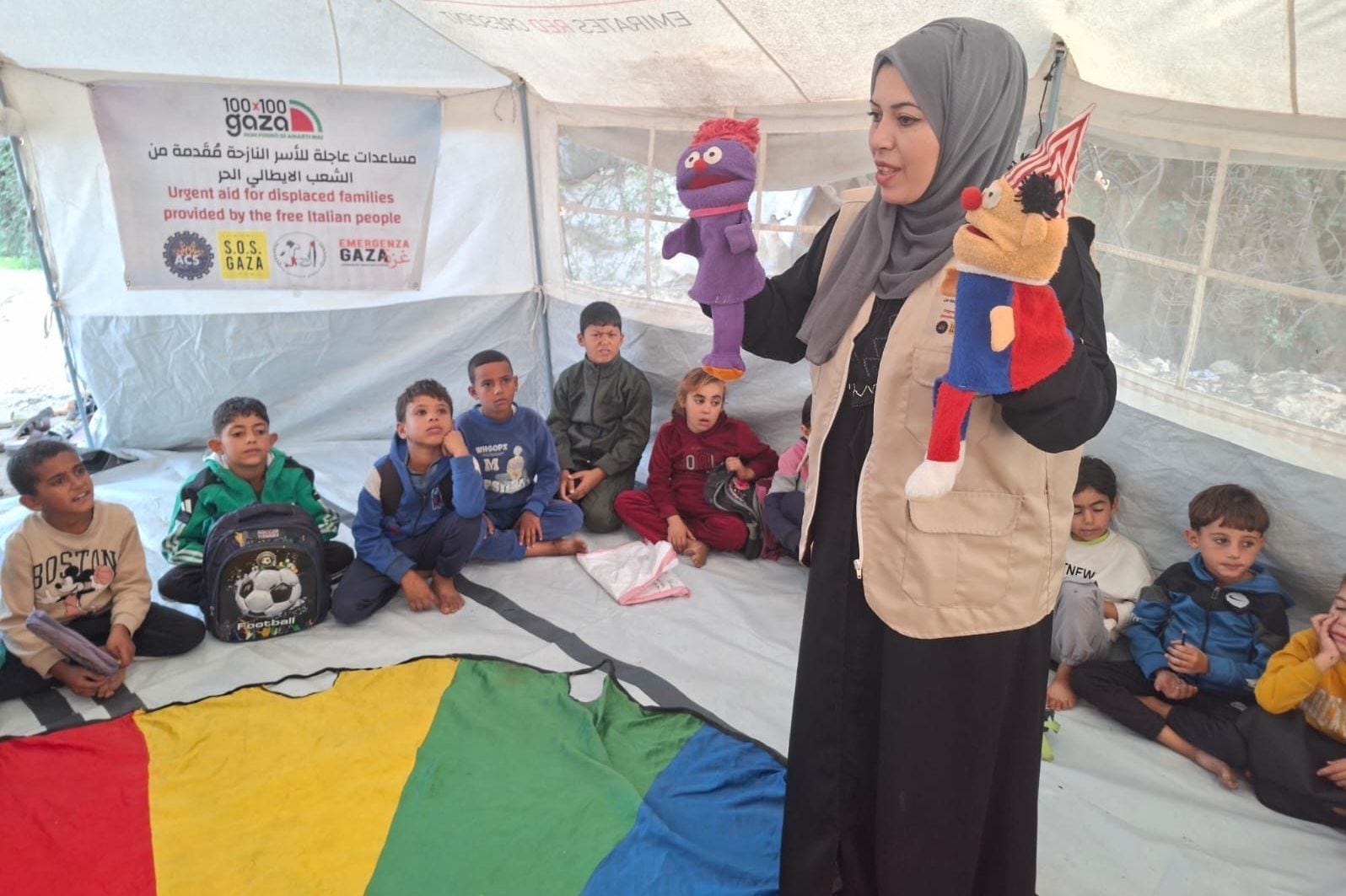
As the humanitarian crisis in the Gaza Strip continues to displace hundreds of thousands of civilians, a grassroots initiative has emerged to provide a semblance of normalcy for the region’s youngest inhabitants. In a unique effort to foster solidarity, a project has launched connecting informal “tent schools” in Gaza with educational communities in Italy, creating a bridge of cultural and emotional support for children whose lives have been upended by ongoing conflict.
The situation for children in the region remains dire. According to data from the United Nations Relief and Works Agency for Palestine Refugees (UNRWA), the vast majority of the population in the Gaza Strip has been displaced, with children accounting for a significant portion of those struggling to access basic services, including education. The UNRWA situation reports underscore the catastrophic impact on the education sector, where school buildings have been heavily damaged or converted into emergency shelters, leaving hundreds of thousands of students without access to formal classrooms.
Building Bridges Through Education
The gemellaggio, or twinning project, seeks to link these makeshift learning spaces with Italian schools. By facilitating the exchange of drawings, songs, and messages of hope, organizers aim to provide Palestinian children with a sense of connection to the outside world, while simultaneously raising awareness among Italian students about the realities facing their peers in Gaza. This initiative highlights the power of educational diplomacy in times of profound instability.

While the logistical challenges of operating under current conditions in Gaza are immense, such projects rely on the dedication of local aid workers and international volunteers. Education experts emphasize that even under extreme duress, maintaining a routine—even one as unconventional as a tent school—is vital for the psychological well-being of minors. The United Nations Children’s Fund (UNICEF) has repeatedly called for the protection of schools and the resumption of learning for children in the territory, noting that the loss of educational time has long-term implications for a generation of youth.
The Humanitarian Landscape
The scale of the disruption in Gaza is difficult to overstate. With the majority of schools across the territory either destroyed or repurposed, the educational infrastructure has essentially collapsed. The United Nations Office for the Coordination of Humanitarian Affairs (OCHA) provides ongoing updates on the state of civilian infrastructure, documenting the severe lack of resources that affects every aspect of life, from food security to health care and schooling.
For the children involved in the twinning program, the act of sending a drawing or a song is more than a creative exercise; it is an assertion of their existence and a plea for empathy. These exchanges allow for a human-to-human connection that transcends political borders, grounding the abstract concept of international solidarity in tangible, personal interactions.
Supporting the Future
While international organizations continue to negotiate for broader humanitarian access and the restoration of essential services, small-scale initiatives serve as a reminder of the global community’s capacity for compassion. The twinning of classrooms provides a framework through which students in Italy can engage with the concept of global citizenship, learning about the lives of children in conflict zones while providing a source of motivation for those living in the tents.

As of late May 2026, the situation remains fluid. For those looking to understand the broader context or to support recognized humanitarian efforts, official updates and guidance are available through international bodies. The United Nations remains the primary source for verified data on the status of aid, infrastructure, and the protection of civilians in the Gaza Strip.
Future developments regarding the expansion of this twinning project will depend on the evolution of the security situation and the ability of aid organizations to maintain safe zones for educational activities. We encourage our readers to stay informed through verified, high-authority sources and to share this story to help keep the focus on the essential needs of children in crisis zones worldwide.