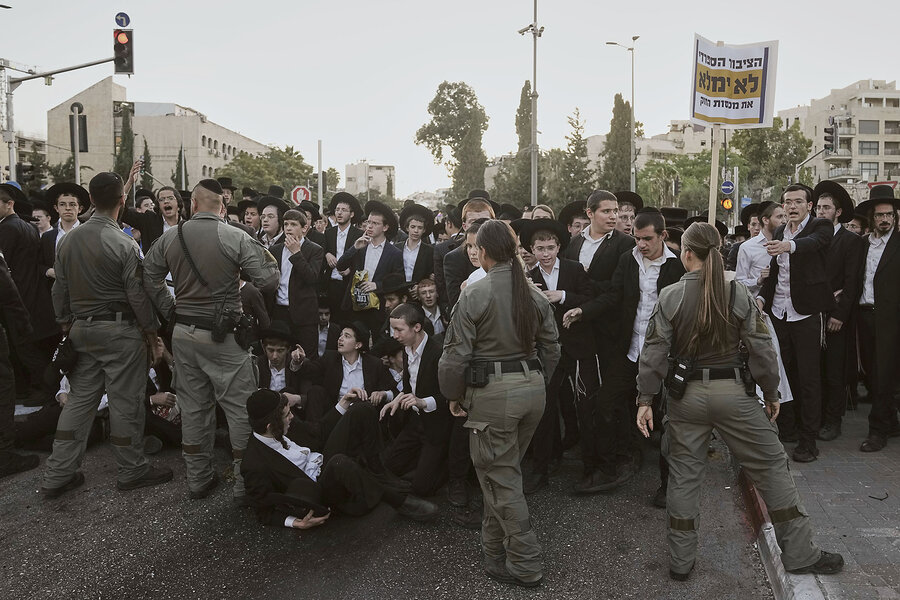
A Nation Divided: The Growing Rift Between Israel‘s Haredi Community and the State
The October 7th attacks have exposed and deepened existing fractures within Israeli society, but perhaps nowhere are these divisions more pronounced than in the relationship between the ultra-Orthodox (Haredi) community and the state. while the majority of Israelis grapple with the immediate aftermath of the deadliest day in the nation’s history, the Haredi outlook remains strikingly different, rooted in deeply held beliefs and a long-standing distrust of secular authority. This divergence isn’t new, but the escalating conflict is forcing a reckoning on both sides, particularly regarding the contentious issue of military conscription.
For many Israelis, the attacks brought a shared sense of vulnerability and a renewed commitment to national defense. However, the Haredi community, largely insulated from direct impact due to its insular nature, views the threat through a different lens. Dr. Malach, an expert on Haredi society, explains this disconnect: “most Jewish Israelis see Hamas as the primary threat, while most Haredim perceive the state itself as a threat to their way of life.” This fundamental difference in perception underscores a profound cultural and ideological gap.
This gap is further complicated by the issue of military service. Historically, Haredi men have been largely exempt from Israel’s mandatory draft, allowed to dedicate their lives to religious study. This exemption, however, has become a major point of contention, particularly as the security situation deteriorates. A recent Supreme Court ruling invalidated the legal basis for these exemptions,demanding the army begin drafting ultra-orthodox conscripts.
The response has been resistance. Despite 24,000 draft notices issued last year, only around 400 Haredi men enlisted, reflecting the strong opposition from religious leaders who fear conscription will erode their community’s values and traditions. Lieutenant Colonel Moshe Tur-Paz,a centrist lawmaker,believes this must change. “We are heading toward years of fighting, and the ultra-Orthodox have no justification for claiming military service impedes their way of life.” He highlights the growing consensus that the status quo is unsustainable.
The argument for Haredi participation isn’t solely about manpower.Tur-Paz, himself Modern Orthodox and well-represented in the army’s officer ranks, points to a demographic reality: “If 1 out of 4 Jewish 12th graders are not serving in the army, this is becoming a real problem for Jewish existence in Israel.” The burden of defense is increasingly falling on a shrinking segment of the population.
From the Haredi perspective, however, the issue is not about avoiding service, but about preserving a way of life that has sustained the jewish people for millennia. Former ultra-Orthodox politician Yitzhak Ze’ev Pindrus emphasizes that Jewish continuity has historically relied on tradition and Torah study, not statehood. He argues that attempts to enforce conscription feel like an attack on the community’s core identity.
The government has attempted to bridge this divide by creating an all-Haredi brigade,designed to accommodate strict religious observance within a military framework. This is a gesture intended to demonstrate that religious devotion and military service aren’t mutually exclusive. Though, it hasn’t quelled the opposition from within the Haredi leadership.
Yanki Farber, a Haredi journalist with Behadrei Haredim, represents a growing minority who believe integration is possible. He served in the army and continues to participate in reserve duty, demonstrating that religious observance can coexist with national service. “The Haredi leaders are scared,” he explains, “They fear losing control of their young people as a society that fears any kind of change.”
The current crisis is forcing a arduous conversation about the future of Israeli society. The question is no longer if change will come, but how. Balancing the security needs of the state with the religious and cultural sensitivities of the haredi community will require nuanced leadership, genuine dialog, and a willingness to compromise on both sides. The stakes, for the future of Israel, are exceptionally high.