Returning to Rubble: A Family’s Resilience in Gaza
The scent of dust adn loss hangs heavy in the air, yet amidst the devastation in Gaza, a remarkable story of return and resilience is unfolding. families, displaced by months of conflict, are venturing back to their shattered homes, not to rebuild instantly, but to reconnect with the fragments of their past and reaffirm their enduring connection to the land.
Mohammad abu Warda’s family is among those who recently made this poignant journey. They fled northern Gaza seeking safety from intense military operations, leaving behind a life irrevocably altered. Now, they’ve returned to find their home reduced to rubble, a stark testament to the recent violence.
A search Through the Remains
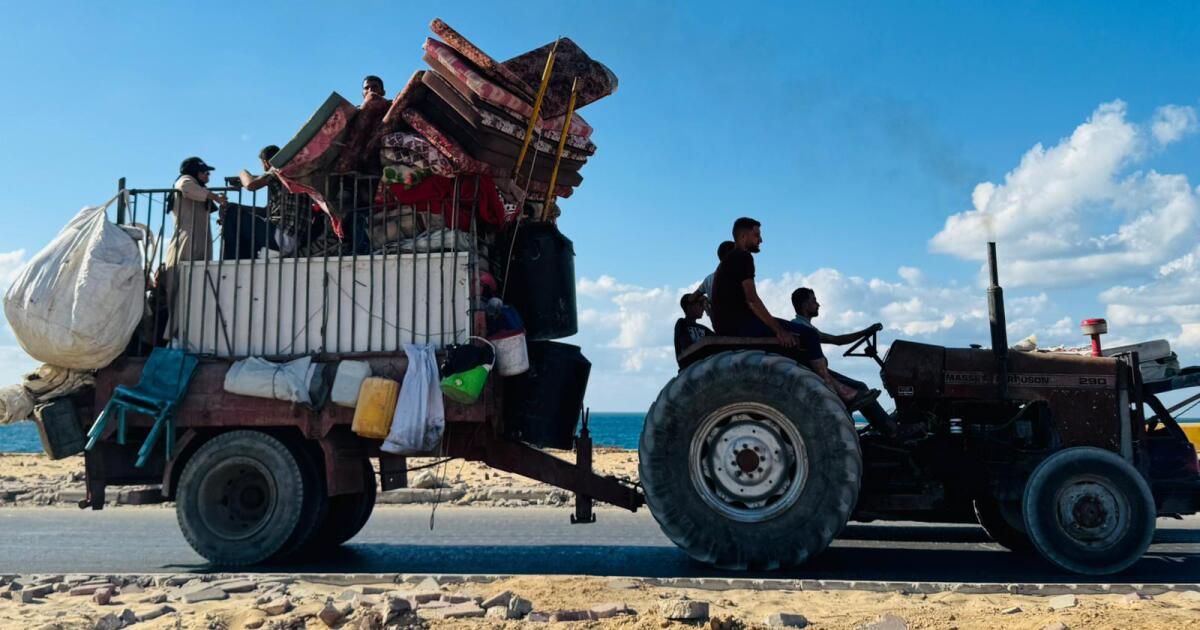
A trailer now holds all their worldly possessions, a meager collection representing a life uprooted. yet, the material loss pales in comparison to the emotional weight of returning to what remains.
Abu Warda carefully sifted through the debris, a desperate search for remnants of normalcy. He discovered a school notebook,its cover worn and dusty,bearing the faded red marker inscription of his son’s name. It was a small, heartbreaking reminder of a life interrupted.
His sister, Amal Warda, knelt and gathered a handful of gray dust. “This is what we came back for,” she whispered, her voice thick with emotion. “To touch the truth with our own hands.”
Finding Solace in Shared Grief and hope
As the afternoon progressed, the family worked to create a semblance of shelter. They secured a tarp between surviving concrete structures using rope salvaged from a neighbor. A small fire was kindled with scavenged wood,and tea was brewed in a dented kettle,offering a moment of warmth and connection.
Neighbors and cousins, similarly displaced, emerged from their own ruined homes. Greetings were exchanged, a blend of joy at reconnection and the fragility of their shared circumstances. Water was offered, and vital details shared – news of functioning wells and the arrival of U.S. assistance.
The Resilience of Childhood
Even amidst the devastation, life finds a way. Children, remarkably resilient, began to play, scrambling over piles of debris. Bisan, Abu Warda’s 12-year-old niece, drew a picture of a house with four windows and a tree, her family smiling outside. When the wind erased her creation, she simply drew it again, a powerful symbol of unwavering hope.
“Gaza still breathes through its peopel,” Amal warda observed. “As long as people are back here, life will slowly return.”
A Future Uncertain, But a Present Reclaimed
As the sun set and a cool sea breeze swept through the ruins, the family spread out blankets and prepared to sleep under the tarp. Abu Warda gazed at the night sky, contemplating the uncertainty of the future.
“I’m not sure what tomorrow is going to bring,” he admitted. “But I do know this: Being here, even if it’s in ruins, is better than waiting for news in a tent.”
This return isn’t about rebuilding structures; it’s about reclaiming a sense of belonging, reaffirming identity, and demonstrating an unusual capacity for hope in the face of unimaginable loss. It’s a testament to the enduring spirit of a people determined to rebuild their lives, one fragment of memory, one shared cup of tea, one child’s drawing at a time.
Key Takeaways for You:
* The human cost of conflict is immense. Beyond statistics, there are individual stories of loss, displacement, and resilience.
* Returning home is a powerful act of defiance and hope. It’s a way to reclaim identity and connection to the land.
* Community support is vital. Sharing resources and information is crucial for survival and rebuilding.
* The resilience of children is inspiring. Their ability to find joy and create amidst devastation offers a glimmer of hope for the future.
* Even in the face of uncertainty,the human spirit endures. The desire for belonging and a sense of normalcy remains strong.