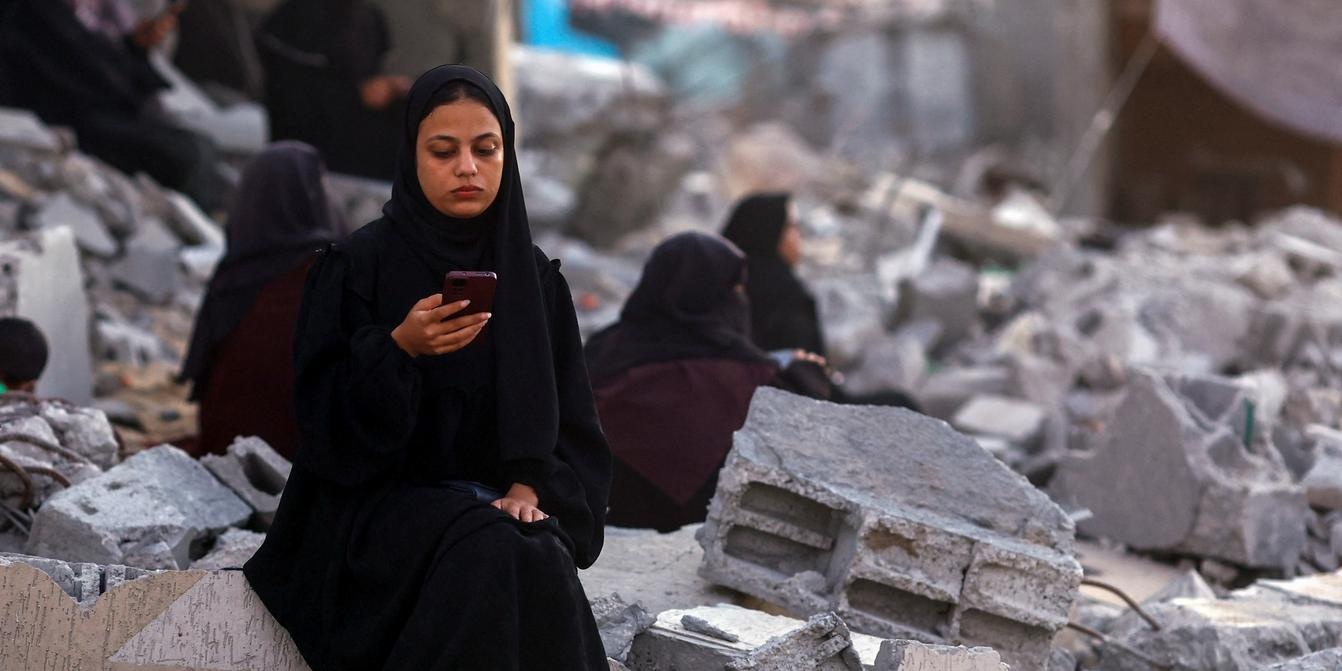
The human cost of conflict is often reduced to statistics in global headlines, but the lived experience of those on the ground reveals a far more complex and harrowing reality. A recent episode of the PalCast podcast, titled Gaza, The Daily Reality As The World Looks Away, seeks to bridge this gap by centering the narrative on the personal testimony of Noor Alhinnawi, a Palestinian writer and student navigating the wreckage of her home.
Alhinnawi’s account provides a granular look at the systemic collapse of civilian infrastructure and the psychological toll of repeated displacement. Speaking with host Yousef, she describes a life defined by precariousness, where the simple act of pursuing an education or maintaining a family bond becomes an act of defiance against a backdrop of total urban destruction.
The episode documents the specific geography of loss, from the ruins of northern Gaza to the crowded tents of the south. Through Alhinnawi’s eyes, the listener is introduced to a landscape where entire neighborhoods have been reduced to rubble, and the struggle for survival is compounded by severe food scarcity and the constant threat of further displacement.
The Geography of Displacement: From Jabalia to Al Mawasi
For Noor Alhinnawi, the experience of the conflict began with the total loss of her family home in northern Gaza, specifically in the areas of Jabalia and Beit Lahia. According to the podcast, these areas were transformed into military zones, leaving families to live among ruins where children are seen searching for toys in destroyed streets.
The journey toward safety in the south was not a simple transition but a series of perilous hurdles. Alhinnawi describes the Netzarim Corridor as a site of extreme hardship, where hundreds of displaced people waited under the sun for extended periods, only to be forced to turn back and traverse long, unsafe distances on foot. This cycle of repeated displacement highlights the instability faced by civilians attempting to locate refuge.
The human toll of these journeys often manifests in the fragmentation of the family unit. Alhinnawi recounted moments of separation during their travels, describing the terror of losing track of loved ones while navigating dangerous routes. Eventually, the family reached Al Mawasi, where they lived in a tent. It was here that the crisis of food scarcity became most acute; the family survived on minimal meals, and the health of Alhinnawi’s elderly father declined significantly due to exhaustion and hunger.
Education as Resistance and Documentation
Despite the collapse of her physical environment, Alhinnawi has remained committed to her academic and professional aspirations. As a writer preparing to graduate and commence her career, she has continued her university studies under grueling conditions. This pursuit has required navigating severe disruptions and poor internet access, yet she views her education and her writing as a critical form of resistance.
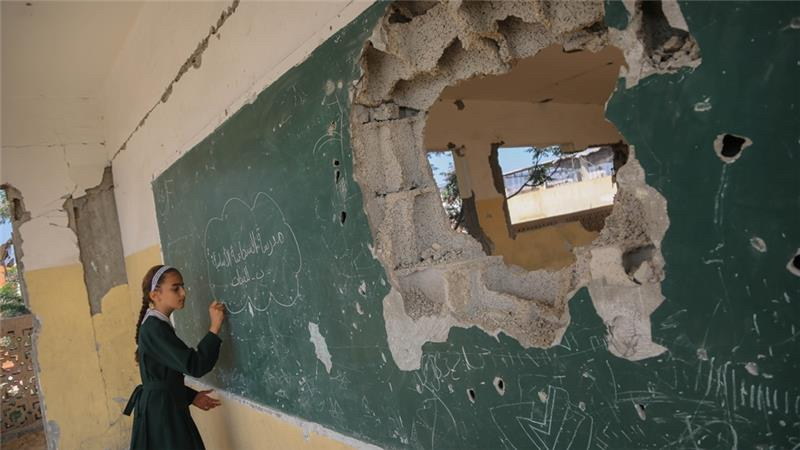
The determination to document the daily reality in Gaza serves as a central theme of the episode. By recording the experiences of those living in temporary shelters and enduring extreme weather, Alhinnawi aims to create a record of survival that persists even as the world’s attention shifts. Her goal is to utilize scholarships to continue her education and to tell stories that reflect the authentic ground reality of the Palestinian experience.
Currently, Alhinnawi is living in a relative’s home after the destruction of her own residence. Her story underscores the broader phenomenon of internal displacement, where the loss of a primary home forces families into overcrowded, temporary living arrangements with limited resources.
Key Realities of Daily Life in Gaza
- Infrastructure Collapse: Entire neighborhoods reduced to rubble, with civilians often remaining in the ruins of their former homes.
- Movement Restrictions: Dangerous crossings through corridors like Netzarim, characterized by long waits and forced retreats.
- Resource Scarcity: Severe food shortages in areas like Al Mawasi, leading to critical health declines in elderly populations.
- Academic Struggle: Students attempting to graduate despite a lack of stable internet and the destruction of educational facilities.
The full conversation between host Yousef and Noor Alhinnawi is available for global audiences on Spotify and Apple Podcasts, providing a primary-source account of the ongoing humanitarian crisis.
As the situation in Gaza continues to evolve, the documentation provided by writers and students like Alhinnawi remains a vital checkpoint for understanding the long-term social and psychological impact of the conflict. We encourage readers to share this account and engage in the discussion regarding the protection of civilians and the preservation of education in conflict zones.
Related reading