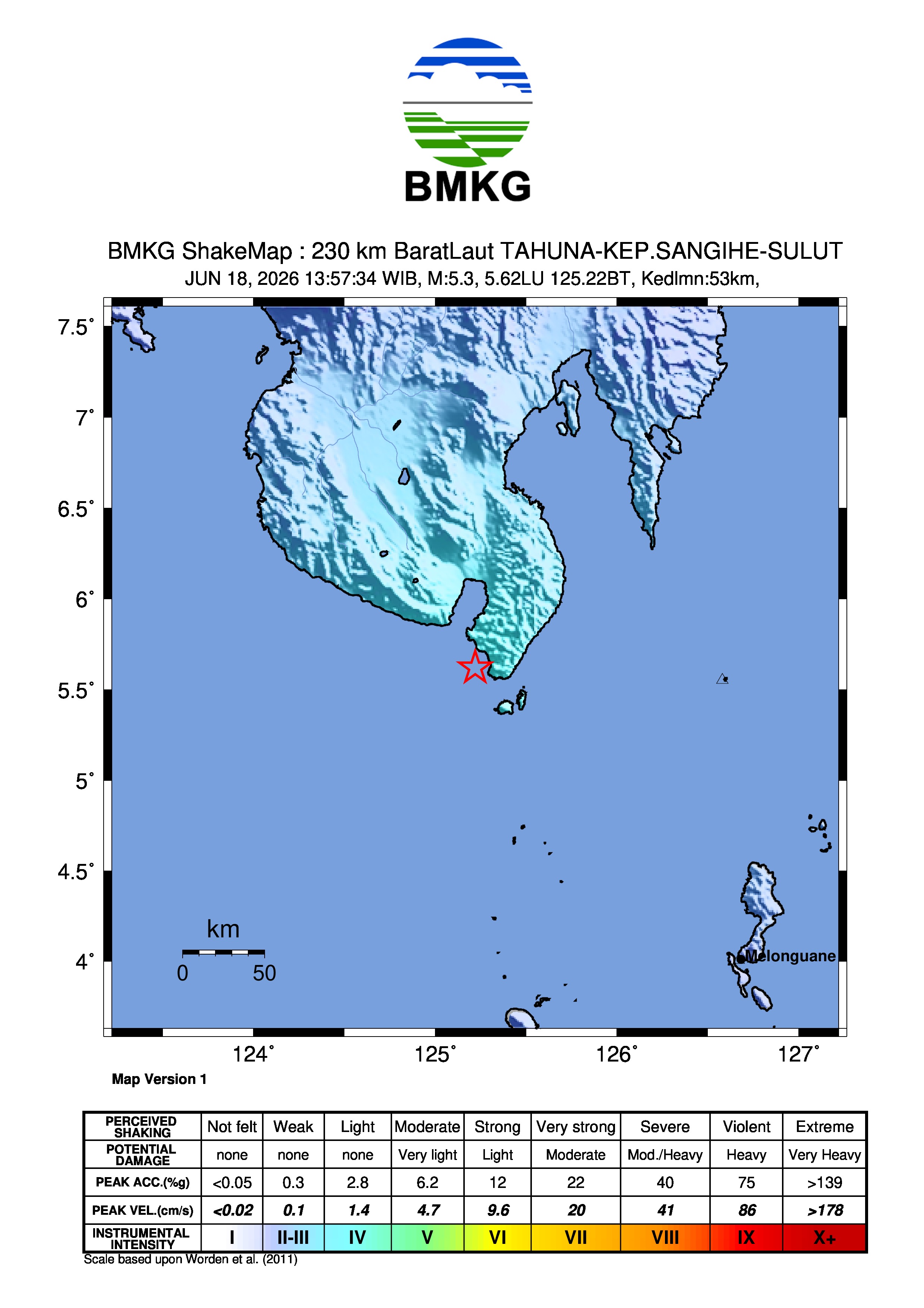
A magnitude 5.5 earthquake struck 224 kilometers northwest of the Sangihe Islands in North Sulawesi, Indonesia, on the morning of September 11, 2024. According to data provided by the Badan Meteorologi, Klimatologi, dan Geofisika (BMKG), the tremor occurred at a depth of 10 kilometers. Official reports from the agency confirmed that the seismic event posed no tsunami risk to the surrounding coastal regions.
The earthquake, which originated in the Celebes Sea, was part of a broader period of seismic activity in the North Sulawesi region. While the magnitude 5.5 event was the most significant in the immediate vicinity of the Sangihe Islands, local authorities have monitored subsequent tremors across the province. The BMKG maintains a real-time seismic monitoring network to track tectonic shifts and issue timely public warnings for the Indonesian archipelago, which sits along the highly active Pacific Ring of Fire.
Geological Context and Seismic Activity in North Sulawesi
The Sangihe Islands are situated in a complex tectonic zone where the Molucca Sea Plate subducts beneath the Sangihe volcanic arc. This geological setting frequently results in moderate to high-magnitude earthquakes. According to the United States Geological Survey (USGS), the interaction between these plates is responsible for the persistent seismic volatility observed in northern Indonesia. The depth of 10 kilometers reported by BMKG for this specific event is typical for shallow-crustal earthquakes in this maritime corridor.

During the same 24-hour window, other tremors were recorded in the North Sulawesi region, including activity near Melonguane. Official records from the Indonesian National Police (Polri), which frequently coordinates with local disaster management agencies to monitor public safety, noted that these smaller tremors—including a magnitude 3.4 event—did not result in structural damage or civilian casualties in the Melonguane area. Residents in the affected districts are advised to rely exclusively on official updates provided by the BMKG rather than unverified reports circulating on social media.
Safety Protocols and Regional Response
Following the magnitude 5.5 earthquake, local disaster mitigation agencies in North Sulawesi activated standard monitoring protocols. While the lack of a tsunami threat was quickly communicated, the National Agency for Disaster Countermeasure (BNPB) emphasizes that residents in coastal areas should remain aware of local earthquake safety procedures. This includes the “Drop, Cover, and Hold On” method and the identification of elevated evacuation routes in the event of larger, more damaging quakes.

The frequency of recent seismic events, including recorded activity in Sigi and Melonguane, has prompted regional authorities to reinforce public awareness campaigns regarding building codes and emergency preparedness. According to government guidelines, infrastructure in North Sulawesi is subject to specific seismic-resistant standards designed to mitigate the risks posed by the region’s high earthquake frequency. The BNPB continues to manage risk assessments in these areas to ensure that local emergency response teams are adequately equipped to manage potential secondary impacts.
Monitoring Future Seismic Developments
For those tracking ongoing developments, the BMKG provides continuous updates through its official website and mobile applications. The agency remains the primary source of truth for all seismic data in Indonesia. Residents are encouraged to monitor the BMKG official portal for any changes in tectonic patterns or new warnings. No further major activity was reported in the Sangihe region as of the latest evening update from the agency.
As an editor with over 16 years of experience in global reporting, I continue to monitor these developments closely to provide accurate, verified updates for our readers. We encourage our community to stay informed through reliable government channels. If you have questions or updates regarding your local area, please feel free to share them in the comments section below or join the discussion with our global audience.
Keep reading