Éric Duhaime Advocates for Expanded Use of Canada’s Notwithstanding Clause
Éric Duhaime, leader of the Parti conservateur du Québec (PCQ), has renewed his call for the systematic use of Section 33 of the Canadian Charter of Rights and Freedoms, commonly known as the notwithstanding clause, should he be elected to Quebec’s National Assembly. Speaking on the Radio-Canada program La Parole est aux Mordus du politique, Duhaime stated that all legislation introduced by his government would invoke the constitutional override to shield provincial laws from judicial review.
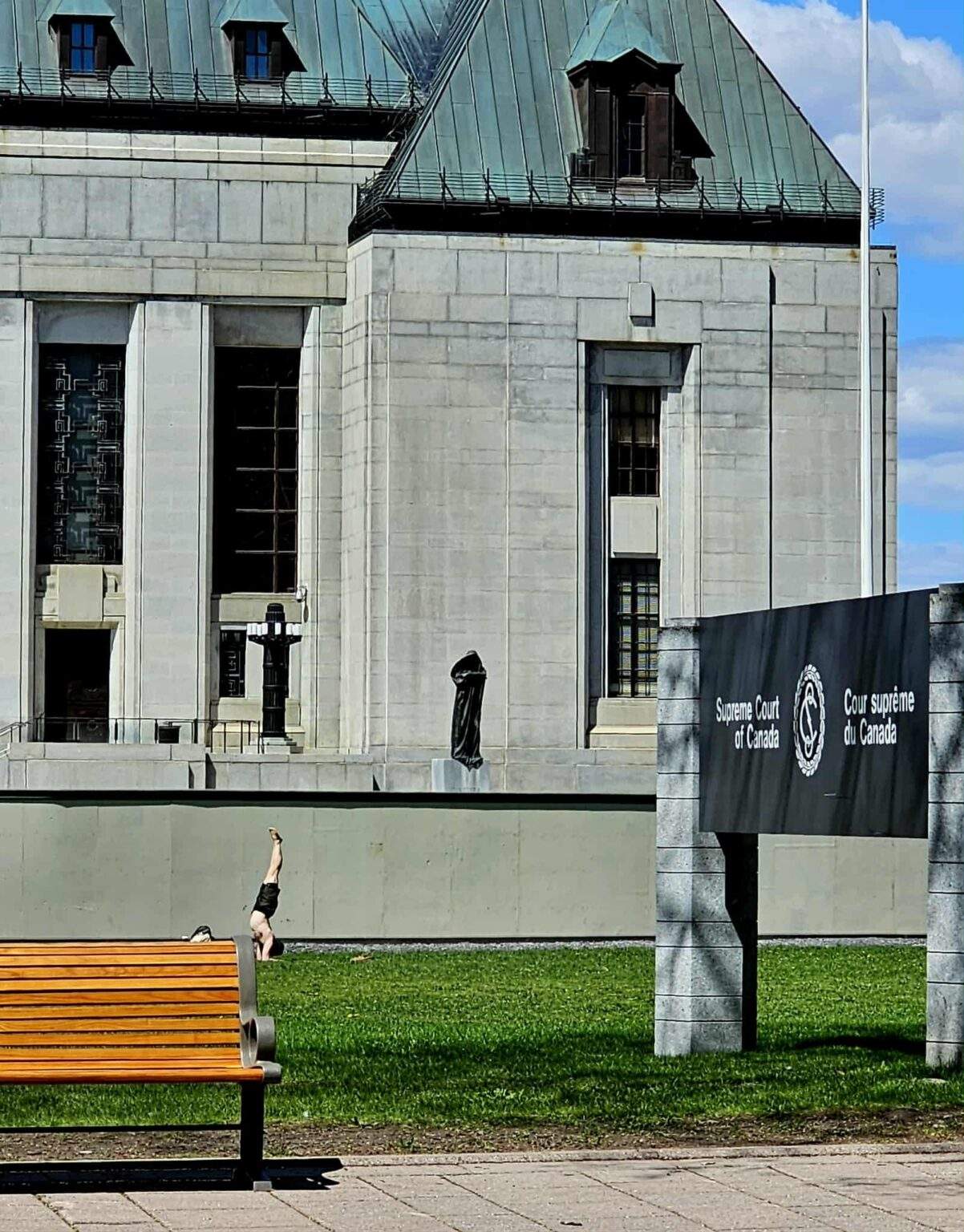
His remarks come amid ongoing national debate over the scope and limits of the notwithstanding clause, particularly following the Supreme Court of Canada’s pending decision on Quebec’s secularism law, Bill 21. Duhaime argued that provinces, including Quebec, should have the authority to govern within their jurisdictional boundaries without interference from federal institutions or the courts.
He framed his position as a continuation of the doctrine historically associated with former Quebec Premier René Lévesque, citing the Parti québécois’s frequent use of the clause between 1982 and 1985 as a precedent for asserting provincial autonomy in legislative matters.
Understanding the Notwithstanding Clause
Section 33 of the Charter allows federal or provincial governments to temporarily override certain Charter rights for a period of up to five years, renewable indefinitely. It applies to fundamental freedoms, legal rights, and equality rights, but cannot be used to override democratic rights, mobility rights, or language rights.
The clause was included in the Charter during the patriation of the Canadian Constitution in 1982 as a compromise to address provincial concerns about judicial overreach. While rarely used at the federal level, it has been invoked more frequently by provinces, particularly Quebec, Saskatchewan, and Alberta, in areas such as language legislation, back-to-work orders, and policy overrides.
Legal scholars note that the clause’s existence reflects Canada’s unique balance between parliamentary supremacy and judicial review. Its use is subject to political accountability, as any government invoking it must face voters within the five-year renewal window.
Duhaime’s Position and Political Context
Duhaime has positioned himself as a champion of Quebec nationalism and provincial rights, seeking to appeal to voters concerned about federal encroachment on areas such as immigration, education, and cultural policy. His advocacy for expanded use of the notwithstanding clause aligns with his broader platform of limiting judicial influence on legislation deemed within provincial jurisdiction.
During his interview, Duhaime criticized both the courts and the federal government for overstepping their roles, stating: « Nous, ce qu’on dit au fédéral, c’est : ‘Mêlez-vous de vos affaires. Déjà que vous ne les faites pas bien… Faites-les comme il faut, et puis laissez les provinces tranquilles dans leurs champs de compétences.’ » This sentiment reflects a longstanding tension in Canadian federalism regarding the division of powers and the role of the judiciary in interpreting constitutional rights.
He as well referenced Justice Minister Sean Fraser’s earlier comments about wanting to review the use of the notwithstanding clause, noting that Fraser later retracted those statements. Duhaime interpreted this as evidence of federal reluctance to respect provincial autonomy.
Historical Use and Legal Debate
The notwithstanding clause has been invoked fewer than 20 times since its inclusion in the Charter. Quebec has been the most frequent user, employing it to protect laws such as the Charter of the French Language (Bill 101) and, more recently, Bill 21 on state secularism. Other provinces have used it in contexts ranging from labor legislation to healthcare policy.
Critics argue that frequent or preemptive use of the clause undermines the Charter’s purpose of protecting minority rights and weakens judicial oversight. Supporters contend that it preserves democratic legitimacy by allowing elected officials to prevail over court decisions in matters of public policy.
The Supreme Court of Canada has not yet ruled on whether there are implicit limits to the clause’s use, though legal experts suggest that future decisions could define boundaries around its application, particularly if used in ways that violate constitutional principles unrelated to the Charter, such as federalism or democracy.
Implications for Quebec and Canadian Federalism
If Duhaime were to form a government and implement his proposed approach, Quebec would see a significant shift toward preemptive use of the notwithstanding clause across its legislative agenda. This could affect policies in education, healthcare, and civil liberties, depending on which laws are deemed to require protection from Charter challenges.
Such a strategy would likely intensify debates over the balance between provincial autonomy and national constitutional standards. It could also prompt responses from the federal government, opposition parties, or civil rights organizations concerned about the potential erosion of rights protections.
Observers note that any expanded use of the clause would remain subject to electoral accountability, as the five-year renewal requirement ensures that voters can assess the government’s use of the override power.
What Comes Next
The next key development in this ongoing discussion will be the Supreme Court of Canada’s anticipated ruling on the constitutionality of Quebec’s Bill 21, which prohibits certain public servants from wearing religious symbols. The decision, expected in the coming months, may clarify the Court’s stance on the limits of legislative power and the role of the notwithstanding clause in shielding laws from judicial review.
Until then, political leaders like Duhaime are likely to continue referencing the clause as a tool for asserting provincial authority in the face of judicial or federal challenges to legislation.
For updates on constitutional developments, federal-provincial relations, and Quebec politics, readers are encouraged to follow official proceedings from the National Assembly of Quebec and the Supreme Court of Canada.
We welcome your thoughts on this important debate about democracy, rights, and governance in Canada. Share your perspective in the comments and facilitate spread informed discussion by sharing this article with others.
Related reading