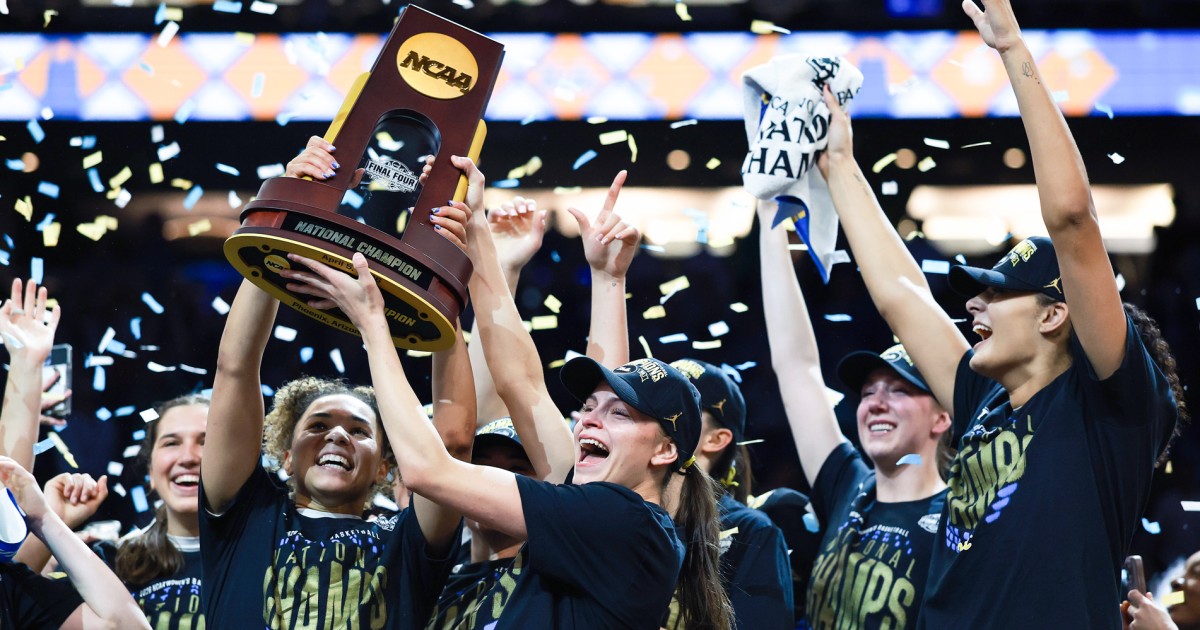
The spectacle of March Madness is often defined by the “Cinderella story”—the improbable upset where a low-seeded underdog topples a giant in a nail-biting finish. Yet, the tournament’s history is equally marked by the opposite extreme: the absolute annihilation of an opponent. These games, characterized by staggering margins of victory, serve as a stark reminder of the talent gap that can exist between the nation’s elite programs and the smaller schools that fight for a spot in the bracket.
While double-digit wins are common in the early rounds, truly historic blowouts—those exceeding 40 points—are rare. In the entire history of the NCAA Tournament, only about three dozen games have reached this threshold, with fewer than half of those occurring within the last 20 years according to BetMGM. These routs often occur in the first round, where top seeds can overwhelm low-major squads with superior depth and athleticism.
Recent tournaments have continued this trend of decisive victories. The 2026 tournament saw one of the most lopsided results in history, with Florida defeating Prairie View 114-55, a massive 59-point margin as reported by Sporting News. This follows a string of recent dominant performances, including Duke’s 44-point victory over Mount St. Mary’s in 2025 and Houston’s 40-point win over Longwood in 2024.
The Gold Standard: Loyola Chicago’s 1963 Rout
When discussing the largest margins of victory in NCAA tournament history, one game stands alone. On March 11, 1963, Loyola Chicago delivered a performance for the ages, defeating Tennessee Tech 111-42. The 69-point margin remains the largest in the history of the tournament according to The Analyst.
The game was essentially decided in the first half, as the Ramblers outscored the Golden Eagles 61-20. This 41-point halftime advantage is still the largest halftime lead ever recorded in the NCAA Tournament. All five of Loyola’s starters scored in double figures, led by Ron Miller’s 21 points. This victory served as a catalyst for Loyola’s historic run, which culminated in the school’s first and only men’s basketball national championship after defeating Cincinnati 60-58 in overtime.
The Bruin Beatdown: UCLA’s Legacy of Dominance
UCLA, a program synonymous with collegiate basketball excellence, has its own chapter in the record books of tournament blowouts. The Bruins have twice appeared on the list of the most decisive victories in tournament history, demonstrating a level of control that left opponents with little hope of recovery.
The most significant “Bruin beatdown” occurred in 1967 during the second round, when UCLA dismantled Wyoming with a final score of 109-60. The 49-point margin of victory remains one of the top five largest blowouts in the history of the event per Sporting News data. This era of UCLA dominance set a standard for how top-seeded teams could utilize their depth to exhaust and demoralize opponents.
The Bruins repeated this trend of dominance decades later. In 2008, UCLA secured a 41-point victory over Mississippi Valley State, winning 70-29. While the score was lower than their 1967 outing, the margin of victory underscored the persistent gap between the powerhouse programs and the smaller schools that qualify for the tournament.
Analyzing the 40-Point Threshold
To put these margins in perspective, tournament games that end by more than 45 points are exceedingly rare; only 11 such games have occurred in the history of the tournament, compared to 214 games that were decided by a single point according to The Analyst. Winning by 40 or more points is generally viewed as the benchmark for a “historic” rout.

While most of these blowouts happen in the first round, some have occurred in the later stages of the tournament, proving that even elite teams can be overwhelmed. A notable example is Villanova’s 44-point victory over Oklahoma in the 2016 Final Four, where the Wildcats won 95-51. Similarly, Princeton defeated Providence by 40 points in a 1965 Regional Final, winning 109-69.
Notable Tournament Blowouts (40+ Points)
| Winning Team | Opponent | Score | Margin | Year |
|---|---|---|---|---|
| Loyola Chicago | Tennessee Tech | 111-42 | 69 | 1963 |
| Florida | Prairie View | 114-55 | 59 | 2026 |
| Kansas | Prairie View | 110-52 | 58 | 1998 |
| UConn | Chattanooga | 103-47 | 56 | 2009 |
| UCLA | Wyoming | 109-60 | 49 | 1967 |
The Impact of Mismatches in March Madness
The occurrence of these blowouts often sparks debate regarding the tournament’s format and the inclusion of low-major programs. Critics argue that these mismatches are inevitable given the disparity in resources and recruiting between “Power Five” conferences and smaller divisions. However, proponents of the current system argue that the opportunity to play on the national stage is a vital reward for the success these smaller schools achieve during their regular seasons.
From a strategic standpoint, these games often end early as top seeds employ aggressive defensive schemes and deep rotations that the opposing team cannot match. When a team like Florida or UCLA builds a double-digit lead early, the psychological impact often leads to a cascade of errors from the underdog, turning a competitive start into a rout.
For the winning teams, these blowouts provide a chance to build momentum and refine their rotations without risking the health of their primary starters in the closing minutes. For the losing teams, these games serve as a grueling introduction to the highest level of collegiate competition.
As the basketball world looks toward the next cycle of recruitment and training, the records set by Loyola Chicago and the dominant history of the Bruins remain as markers of the sheer scale of victory possible in the NCAA Tournament. The 2026 results have already proven that the era of the massive blowout is far from over.
With the current season concluded, the focus now shifts to the off-season recruiting window and the upcoming conference alignments, which may further influence the competitive balance of future tournaments. Official updates on tournament format changes or seeding adjustments are typically released by the NCAA during the summer administrative sessions.
Do you think the tournament format should be changed to avoid these massive mismatches, or is the “Cinderella” opportunity worth the risk of a blowout? Share your thoughts in the comments below.