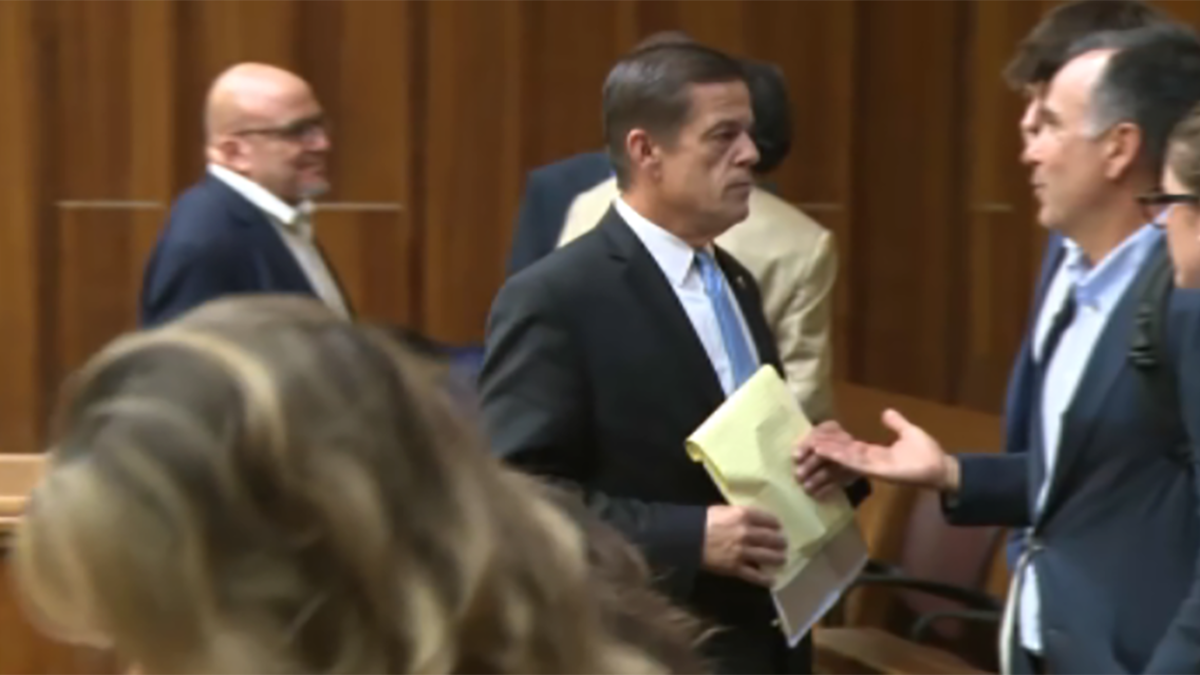
MIAMI, Florida — Closing arguments began today in the high-profile trial of billionaire real estate heir George Pino, accused of causing the deaths of seven people in a 2022 boat crash off the coast of Florida. The case, which has drawn national attention, will now be decided by a jury after weeks of testimony detailing the events of that fateful night and the subsequent investigation.
Pino, 57, faces charges of seven counts of manslaughter and one count of boating under the influence (BUI). Prosecutors allege he was operating his 40-foot yacht at excessive speeds and failed to render aid after the crash, which occurred near Palm Beach. Defense attorneys have argued that Pino acted responsibly and that the crash was caused by other factors, including weather conditions and the actions of other vessels.
With the jury’s deliberations imminent, here’s what we know about the closing arguments, the evidence presented, and what comes next in this landmark case.
What Are the Key Allegations in the George Pino Trial?
Prosecutors have centered their case on three main claims:
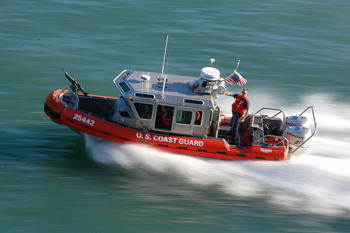
- Excessive speed: According to the State Attorney’s Office for the 18th Judicial Circuit, radar data and witness testimony place Pino’s yacht, Lady Luck, traveling at speeds between 35 and 40 knots—well above the 10-knot speed limit in the area where the crash occurred. Radar evidence recovered from the U.S. Coast Guard and private boating services was presented as critical proof.
- Failure to render aid: Testimony from survivors and Coast Guard personnel described how Pino allegedly refused to stop his vessel to assist those in the water, instead accelerating away from the scene. A 911 call placed by a passenger on another boat, later identified as Coral Queen, captured Pino’s voice saying, “I’m not stopping,” before ending the call. The call was played in court as part of the prosecution’s case.
- Intoxication: Blood alcohol tests and witness accounts suggest Pino had been drinking prior to the crash. While his exact BAC remains disputed, prosecutors have argued that his impaired judgment contributed to the tragedy. Defense attorneys, however, have pointed to inconsistencies in toxicology reports and questioned the reliability of eyewitness accounts.
The defense, led by attorney Jeffrey Sloman, has focused on challenging the prosecution’s timeline and the reliability of key witnesses. Sloman argued during closing arguments that the crash was caused by a sudden, unexpected wave—common in the area—and that Pino acted appropriately by prioritizing the safety of his own passengers. “This was not a crime scene,” Sloman told jurors. “This was a tragedy, and Mr. Pino was not responsible.”
How Did the Prosecution and Defense Present Their Cases?
The trial has been marked by dramatic testimony, including emotional outbursts and confrontational exchanges. Here’s a breakdown of the key arguments from both sides:
Prosecution’s Case: Negligence and Criminal Intent
Assistant State Attorney David Berman delivered the prosecution’s closing argument, framing Pino’s actions as a deliberate disregard for human life. “This was not an accident,” Berman stated. “This was a preventable tragedy caused by reckless speed, intoxication, and a refusal to help.”
Key evidence cited by prosecutors included:
- Radar data: Showing Pino’s yacht was traveling at dangerous speeds before the crash. Coast Guard records confirmed the vessel’s speed exceeded safe limits.
- Survivor testimony: Passengers from the Coral Queen described seeing Pino’s boat “plow into” theirs, sending people into the water. One witness, Mark Whitaker, testified that Pino “didn’t even slow down.”
- 911 call evidence: The recording of Pino’s refusal to stop was played for the jury, with prosecutors arguing it demonstrated his indifference to the victims’ plight.
Defense’s Case: Accident and Exonerating Circumstances
Sloman’s defense argued that the crash was the result of an unforeseeable freak wave—a phenomenon known in the boating community as a “rogue wave.” He pointed to meteorological data showing turbulent conditions that night and questioned the accuracy of radar readings, which he called “inconsistent with real-world boating experiences.”

Additional defense strategies included:
- Challenging witness credibility: Sloman cross-examined survivors, suggesting their accounts were influenced by media coverage or personal biases. For example, he highlighted discrepancies in timelines provided by different witnesses.
- Intoxication debate: While acknowledging Pino had been drinking, the defense argued his BAC was below the legal limit for boating under the influence in Florida (0.08%). They also questioned the chain of custody for blood samples.
- Alternative causes: Experts hired by the defense testified that the crash could have been caused by a sudden, violent wave—something Pino could not have predicted or avoided.
Sloman concluded his argument by urging the jury to consider the “human element” of the case. “George Pino is not a monster,” he said. “He is a man who made a terrible mistake in a moment of chaos. But he did not commit a crime.”
Who Are the Jurors, and What Challenges Do They Face?
The jury in this case consists of 12 individuals selected from Palm Beach County, where the crash occurred. Juror selection was contentious, with both sides exercising challenges to remove potential bias. According to court records, three alternate jurors were also seated to replace any who might be dismissed during deliberations.
Challenges included:
- Pre-existing opinions: Some potential jurors admitted to knowing Pino or having followed the case closely in the media. Prosecutors and defense attorneys used peremptory challenges to remove these individuals.
- Boating experience: The court sought jurors with some familiarity with boating or maritime law, given the technical nature of the evidence. Court documents show that several jurors had prior experience on the water.
- Emotional impact: The trial has included graphic descriptions of the crash and the aftermath, which some jurors have described as “devastating.” Court officials have provided mental health resources for jurors.
Jurors were instructed to focus solely on the evidence presented in court and to disregard any outside influences, including media coverage. However, the high-profile nature of the case—combined with Pino’s wealth and status—has made it difficult to shield the jury from public scrutiny.
What Happens Next in the George Pino Trial?
With closing arguments concluded, the jury will now retire to deliberate. Florida law requires jurors to reach a unanimous verdict on all counts for a conviction to stand. If they deadlock, the judge may declare a mistrial, though such outcomes are rare in high-profile cases.
Key next steps:
- Jury deliberations: Expected to take days, though complex cases like this can drag on for weeks. Jurors are sequestered and prohibited from discussing the case with anyone outside the courtroom.
- Verdict announcement: Once a decision is reached, the jury will return to the courtroom for the verdict to be read aloud. This could occur as early as this week, though no official timeline has been set.
- Potential sentencing: If convicted, Pino faces up to 21 years in prison—seven years per manslaughter count, with the BUI charge carrying an additional penalty. However, Florida law allows for probation or community service in some manslaughter cases, depending on the judge’s discretion.
- Appeals process: If convicted, Pino’s legal team will likely file an appeal, citing errors in the trial process or insufficient evidence. Appeals in Florida can take years to resolve.
Outside the courtroom, the case has sparked broader discussions about boating safety, wealth and accountability, and the challenges of prosecuting high-profile defendants. Florida’s boating laws, which include strict speed limits in designated zones, have come under scrutiny, with some lawmakers calling for stricter enforcement.
Why Does This Case Matter Beyond Florida?
The George Pino trial is more than a local criminal case—it’s a test of how Florida’s legal system handles high-net-worth defendants accused of criminal negligence. Here’s why it resonates nationally:
- Wealth and justice: Pino’s net worth—estimated at $1.2 billion—has drawn comparisons to other cases where affluent defendants face lesser consequences than their lower-income counterparts. Critics argue the trial may be influenced by Pino’s ability to afford top legal representation.
- Boating safety reforms: The crash has prompted calls for stricter regulations, including mandatory life jacket laws and enhanced radar monitoring in high-traffic areas. The Florida Fish and Wildlife Conservation Commission has already proposed new safety measures in response to the tragedy.
- Jury dynamics: The case serves as a case study in how juries weigh emotional testimony against technical evidence. Legal experts are watching closely to see how the jury balances the human cost of the crash with the legal standards of proof.
For readers following the case, the verdict will not only determine Pino’s future but may also set a precedent for how similar cases are handled in Florida and beyond.
What You Need to Know About the Case
- Charges: Seven counts of manslaughter and one count of boating under the influence (BUI).
- Key evidence: Radar data, 911 call recordings, and survivor testimony.
- Defense strategy: Focuses on a freak wave as the cause of the crash and challenges to witness credibility.
- Jury composition: 12 jurors plus three alternates, selected from Palm Beach County.
- Next steps: Jury deliberations begin immediately; verdict expected within days to weeks.
- Potential outcomes: Conviction could lead to up to 21 years in prison; acquittal would end the case.
Frequently Asked Questions About the George Pino Trial
Q: What is George Pino accused of?
A: Pino is charged with seven counts of manslaughter and one count of boating under the influence (BUI) in connection with the 2022 boat crash that killed seven people. Prosecutors allege he was operating his vessel at excessive speeds and failed to render aid.
Q: How many people died in the crash?
A: Seven people died in the crash, which occurred on the night of March 12, 2022. The victims included passengers from Pino’s yacht and another vessel, the Coral Queen.
Q: What was the speed limit where the crash occurred?
A: The speed limit in the area where the crash happened was 10 knots. Radar evidence showed Pino’s yacht was traveling at 35–40 knots prior to the collision.
Q: Can Pino be convicted on all counts?
A: For a conviction on all counts, the jury must unanimously agree that Pino acted with criminal negligence or intent in each of the seven manslaughter cases. Florida law requires unanimity for a guilty verdict.
Q: What happens if the jury deadlocks?
A: If the jury cannot reach a unanimous decision, the judge may declare a mistrial, and the case could be retried or dropped, depending on the circumstances.
Q: How long could Pino serve if convicted?
A: If convicted of all seven manslaughter counts, Pino could face up to 21 years in prison (three years per count). The BUI charge carries an additional penalty, though sentencing in Florida can include probation for manslaughter cases.
The George Pino trial marks a pivotal moment in Florida’s legal landscape, with implications for boating safety, wealth and accountability, and the challenges of prosecuting high-profile defendants. As the jury deliberates, we’ll continue to provide updates on the verdict and any subsequent legal developments.
For more on the case, including background on the crash and the legal proceedings, explore our coverage of Florida criminal trials or follow updates from the Florida Court System.
What do you think about the case? Share your thoughts in the comments below or join the discussion on our social media channels.
Keep reading
- How Cousins Lauren McDuffie and Rachel Albers Simplified a Kitchen Staple
- Senegalese Passport Renewal Delays: Urgent Appeal for Diaspora and Students in Canada
- Judge Orders Jury Trial Over Minneapolis Staffing Levels (news-usa.today)
- Lindsay Clancy Trial: What to Know About the Accused Mother’s Case (archyworldys.com)