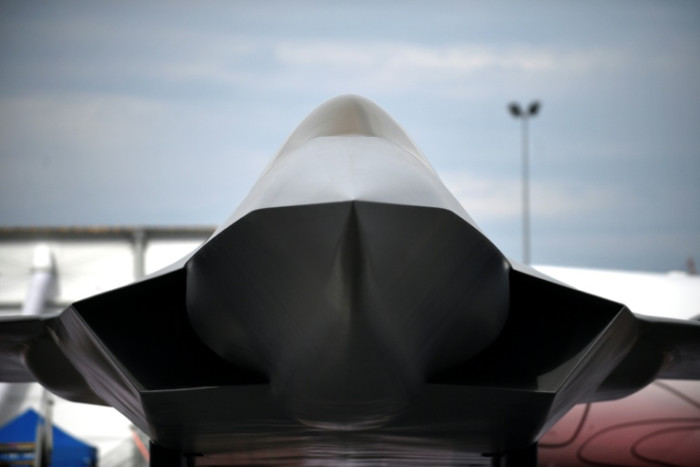
BERLIN — A landmark European defense project, the Future Combat Air System (FCAS), is facing a potential collapse as Germany signals growing reservations about aligning its future fighter jet requirements with those of France. Chancellor Friedrich Merz publicly questioned the viability of the program on Wednesday, highlighting fundamental differences in operational needs, particularly France’s insistence on a nuclear-capable and aircraft carrier-compatible aircraft. This development casts a shadow over Franco-German defense cooperation and raises concerns about the future of European military integration amid escalating geopolitical tensions.
The FCAS, launched in 2017 with much fanfare by then-German Chancellor Angela Merkel and French President Emmanuel Macron, aimed to replace France’s Rafale fighter jets and Germany’s Eurofighters by around 2040. The ambitious project, which as well includes Spain, envisioned not only a next-generation fighter but also a network of drones and a sophisticated combat cloud system. However, the program has been plagued by industrial disputes and disagreements over leadership and technology sharing, bringing it to a near standstill for the past year. The latest comments from Chancellor Merz suggest that these challenges may prove insurmountable.
Merz, speaking on the German podcast Machtwechsel, articulated a core divergence in military strategy. “The French need, in the next generation of fighter jets, an aircraft capable of carrying nuclear weapons and operating from an aircraft carrier,” he stated. “That’s not what we currently need in the German military.” This divergence stems from France’s unique position as a nuclear power with a naval aviation component, requiring capabilities not prioritized by Germany’s defense doctrine. The question now facing both nations, according to Merz, is whether they can realistically develop two distinct aircraft variants within a single program, or if a split is inevitable. The potential cost implications of pursuing two separate designs are significant, potentially exceeding the already substantial estimated budget of over €100 billion ($109.5 billion USD as of February 18, 2026) for the entire FCAS program. Politico reported on the growing likelihood of the project’s failure earlier this week.
French Response and Industrial Tensions
The French government has responded to Merz’s comments with a reaffirmation of its commitment to the FCAS project. A statement released by the Élysée Palace, while President Macron was traveling in India, emphasized that the military requirements of all three participating nations – France, Germany, and Spain – remain unchanged, including France’s need for a nuclear deterrent capability. The statement underscored the strategic importance of the program for European defense and expressed hope that industrial disagreements could be overcome. However, the underlying tensions remain palpable. The disputes between France’s Dassault Aviation and Airbus Space and Defence over control of the project have been a major stumbling block, with German industrial interests reportedly frustrated by Dassault’s attempts to assert greater control over the aircraft’s development. Aerotime details how these disagreements center around the differing operational profiles desired by each nation.
The powerful IG Metall industrial trade union, representing Airbus workers in Germany, and the German Aerospace Industries Association have publicly advocated for a potential split with France, urging Berlin to explore alternative partnerships. Industry sources have suggested that Sweden’s Saab could be a viable partner for Germany and Spain in developing a separate fighter jet program. This potential shift reflects a growing sentiment within German industry that the FCAS project, in its current form, is no longer serving Germany’s best interests. The German government’s massive military investment program, spearheaded by Merz, aims to build Europe’s largest conventional armed forces, and some believe a more focused and independent approach to fighter jet development is necessary to achieve this goal.
Impact on European Defense Cooperation
The potential unraveling of the FCAS project carries significant implications for broader European defense cooperation. At a time when the continent is facing increased security challenges, particularly in light of the ongoing conflict in Ukraine and concerns about potential Russian aggression, a unified and coordinated approach to defense procurement is seen as crucial. The failure of FCAS would be a blow to efforts to demonstrate tight cooperation among European NATO allies and could raise questions about the viability of future joint defense initiatives. It also comes at a time of increasing uncertainty about the level of American security commitments to Europe, further emphasizing the need for greater European self-reliance in defense.
The discord surrounding FCAS also highlights broader strains in Franco-German relations. Recent disagreements over defense spending and French efforts to obstruct an EU trade deal with the Mercosur bloc of South American countries have contributed to a sense of growing distance between the two traditionally close allies. While German Foreign Minister Annalena Baerbock sought to downplay these concerns on Wednesday, stating that Paris remains Berlin’s “closest partner and most important friend in Europe,” the FCAS dispute underscores the challenges of maintaining a strong and cohesive partnership in a complex geopolitical landscape.
Alternative Paths and Future Prospects
If Germany ultimately decides to abandon the FCAS project, several alternative paths could be pursued. A partnership with Saab, as suggested by industry sources, appears to be the most likely option. Sweden has a well-established aerospace industry and a proven track record in fighter jet development, with the Gripen aircraft already in service with several European air forces. Another possibility, though less likely, would be for Germany to independently develop a new fighter jet, even though this would be a significantly more expensive and time-consuming undertaking.
Dassault CEO Eric Trappier has maintained that his company is capable of developing a fighter jet on its own, but the financial burden could strain the French government’s budget. The French government is already facing economic challenges and may be reluctant to commit significant additional resources to a standalone fighter jet program. The future of the FCAS project remains uncertain, and a final decision is expected in the coming months. The key sticking point remains the divergent requirements of France and Germany, and whether a compromise can be reached that satisfies both nations’ strategic needs. The project’s ultimate fate will likely depend on the willingness of both governments to prioritize cooperation and find a way to overcome the industrial and political obstacles that have plagued it for the past year.
The complexities surrounding the FCAS program also underscore the broader challenges of European defense industrial cooperation. Balancing national interests, industrial competitiveness, and strategic priorities is a delicate task, and the FCAS experience serves as a cautionary tale for future joint defense initiatives. The need for greater transparency, clearer decision-making processes, and a more equitable distribution of responsibilities will be crucial to ensuring the success of future European defense projects.
Key Takeaways:
- Germany is questioning its continued participation in the FCAS project due to differing fighter jet requirements.
- France remains committed to the project but faces industrial disputes with Airbus.
- The potential collapse of FCAS would be a setback for European defense cooperation.
- Alternative partnerships, such as with Saab, are being explored.
- The future of the project hinges on resolving disagreements over specifications and control.
The next key development to watch for is a formal announcement from the German government regarding its position on the FCAS project, expected within the next quarter. We will continue to provide updates as this critical story unfolds. Share your thoughts on the future of European defense cooperation in the comments below.
Keep reading