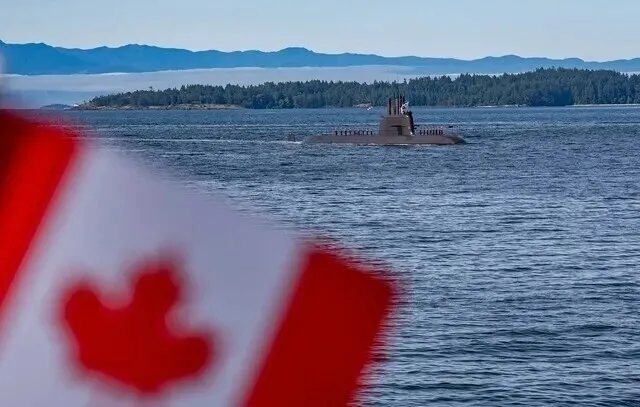
The Canadian government is currently evaluating options for its future submarine fleet as part of the Canadian Patrol Submarine Project (CPSP), a multi-billion dollar initiative intended to replace the existing Victoria-class vessels. While international media reports have speculated on the involvement of various global defense firms, including Germany’s ThyssenKrupp Marine Systems (TKMS) and South Korea’s Hanwha Ocean, the Canadian Department of National Defence has not yet awarded a contract or finalized a selection for the project. The procurement process remains in a preliminary phase as Ottawa assesses the operational requirements for its next-generation underwater capabilities.
The competition to replace Canada’s aging submarines has drawn significant interest from global naval contractors. The Canadian Patrol Submarine Project is designed to ensure the Royal Canadian Navy maintains a sovereign, stealthy, and persistent underwater presence. According to the Department of National Defence, the federal government formally launched the project in July 2024 to initiate a high-level engagement with industry partners and allies. This process is intended to inform the government’s understanding of available technologies, delivery timelines, and the potential for domestic industrial participation.
Understanding the Canadian Patrol Submarine Project
The Canadian Patrol Submarine Project aims to acquire up to 12 conventionally powered, high-endurance submarines. These vessels are intended to operate in diverse environments, including the Arctic, the Atlantic, and the Pacific oceans. The Public Services and Procurement Canada website notes that the project is currently in the “options analysis” phase. This stage involves extensive consultations with industry and international partners to determine which submarine designs can best meet the specific needs of the Royal Canadian Navy, particularly regarding under-ice navigation and long-range patrol capabilities.

For South Korean firms like Hanwha Ocean and HD Hyundai Heavy Industries, the Canadian market represents a strategic opportunity to expand their presence in the North American defense sector. Both companies have actively engaged with Canadian officials to showcase their KSS-III class submarine technology. Similarly, Germany’s TKMS has positioned its Type 212CD submarine as a viable solution, citing its existing partnerships with NATO allies and its specialized capabilities in littoral and deep-water environments. Despite these active pitches, the Canadian government has emphasized that the competitive procurement process is ongoing and will adhere to established federal acquisition policies.
Global Competition and Industrial Strategy
A critical component of the procurement strategy is the requirement for significant industrial benefits within Canada. The government has signaled that any successful bid must include a plan for domestic maintenance, training, and potential construction support to sustain the fleet over its multi-decade lifespan. This industrial requirement is a major factor in the evaluation process, as Canada seeks to revitalize its naval shipbuilding capacity through the National Shipbuilding Strategy.
The selection process is expected to be lengthy and rigorous. By engaging with multiple potential bidders, the Canadian government aims to ensure that the final choice provides the best value for taxpayers while meeting stringent performance criteria. Officials have indicated that the decision-making process will involve a comprehensive assessment of technical maturity, life-cycle costs, and the ability of the chosen partner to integrate with Canada’s existing naval infrastructure. There is currently no fixed date for the final contract award, as the project must navigate various budgetary and technical milestones.
The Path Forward for the Royal Canadian Navy
The Victoria-class submarines, which have been in service since the early 2000s, are nearing the end of their operational life. The transition to a new platform is considered essential for Canada to maintain its commitments to NORAD and NATO. The Royal Canadian Navy has stressed that the new vessels must be capable of operating effectively in the Arctic, an area of increasing strategic importance due to changing environmental conditions and heightened international activity.

As the project progresses, the Canadian government will likely issue more detailed requests for information and proposals to shortlisted companies. Stakeholders and industry observers are watching for updates from the Department of National Defence regarding the formal timeline for procurement. For now, the process remains a competitive assessment of international technologies, with no official selection confirmed by the Cabinet or the Department of National Defence.
Updates regarding the Canadian Patrol Submarine Project are periodically posted on the official Department of National Defence newsroom. Interested parties can monitor these channels for future announcements regarding project milestones and procurement developments. Please share this report if you found it useful, and feel free to join the discussion on our social media platforms.