A Dialogue Between the Sacred and the Secular: Amala Dianor’s “Gesualdo Passione”
The intersection of music and dance consistently offers fertile ground for artistic exploration. Countless approaches exist to blend these disciplines, especially when performers share a live stage, creating a dynamic interplay between sound and movement. Recently, the Dance Umbrella festival in London presented a UK premiere that exemplifies this captivating synergy.
This performance featured Carlos Gesualdo‘s “Tenebrae Responsoria,” a 400-year-old composition, brought to life by the vocal talents of Les Arts Florissants. Alongside them, choreographer Amala Dianor, known for his roots in hip-hop and his Senegal-born, France-based perspective, guided four dancers through a compelling narrative. The pairing initially seems unconventional, yet it ultimately delivers a powerful blend of harmony and contrast.
A Striking Visual and Auditory Landscape
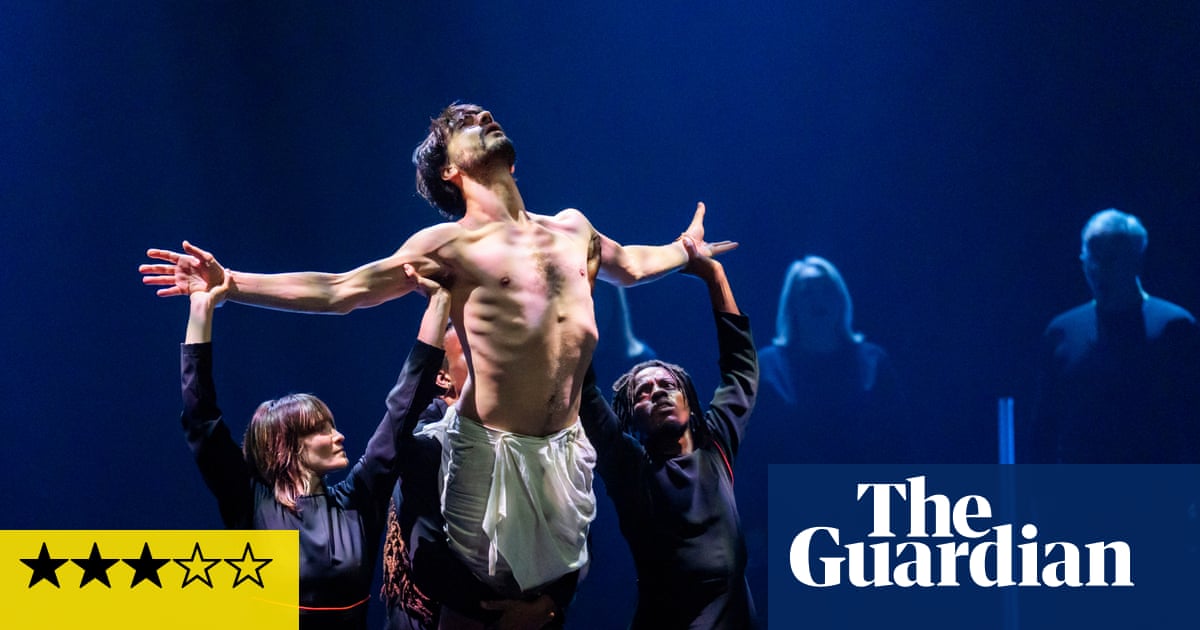
Initially, the performers move as a unified ensemble. Singers and dancers progress slowly, all clad in black except for Damiano Bigi, portraying Jesus in white. The musicians demonstrate vocal agility and measured movement, maintaining refinement even during physically demanding moments, such as performing while lying on the floor.
Dianor skillfully incorporates iconic religious imagery into the choreography. You’ll witness representations of Judas’s kiss, the crucifixion, and Jesus’s body being tenderly cradled by soprano Miriam allan, evoking the image of Mary. These moments are particularly striking and emotionally resonant.
Recurring Motifs and Shifting dynamics
Musical sections are thoughtfully repeated throughout the performance. For example, when the singers first lament Christ’s final breath, they kneel around Jesus’s form.Upon the phrase’s return, the body has vanished, leaving a palpable sense of mystery and spiritual weight.
The dancers, grounded in their physicality, present a distinctly human presence. Their controlled convulsions convey a sense of urgency and raw emotion. However, the choreography doesn’t always adhere strictly to the music’s rhythm. Rather, it establishes its own independant pulse, notably when the dancers begin a powerful, percussive footwork pattern that subtly infiltrates the music’s expansive resonance.
Finding Clarity and Sacred Space
At times, the singers align along the stage’s edge, directly addressing the audience. This arrangement offers a welcome opportunity to focus on the music’s intricate movements and identify individual vocal contributions, clarifying the complex harmonies. Concurrently, Xavier Lazarini‘s lighting design transforms the dancers into striking silhouettes, resembling shadow puppets. He also employs flickering columns of light, reminiscent of torches, to create a sacred atmosphere appropriate for the music’s Holy Week context.
Ultimately, while the performance is deeply moving, a certain intensity of passion might be the one element slightly understated in the choreography. Still, “Gesualdo Passione” is a thought-provoking and visually arresting experience. It’s a testament to the power of cross-disciplinary collaboration and the enduring relevance of both ancient music and contemporary dance.
Key Takeaways for the Audience:
* Unexpected Pairing: The combination of Gesualdo’s sacred music and Dianor’s contemporary choreography creates a unique artistic tension.
* Powerful imagery: The performance effectively utilizes iconic religious imagery to evoke emotional resonance.
* Independent Rhythms: The dance establishes its own rhythmic identity, complementing and contrasting with the music.
* Atmospheric Design: Lighting and staging contribute significantly to the overall sense of sacred space and emotional depth.
This performance offers you a compelling example of how artistic boundaries can be pushed to create something truly innovative and moving. It’s a dialogue between the sacred and the secular,inviting you to contemplate the enduring power of both music and dance.