
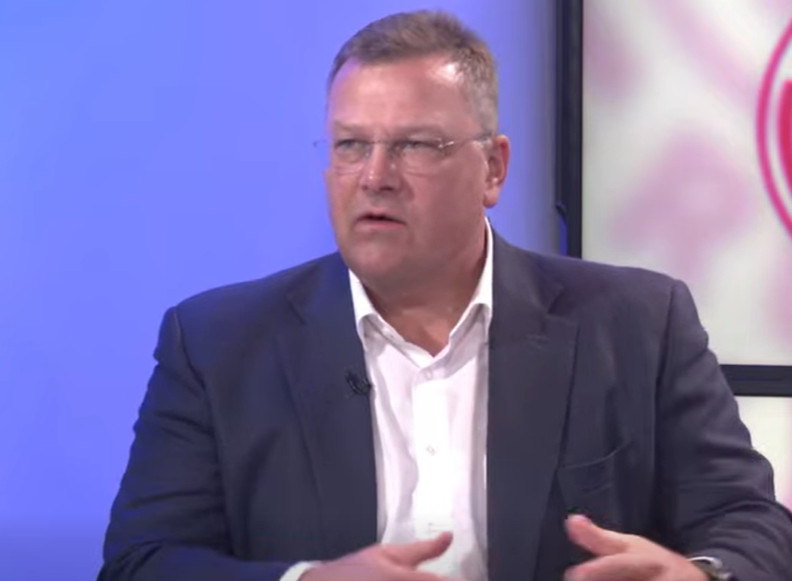
Latvia’s new administration faces an immediate period of economic and political friction as the country navigates the lasting impacts of the regional conflict. Business expert Ģirts Rungainis warns that the government will encounter significant challenges in the coming weeks, as the “new reality” of the war forces a difficult reconciliation between security spending, economic stability, and social welfare.
The warning comes as the Latvian government attempts to stabilize its fiscal policy following a period of intense geopolitical volatility. As the administration transitions into its new mandate, it must contend with a landscape where the costs of national security and the necessity of economic resilience are in direct competition for limited state resources.
The Collision of Policy and Economic Reality
For the incoming Latvian leadership, the transition from campaign rhetoric to governance is expected to be abrupt. Ģirts Rungainis suggests that the government will “get hit in the teeth”—a metaphor for the harsh collision between political promises and the uncompromising economic realities shaped by the ongoing war. This friction is expected to manifest within the next few weeks as the administration begins to implement its first major fiscal and security-related decisions.
The primary source of this tension lies in the “new reality” of the Baltic economic landscape. Since the escalation of the conflict in Ukraine, the region has moved away from the era of the “peace dividend,” where low defense spending and easy access to Eastern markets fueled growth. In its place is a high-cost security environment that demands significant public investment, often at the expense of other social and developmental priorities.
Political analysts note that any new government in the Baltics must now balance three competing pillars:
- Defense Readiness: Meeting and exceeding NATO-mandated defense spending targets to ensure regional deterrence.
- Social Cohesion: Addressing inflation and the cost-of-living crisis to maintain public support during a period of prolonged uncertainty.
- Economic Competitiveness: Supporting local businesses as they navigate restructured supply chains and higher energy costs.
The immediate challenge for the administration will be the sequencing of these priorities. A failure to address the economic anxieties of the populace could undermine the political capital required to sustain long-term security investments.
How the Regional Conflict Reshapes Latvian Business
The impact of the war on Latvian business is no longer a matter of theoretical risk; it is a fundamental component of daily operational strategy. The shift in the geopolitical environment has forced a massive reconfiguration of trade routes, energy procurement, and investment patterns across the country.
One of the most profound shifts has been the decoupling from Eastern markets. For decades, many Latvian enterprises relied on transit and trade with Eastern neighbors. The current security climate has rendered those relationships functionally obsolete or too high-risk to maintain. This has necessitated a rapid, and often expensive, pivot toward Western European and Nordic markets. While this transition strengthens Latvia’s integration into the European single market, the short-term costs of restructuring supply chains and finding new partners have placed significant pressure on small and medium-sized enterprises (SMEs).
Furthermore, the “security premium”—the added cost of doing business in a frontline state—is becoming a permanent fixture of the Latvian economy. This includes:
Increased Energy Volatility: While Latvia has made significant strides in energy independence through the expansion of LNG infrastructure and increased interconnection with the European grid, the regional instability continues to drive fluctuations in energy pricing. Businesses must now account for higher baseline energy costs and greater price unpredictability.
Logistical Complexity: The rerouting of goods away from traditional Eastern corridors has increased transit times and costs for many exporters, requiring more sophisticated logistics management and higher working capital.
Labor and Talent Shifts: The regional instability has influenced migration patterns and labor availability, forcing businesses to adapt to a changing demographic landscape and new competition for skilled workers in the defense and technology sectors.
The Tension Between Defense and Social Stability
As the new government begins its work, the debate over the national budget is expected to become the central arena for political conflict. The requirement to maintain high levels of defense spending is non-negotiable for the security of the Baltic states, yet the fiscal space for this spending is increasingly constrained.
The “teeth-hitting” reality Rungainis describes refers to the moment when the government must decide which social programs to protect and which defense or infrastructure projects to fund. In a period of economic uncertainty, public appetite for increased taxation or the reduction of social benefits is traditionally low. However, the geopolitical necessity of maintaining a robust military posture leaves little room for traditional fiscal maneuvering.
This creates a political paradox: the very measures required to keep the country safe (increased defense spending) may simultaneously increase the domestic economic pressures that threaten social stability. The government’s ability to communicate the necessity of these trade-offs will be a defining test of its leadership in the coming months.
Economic Indicators and the Security Context
To understand the scale of the challenge, it is necessary to look at the broader economic context of the region. While the Latvian economy has shown resilience, the structural changes required by the current security environment are significant.
| Economic Factor | Pre-Conflict Landscape | The “New Reality” (Current State) |
|---|---|---|
| Primary Trade Focus | Balanced between EU and Eastern markets. | Heavily oriented toward EU and Nordic markets. |
| Defense Spending | Lower, focused on basic NATO compliance. | High, focused on rapid modernization and deterrence. |
| Energy Procurement | Significant reliance on Eastern energy sources. | Diversified, focused on LNG and European interconnectors. |
| Risk Management | Standard commercial risk assessment. | Integrated geopolitical and security risk assessment. |
Navigating Business Uncertainty: Strategies for Resilience
Despite the challenges, the Latvian business community is not merely reacting to the new reality; many are actively adapting to it. The necessity of survival in a high-risk environment has spurred a wave of innovation and strategic diversification.
Forward-thinking companies are increasingly adopting “security-first” business models. This includes diversifying supplier bases to avoid single points of failure, investing in digital resilience to protect against cyber threats, and integrating geopolitical risk forecasting into their long-term planning. The shift toward more stable, Western-aligned markets, while costly in the short term, is providing a more predictable foundation for long-term growth.
Moreover, the increased focus on national security has created new opportunities in the defense-tech and cybersecurity sectors. As the government and NATO increase their procurement needs, local firms that can provide specialized technological solutions are finding new avenues for expansion. This emerging sector could become a vital component of Latvia’s future economic diversification.
Key Takeaways for Stakeholders
- For Policymakers: The immediate priority is managing the fiscal gap between defense requirements and social welfare needs to prevent political instability.
- For Businesses: Resilience depends on rapid adaptation to new supply chains and the integration of geopolitical risk into all levels of decision-making.
- For Investors: While the “security premium” remains, the structural pivot toward deeper EU integration provides a more stable, albeit more expensive, long-term environment.
The coming weeks will serve as a litmus test for the new administration’s ability to navigate these overlapping crises. Whether the government can avoid the “hit in the teeth” promised by Rungainis will depend on its capacity to balance the immediate needs of the economy with the long-term imperatives of national security.
Next Checkpoint: The upcoming deliberations on the national budget and the scheduled regional security summit will provide the first concrete indicators of how the new government intends to resolve these tensions.
What are your thoughts on the balance between defense spending and social welfare in the Baltics? Share your perspective in the comments below and share this article with your network.