As the landscape of digital finance continues to evolve, a new report from blockchain analytics firm Glassnode has brought the intersection of cryptography and future computing power into sharp focus. With the ongoing development of quantum computing, researchers are increasingly examining the resilience of existing blockchain architectures. A recent analysis indicates that approximately 6.04 million Bitcoin—roughly 30.2% of the total issued supply—possesses visible public keys on-chain, rendering them theoretically susceptible to future quantum-based decryption methods.
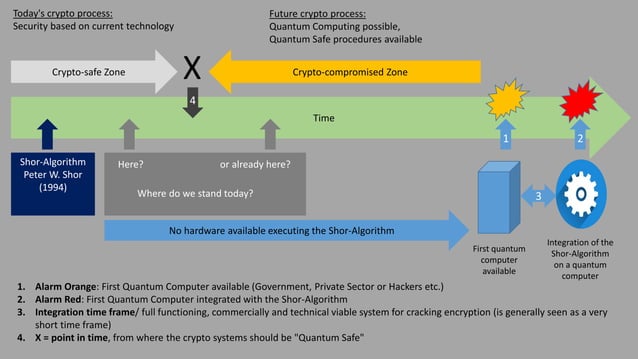
This development underscores a critical distinction in how digital assets are secured. While Bitcoin’s current security model remains robust against traditional computational threats, the potential emergence of powerful quantum algorithms, such as Shor’s algorithm, necessitates a deeper understanding of how public keys are handled within the network. For investors and market observers, the distinction between assets that have never broadcast a public key and those that have is becoming a primary metric for assessing long-term risk.
Understanding Quantum Exposure in Digital Assets
At the heart of Bitcoin’s security is the mathematical relationship between private and public keys. A private key is used to generate a public key, which in turn creates the address used for transactions. Under current conditions, reversing this process to derive a private key from a public key is considered computationally impossible for modern hardware. However, the theoretical capability of quantum computers to perform these calculations at scale has prompted researchers to categorize assets based on their exposure.
According to the findings from Glassnode, the digital asset market requires a nuanced view of these risks. The firm identifies that while 13.99 million BTC—approximately 69.8% of the supply—remains shielded because the public keys have never been exposed on the blockchain, the remaining 6.04 million BTC are classified as exposed. This classification is based on the visibility of public keys, which are broadcast to the network during specific transaction types.
Structural vs. Operational Risk
The data provided by Glassnode highlights that not all exposed Bitcoin carries the same profile. The firm segments the 6.04 million BTC into distinct categories to better explain the nature of this risk. This granular approach helps institutional and individual investors distinguish between assets that may be inherently “exposed” due to their historical transaction patterns and those that have entered the public domain through more recent activity.
The technical reality is that if a public key has never appeared on the blockchain, it remains structurally shielded from the specific threat vector posed by quantum decryption. Conversely, for the 6.04 million BTC where the public key is known, the security of those assets relies entirely on the current inability of existing technology to invert the underlying elliptic curve cryptography. As quantum technology progresses, the industry continues to monitor these developments to ensure that long-term asset security remains a priority for network participants.
The Future of Blockchain Security
The conversation surrounding quantum risk is not merely academic; it is a fundamental aspect of digital asset market intelligence. Investors and researchers are increasingly utilizing advanced analytics to track capital flows and identify potential inflection points in asset security. By applying a quantitative framework to these variables, market participants can better navigate the complexities of digital asset cycles.

The primary concern for the ecosystem is ensuring that as computing power advances, the cryptographic protocols underpinning Bitcoin can evolve accordingly. This involves a ongoing assessment of how wallets interact with the network and whether future upgrades might mitigate the risks associated with historical public key exposure. For now, the distinction between protected and exposed assets remains a vital component of the broader discussion on cryptocurrency longevity and institutional-grade security.
Key Takeaways for Market Participants
- Defined Exposure: Roughly 30.2% of Bitcoin’s issued supply has visible public keys, categorized as having quantum risk exposure.
- Structural Shielding: Approximately 69.8% of the total supply remains protected because the associated public keys have not been broadcast on-chain.
- The Quantum Threat: The primary theoretical concern involves Shor’s algorithm, which could potentially reverse-engineer private keys if public keys are known.
- Data-Driven Analysis: Platforms like Glassnode provide the necessary metrics to help investors understand these complex market dynamics and institutional risks.
As the industry moves forward, the focus will likely remain on the intersection of technological advancement and cryptographic defense. For investors, the takeaway is clear: understanding the underlying architecture of one’s holdings is as important as monitoring market sentiment or capital flows. Stakeholders are encouraged to follow official updates from blockchain research organizations and maintain vigilance regarding security protocols.
What are your thoughts on the impact of quantum computing on digital asset security? Share your perspective with our community in the comments section below.