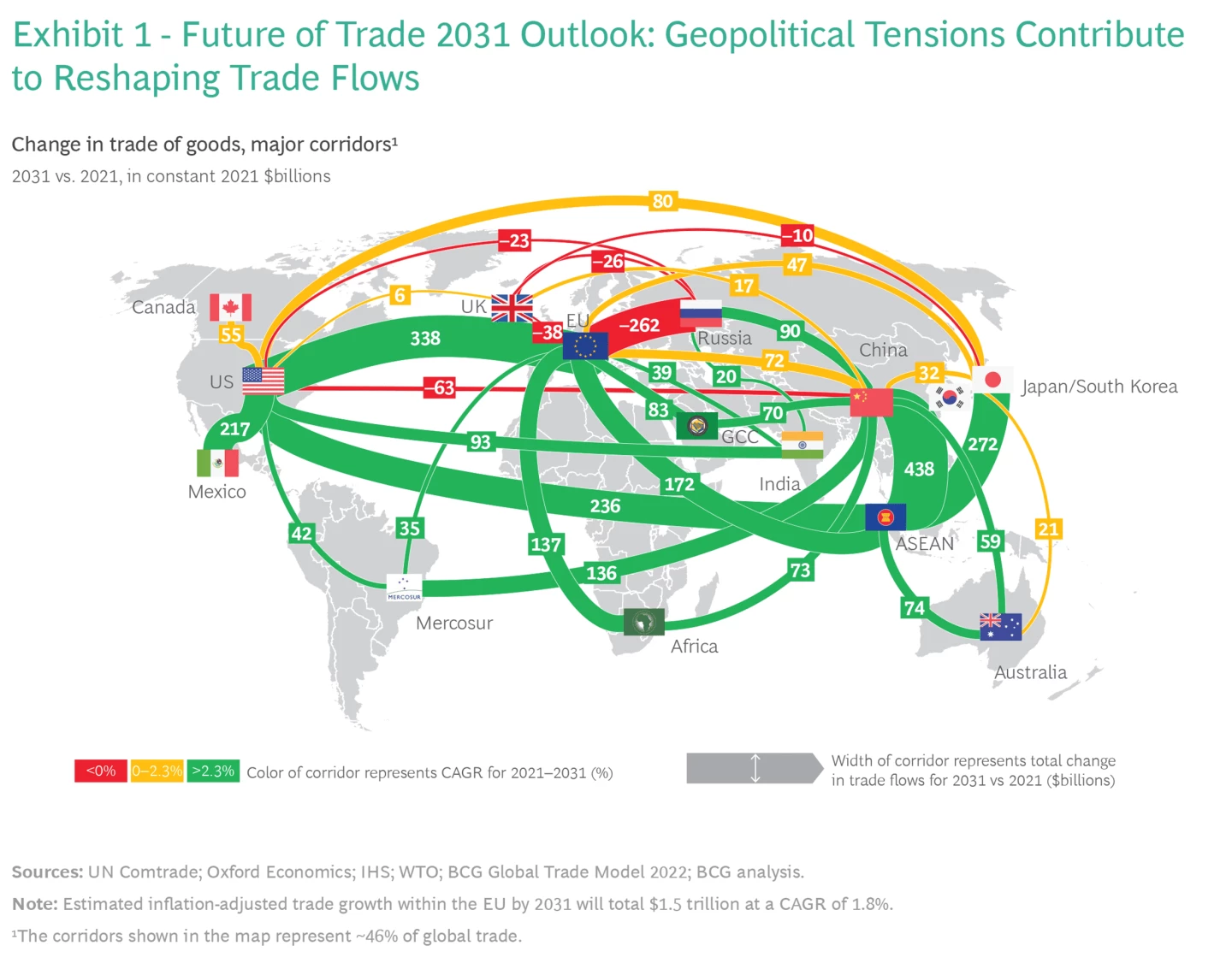
The vast expanse of the South China Sea is often viewed as a distant maritime dispute, a clash of maps and coordinates between regional powers. However, for the global economy, this region represents one of the most critical “bottlenecks” in existence. When we analyze the South China Sea conflict US China dynamic, we are not merely looking at a territorial disagreement over coral reefs and fishing rights; we are witnessing a high-stakes struggle for the control of the arteries of global trade.
As a financial journalist who has spent nearly two decades analyzing the intersection of economic policy and geopolitical risk, I have observed that the South China Sea is where the abstract concepts of “hegemony” and “strategic depth” become tangible. The waters are a conduit for a staggering volume of the world’s commerce, making any instability here a systemic risk to global supply chains. For the United States and China, the region is the primary stage for a broader competition over who will define the rules of the 21st-century international order.
The tension is exacerbated by a fundamental clash of perspectives. Beijing views its claims through the lens of historical right and national rejuvenation, seeking to erase what it perceives as a legacy of foreign imposition. Washington, conversely, frames its presence as a defense of the “rules-based international order,” emphasizing the freedom of navigation that allows global markets to function without the permission of a single dominant power. This stalemate has turned a critical trade route into a volatile conflict zone.
The Economic Arteries: Why the “Bottleneck” Matters
To understand the intensity of the South China Sea conflict US China, one must first understand the sheer scale of the economic activity at stake. The South China Sea is not just a body of water; it is a primary maritime highway. A significant portion of global trade passes through these waters, including the critical Strait of Malacca, which serves as the primary chokepoint for oil and liquefied natural gas (LNG) flowing from the Middle East to the industrial hubs of East Asia.
The economic stakes are measured in trillions. According to data analyzed by the Center for Strategic and International Studies (CSIS), trillions of dollars in trade pass through these waters annually. For China, this is the “Malacca Dilemma”—the fear that a hostile power, specifically the United States, could blockade the strait during a conflict, effectively strangling China’s energy imports and economic lifeline.
This vulnerability drives Beijing’s strategic drive to secure “undisputed” control over the sea. By establishing a dominant presence, China aims to mitigate this risk and project power further into the Pacific and Indian Oceans. For the rest of the world, however, the prospect of a single nation controlling these waters introduces a dangerous precedent: the possibility that trade access could be used as a geopolitical weapon.
The Legal Battleground: UNCLOS and the Nine-Dash Line
At the heart of the conflict is a profound disagreement over international law. China bases its claims on the “Nine-Dash Line,” a vaguely defined boundary that encompasses roughly 80% to 90% of the South China Sea. This claim overlaps with the Exclusive Economic Zones (EEZs) of several other nations, including Vietnam, the Philippines, Malaysia, and Brunei.
The primary international framework for these disputes is the United Nations Convention on the Law of the Sea (UNCLOS), which defines the rights and responsibilities of nations regarding the use of the world’s oceans. Under UNCLOS, coastal states are granted an EEZ extending 200 nautical miles from their shores, within which they have sole rights to natural resources, including fish and minerals.
The tension reached a legal peak in 2016. The Permanent Court of Arbitration in The Hague, acting on a case brought by the Philippines, issued a landmark ruling that invalidated China’s “historic rights” claims within the Nine-Dash Line. The court found that there was no legal basis for China to claim historic rights to resources within the sea areas falling within the “nine-dash line.” Beijing, however, refused to participate in the proceedings and has since dismissed the ruling as “null and void,” continuing its assertions of sovereignty through physical presence and administrative control.
The “Great Wall of Sand”: Militarization and Artificial Islands
While legal arguments continue in international forums, the reality on the water has been reshaped by concrete and steel. Over the last decade, China has engaged in an unprecedented campaign of land reclamation, transforming submerged reefs and rocks into artificial islands. These features, located primarily in the Spratly and Paracel Islands, have been expanded into fortified bases.
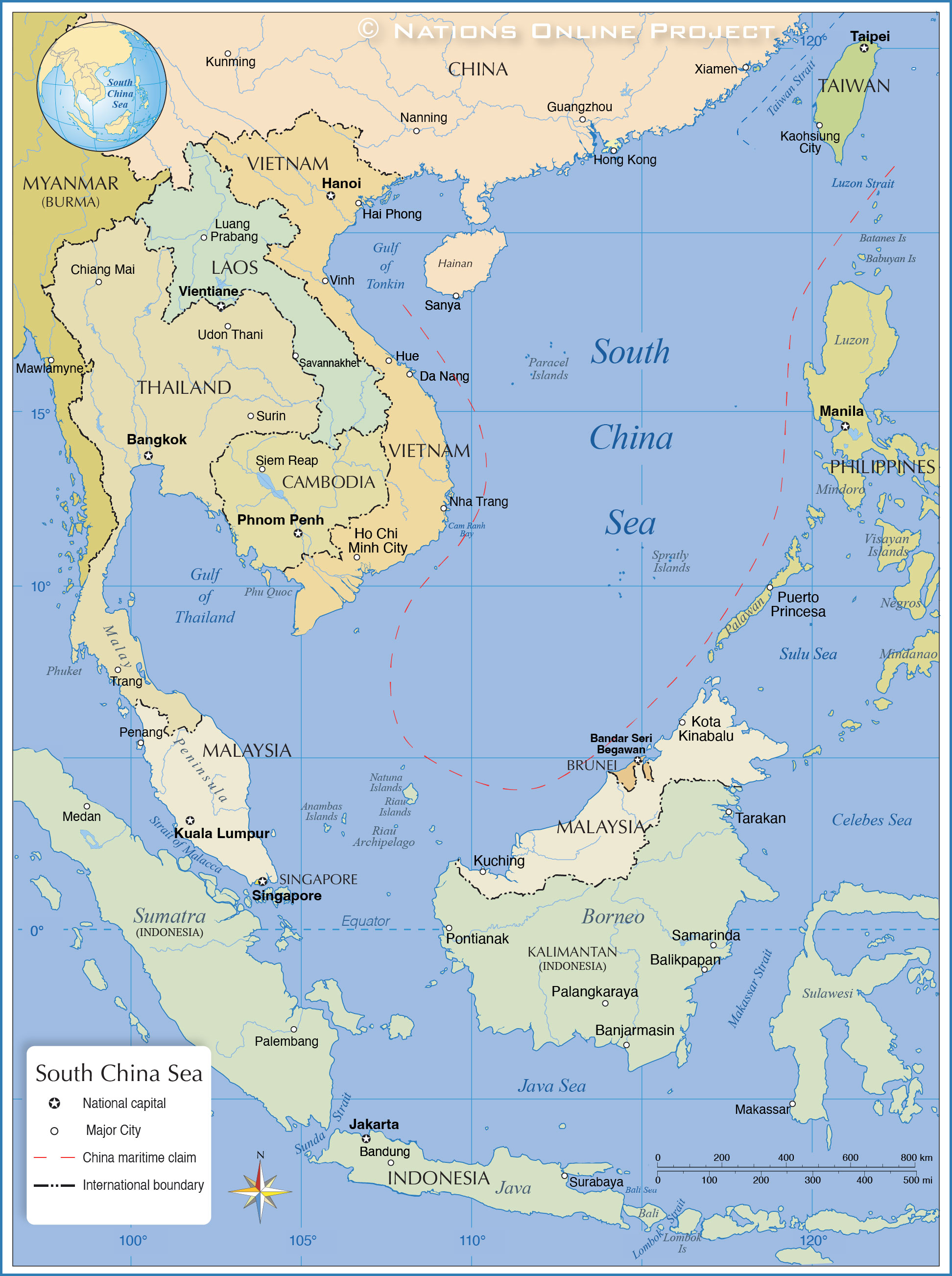
These artificial islands serve several strategic purposes. First, they allow China to project power far from its mainland, providing airfields, radar installations, and deep-water ports for the People’s Liberation Army Navy (PLAN). Second, they create a “fait accompli” on the ground; once a reef is turned into a military base with runways and missile batteries, removing that presence becomes a military operation rather than a diplomatic negotiation.
The militarization of these features has fundamentally altered the security calculus for ASEAN (Association of Southeast Asian Nations) members. Smaller nations now find themselves in a position where they must balance their economic reliance on China—which remains their largest trading partner—with the need to protect their sovereign rights to fisheries and undersea oil and gas reserves.
The US Response: Freedom of Navigation and Alliances
The United States, while not a claimant in the South China Sea, maintains that it has a vital national interest in ensuring the region remains “free and open.” The primary tool for this is the Freedom of Navigation Operation (FONOP). In these missions, the US Navy sails warships through waters that Beijing claims as its own to challenge “excessive maritime claims” and signal that the US does not recognize China’s attempts to restrict international transit.
Beyond individual naval patrols, Washington has shifted toward a strategy of “integrated deterrence,” building a network of security alliances to counter Chinese influence. This includes the strengthening of ties with the Philippines and Japan, as well as the formation of new security pacts like AUKUS (Australia, UK, US) and the revitalization of the Quad (US, India, Japan, Australia). These alliances are designed to create a counterbalance to China’s naval expansion, ensuring that no single power can unilaterally dictate the terms of movement in the Indo-Pacific.
This strategy, however, creates a precarious “security dilemma.” As the US increases its presence to deter China, Beijing views these moves as “encirclement” and “containment,” which in turn justifies further militarization of the South China Sea. This cycle of action and reaction increases the risk of a tactical miscalculation—a collision between ships or a mid-air encounter between aircraft—that could escalate into a broader conflict.
The Historical Echo: From the Opium Wars to Today
To understand the emotional and political intensity of China’s current maritime strategy, one must look back to the mid-19th century. The “Century of Humiliation,” a period of foreign intervention and internal collapse, began largely with the First Opium War (1839–1842). That conflict, fought between the Qing Dynasty and the British Empire, ended with the Treaty of Nanking, which forced China to cede Hong Kong and open several ports to foreign trade.
For the current leadership in Beijing, the South China Sea is not just about fish or oil; it is about ensuring that China is never again vulnerable to the whims of foreign naval powers. The memory of the Opium Wars serves as a powerful domestic narrative, framing the current maritime assertions as a necessary step in reclaiming China’s rightful place in the world. When the US speaks of “international law,” Beijing often hears the echo of the “unequal treaties” imposed upon it in the 1800s.
This historical grievance makes the conflict particularly difficult to resolve. While the US views the dispute through a legal and strategic lens, China views it through a lens of national dignity and historical justice. When a dispute is framed as a matter of national survival and honor, the room for diplomatic compromise shrinks significantly.
What This Means for the Global Economy
The South China Sea conflict US China is not a localized event; it is a systemic risk factor for every investor, business owner, and consumer globally. The potential for disruption manifests in three primary ways:

- Supply Chain Fragility: A significant portion of the world’s semiconductors and electronic components are shipped through these waters. Any disruption would trigger immediate shortages in the automotive, consumer electronics, and medical device sectors.
- Energy Volatility: With a massive share of LNG and crude oil passing through the Strait of Malacca and the South China Sea, a conflict would lead to an immediate spike in global energy prices, mirroring or exceeding the volatility seen during the 2022 energy crisis.
- Insurance and Freight Costs: Even without an active conflict, the increased risk of instability leads to higher maritime insurance premiums and diverted shipping routes, which ultimately increases the cost of imported goods.
The “bottleneck” effect is real. If the South China Sea becomes a contested war zone, the global economy would be forced to find alternative routes, which are longer, more expensive, and lack the existing infrastructure to handle current volumes of trade.
Strategic Comparison: Then vs. Now
| Feature | 19th Century (Opium Wars) | 21st Century (Current Conflict) |
|---|---|---|
| Primary Driver | Trade access & Opium markets | Strategic depth & Resource security |
| Key Technology | Steam-powered ironclads | Hypersonic missiles & AI-driven drones |
| Legal Framework | “Might makes right” / Treaties | UNCLOS / International Arbitration |
| Global Impact | Regional destabilization | Systemic global economic risk |
What Happens Next?
The trajectory of the South China Sea depends on whether the US and China can establish “guardrails”—clear communication channels and agreed-upon rules of engagement to prevent a tactical accident from becoming a strategic catastrophe. While high-level diplomatic meetings continue, the operational reality on the water remains tense.
The next critical checkpoint will be the upcoming ASEAN summits, where member states will attempt to finalize a “Code of Conduct” for the South China Sea. While a legally binding code has been elusive for years, any progress toward a framework that limits military escalation would be a positive signal for global markets. The continued expansion of US-Philippine joint patrols will likely be a key indicator of how Washington intends to maintain its presence in the region throughout 2026.
As we navigate this era of geopolitical realignment, the South China Sea remains the ultimate litmus test for whether the world’s two largest economies can coexist in a state of competitive peace, or whether the “bottlenecks” of the global economy will eventually become its breaking points.
Do you believe the current strategy of “integrated deterrence” is enough to prevent conflict in the Indo-Pacific, or is a new diplomatic approach required? Share your thoughts in the comments below.
Worth a look