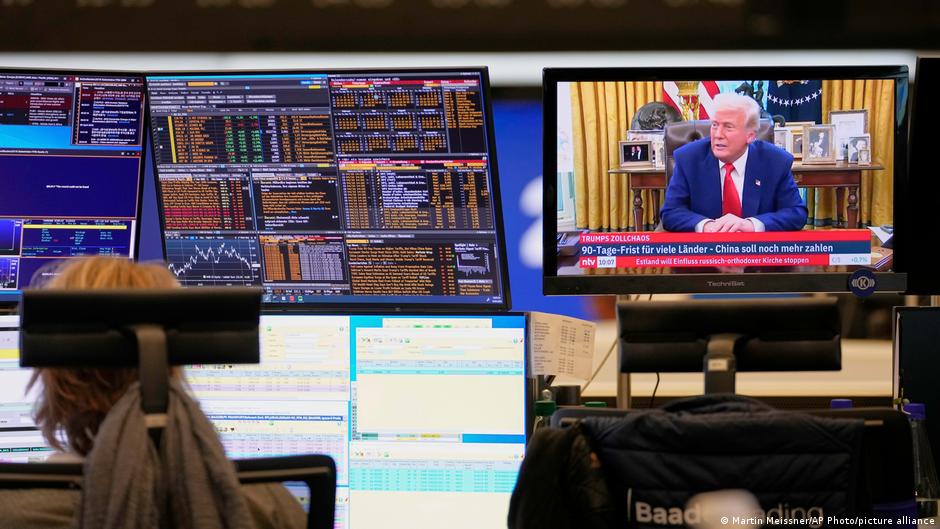
Global markets reacted sharply on Monday, March 2, 2026, to the escalating conflict in the Middle East following a major joint military operation launched by the United States and Israel against Iran. European stock exchanges experienced significant declines, while oil prices surged amid fears of supply disruptions. The situation is particularly volatile as Iran has warned against any attempts to impede its oil exports through the Strait of Hormuz, a critical waterway for global energy supplies. This comes after confirmation from President Donald Trump that Iran’s Supreme Leader, Ayatollah Ali Khamenei, was killed in the operation, a move that has dramatically heightened tensions in the region.
The immediate market response saw widespread selling across European bourses. Investors are grappling with the potential for a prolonged conflict and the broader economic implications of instability in a region vital to global energy markets. The uncertainty is compounded by shifting signals from the Trump administration regarding the possibility of negotiations, with the President stating that talks are now “too late” despite initial overtures from Iran, according to CNN reporting. This complex dynamic is fueling investor anxiety and driving a flight to safe-haven assets.
The attacks, confirmed by President Trump, represent a significant escalation in the long-standing tensions between Iran and the US-Israel alliance. The operation targeted Iranian military sites in Tehran and Beirut, as well as positions held by the Iran-backed Hezbollah group in Lebanon. Notably, the United Nations has confirmed damage to a nuclear facility in Iran, marking the first such incident since the commencement of the military offensive. The situation is rapidly evolving, with the US closing its embassies in Saudi Arabia and Kuwait and advising Americans to depart from over a dozen countries in the Middle East, signaling a heightened security risk.
European Markets Plunge Amidst Geopolitical Uncertainty
European stock markets experienced substantial losses on Monday, reflecting investor concerns about the economic fallout from the escalating conflict. According to reports, Madrid’s stock exchange saw the largest decline, falling 2.62%, its steepest drop since President Trump announced the imposition of tariffs following the “day of the liberation” in April. Frankfurt followed with a 2.57% decrease, while Paris, Milan, and London experienced declines of 2.17%, 1.97%, and 1.2% respectively. The Euro also weakened, losing 1.1% of its value and trading at $1.168, a level not seen since January.
Asian Markets Mixed, Oil Prices Soar
Asian markets presented a more mixed picture. Hong Kong’s Hang Seng Index fell by 2.14%, and Tokyo’s Nikkei 225 declined by 1.35%. However, the CSI 300 index of the Shanghai and Shenzhen stock exchanges bucked the trend, rising by 0.38%. Wall Street closed with a mixed performance, with the Dow Jones Industrial Average down 0.15%, while the S&P 500 edged up 0.04% to 6,881 points and the Nasdaq advanced 0.36% to 22,748 points.
The most dramatic impact was felt in the energy markets. The price of Brent crude oil surged 6.68% to $77.74 per barrel at the close of trading on the London Futures Market. This increase was driven by fears of supply disruptions, particularly after the Iranian Revolutionary Guard Corps (IRGC) warned that it would not allow “a drop of oil” to pass through the Strait of Hormuz and threatened to set fire to any vessel attempting to transit the strategic waterway. The price of North Sea crude, a European benchmark, rose by $4.87 to $72.87 a barrel, while West Texas Intermediate (WTI) crude climbed 6.28% to $71.23 a barrel. Natural gas prices in Europe also saw a significant increase, rising by 35% to around $43 on the Dutch TTF futures market.
Safe-Haven Assets See Increased Demand
As investors sought safe-haven assets, the price of gold rose sharply, increasing by 1.98% to $5,320 per ounce after the US stock market closed. Silver also saw movement, trading at $90.17, though with a 3.43% decrease. Bitcoin experienced gains, rising 5.47% to $69,358. These movements reflect a broader trend of investors shifting away from riskier assets towards perceived safer investments during times of geopolitical instability.
The Strait of Hormuz: A Critical Chokepoint
The Strait of Hormuz, a narrow waterway connecting the Persian Gulf to the Gulf of Oman and the Arabian Sea, is one of the world’s most strategically important oil transit routes. Approximately 20% of global oil consumption passes through this strait daily, according to the U.S. Energy Information Administration. The EIA details the strategic importance of the Strait of Hormuz, highlighting the potential for significant disruptions to global oil supplies if the waterway were to be blocked. Iran’s threat to close the strait, poses a serious risk to the global economy.
Trump Administration’s Shifting Stance
President Trump’s statements regarding potential negotiations with Iran have been inconsistent. While initially indicating a willingness to engage in talks, he has since stated that the opportunity for diplomacy has passed. This shifting stance, as reported by CNN, has added to the uncertainty surrounding the conflict and complicated efforts to de-escalate the situation. The administration’s internal deliberations and lack of unified messaging have also been noted, contributing to the volatile market reaction.
The son of Iran’s late Supreme Leader, Ayatollah Ali Khamenei, Mojtaba Khamenei, has been reported alive by Iranian outlet Mehr News Agency, offering a small point of clarity amidst the broader turmoil. Pakistan has also reminded Iran of its mutual defense pact with Saudi Arabia in an effort to prevent further Iranian attacks on Saudi territory, according to reports, indicating a widening regional impact.
Looking Ahead: Potential Scenarios and Market Implications
The immediate future remains highly uncertain. The situation could escalate further if Iran retaliates against the US and Israel, potentially leading to a wider regional conflict. Alternatively, diplomatic efforts could emerge, although the President’s recent comments suggest that the prospects for negotiations are currently limited. The duration and intensity of the conflict will be key determinants of its impact on global markets.
Analysts are closely monitoring developments in the Strait of Hormuz, as any disruption to oil supplies could trigger a significant price spike. The potential for a prolonged conflict also raises concerns about the broader economic impact, including increased inflation, supply chain disruptions, and a slowdown in global growth. Investors are likely to remain cautious in the near term, favoring safe-haven assets and closely monitoring geopolitical developments.
The next key development to watch will be any official statement from the Iranian government regarding its response to the attacks. Further announcements from the Trump administration regarding its strategy and potential for negotiations will also be crucial. Market participants will be closely analyzing these developments to assess the evolving risks and opportunities.
Please share your thoughts on this developing situation in the comments below. Your insights are valuable as we navigate these complex global events.