
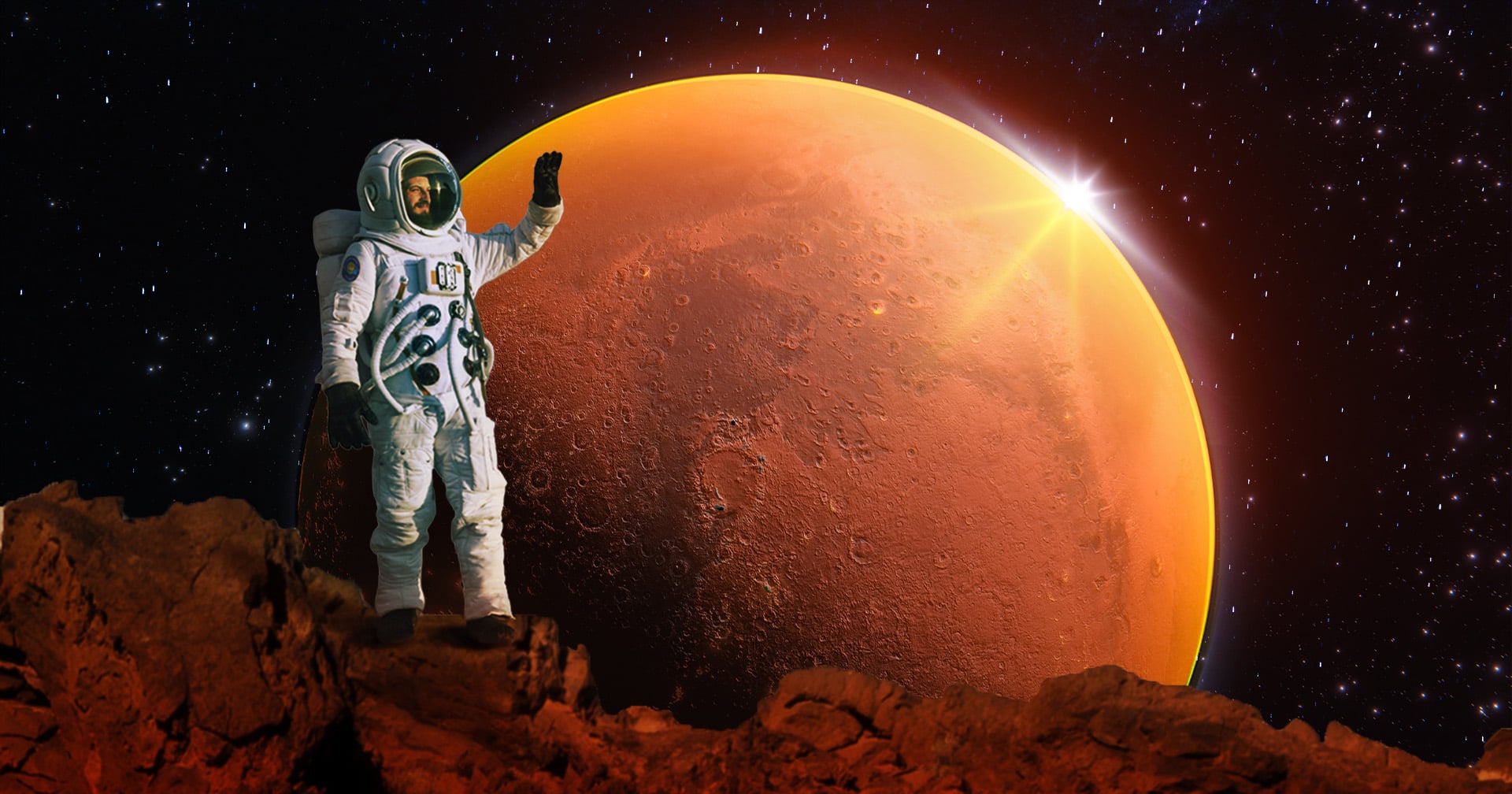
When imagining life on Mars, many picture glass domes, futuristic cities, or sleek spacecraft touching down on red sand. But beyond the science fiction lies a pressing question: can humans actually survive there? The dream of becoming a multiplanetary species hinges not just on reaching Mars, but on sustaining life in an environment that lacks breathable air, liquid water and protection from radiation.
According to recent analysis, survival on Mars will require a fundamental shift from relying on Earth-based supply chains to utilizing local resources through in-situ resource utilization (ISRU). This approach aims to convert Martian materials into essentials like oxygen, water, and building materials—turning the red planet’s challenges into opportunities for long-term habitation.
One of the most critical technologies under development is MOXIE (Mars Oxygen In-Situ Resource Utilization Experiment), which successfully produced oxygen from Martian carbon dioxide during the Perseverance rover mission. This breakthrough demonstrates that generating breathable air and rocket fuel on Mars is technically feasible, laying the groundwork for future human missions.
Water extraction is another key focus. Evidence from orbiters and landers indicates the presence of subsurface ice, particularly at the poles and in mid-latitudes. Techniques such as thermal drilling and microwave heating are being tested to access this ice, which could provide drinking water, support agriculture, and be split into hydrogen and oxygen for fuel and air.
Radiation protection remains a major hurdle. Without a thick atmosphere or global magnetic field, Mars exposes inhabitants to high levels of cosmic and solar radiation. Proposed solutions include building habitats underground, using regolith (Martian soil) as shielding, or developing advanced materials that absorb or deflect radiation.
Food production will also necessitate to adapt to Martian conditions. Experiments on the International Space Station have shown that plants can grow in controlled environments using LED lighting and nutrient-rich hydroponic systems. On Mars, greenhouses would need to maintain pressure, temperature, and light levels while protecting crops from radiation and dust storms.
Psychological and social factors are equally important. Long-duration isolation, confinement, and distance from Earth could impact mental health. Mission planners emphasize the need for robust communication systems, meaningful work, and recreational activities to support crew well-being during extended stays.
While no human has yet set foot on Mars, robotic explorers like Perseverance, Curiosity, and China’s Zhurong rover continue to gather data on geology, climate, and potential resources. These missions inform the design of future habitats, life support systems, and exploration strategies.
International collaboration is shaping the roadmap to Mars. NASA’s Artemis program, which aims to return humans to the Moon, is viewed as a stepping stone for testing deep space technologies. Partnerships with space agencies in Europe, Japan, Canada, and the UAE, along with private companies like SpaceX, are accelerating progress toward crewed missions in the 2030s or 2040s.
As research advances, the focus remains on turning vision into viability. Every experiment on Earth and in space brings us closer to answering not just whether we can go to Mars, but whether we can stay.