
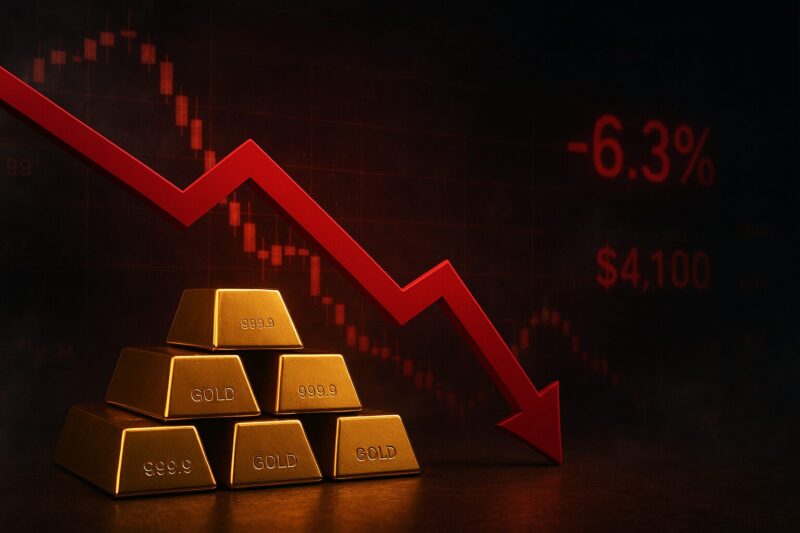
Gold prices have dropped below 1,000 baht per gram for the first time since June 30, reflecting global trends as investors respond to aggressive monetary policy tightening and a weakening outlook for inflation-linked assets. The sell-off accelerated this week after central banks signaled caution on rate cuts. Analysts warn the trend could continue unless geopolitical risks escalate or economic data shows a sharp slowdown.
According to data from the London Bullion Market Association (LBMA), gold prices in Bangkok traded at 1,000 baht per gram lower than the previous session, reflecting global trends. The decline has triggered profit-taking among hedge funds and retail investors, with some asset managers describing the move as a “correction long overdue” after gold’s rally earlier this year.
Central banks, which have been net buyers of gold for years as a hedge against currency risks, have also slowed purchases in 2024. The World Gold Council reported that official sector demand dropped significantly year-over-year in the first quarter, citing higher borrowing costs for sovereign reserves. Meanwhile, jewelry demand in India—a key market—has softened due to weaker consumer confidence and a stronger rupee against the dollar.
Why Are Investors Selling Gold?
The primary driver behind gold’s decline is the prospect of sustained high interest rates, which make non-yielding assets like gold less attractive. “When yields climb, the opportunity cost of holding gold increases,” said the World Gold Council, noting that investors now prefer Treasury bonds or dividend-paying stocks.

Another factor is the strengthening U.S. dollar, which has appreciated against major currencies this quarter. Gold, priced in dollars, becomes more expensive for foreign buyers when the greenback strengthens.
Geopolitical risks, which typically boost gold demand as a safe haven, have also failed to provide support. While tensions in the Red Sea and Middle East persist, markets appear to have priced in a limited escalation scenario. “The war in Ukraine and Middle East conflicts are still factors, but their impact on gold has diminished as investors focus more on central bank policy,” said Bloomberg Intelligence analyst Mike McGlone.
How Are Central Banks Reacting?
Central banks’ stance on gold has shifted subtly but meaningfully. While the People’s Bank of China continues to add to its reserves, the pace has slowed. The European Central Bank (ECB) and Bank of England have not announced new gold purchases since late 2023, citing concerns over funding costs.

Data from the International Monetary Fund’s latest World Economic Outlook suggests that emerging markets, which account for a significant portion of global gold demand, are cutting back on purchases due to tighter liquidity. “The cost of hedging with gold has risen as borrowing rates increase,” said IMF economist Pierre-Olivier Gourinchas.
What Happens Next for Gold Prices?
Short-term, gold prices could face further downward pressure if central banks delay rate cuts. However, analysts suggest that a potential economic slowdown could revive safe-haven demand.
In the longer term, structural factors may limit gold’s decline. The World Gold Council projects that central bank demand will remain robust, particularly in Asia, where governments view gold as a long-term reserve asset. Additionally, ETF holdings—currently at their highest since 2020—could provide support if markets turn volatile.
Key Takeaways for Investors
- Interest rates are the dominant driver: Higher yields reduce gold’s appeal as a non-income-generating asset.
- Central banks are buying less: Slower official sector demand contrasts with past trends of record purchases.
- Geopolitics is a double-edged sword: While conflicts persist, markets are less reactive unless risks escalate sharply.
- Dollar strength is a headwind: A stronger USD increases the cost of gold for foreign buyers.
- Economic slowdown fears could reverse the trend: Safe-haven flows may return if data weakens.
Where to Monitor Gold Market Updates
For real-time tracking of gold prices and central bank movements, investors can refer to:

- London Bullion Market Association (LBMA) – Official gold price benchmarks.
- World Gold Council – Quarterly demand reports and ETF trends.
- Federal Reserve Economic Data (FRED) – Interest rate and inflation updates.
- IMF World Economic Outlook – Global economic forecasts affecting gold demand.
The next major catalysts for gold will be economic data releases and central bank policy signals. Traders will watch for any shifts in the central bank’s language on rate cuts, which could determine whether gold’s decline continues or stabilizes.
Have insights or questions on gold’s outlook? Share your thoughts in the comments below or connect with our team for deeper analysis.