Gold Prices Drop as Trump’s Iran Comments Revive Inflation Fears – Market Analysis
Gold prices fell below $4,350 per ounce on Monday, marking a sharp reversal from last week’s rally as former U.S. President Donald Trump’s latest comments on potential U.S.-Iran tensions reignited inflation concerns and strengthened the U.S. Dollar. The move underscores how geopolitical risks and monetary policy expectations continue to dominate commodity markets, leaving investors questioning whether gold’s safe-haven appeal remains intact amid mixed signals from Washington.
After surging past $4,700 per ounce earlier this week on hopes of de-escalation in the Middle East, gold has since retreated as Trump’s remarks—suggesting a possible military response to Iranian actions—triggered a flight to the dollar and dampened demand for non-yielding assets. Meanwhile, stronger-than-expected U.S. Employment data has reinforced expectations of delayed Federal Reserve rate cuts, further pressuring gold’s near-term outlook. Here’s what investors need to know about the latest shifts and their implications for the weeks ahead.
The sell-off comes as traders reassess the balance between geopolitical uncertainty and inflation pressures. While gold typically benefits from safe-haven demand during crises, the current environment is complicated by:
- U.S. Dollar strength: A stronger dollar makes gold—priced in dollars—less attractive to foreign buyers.
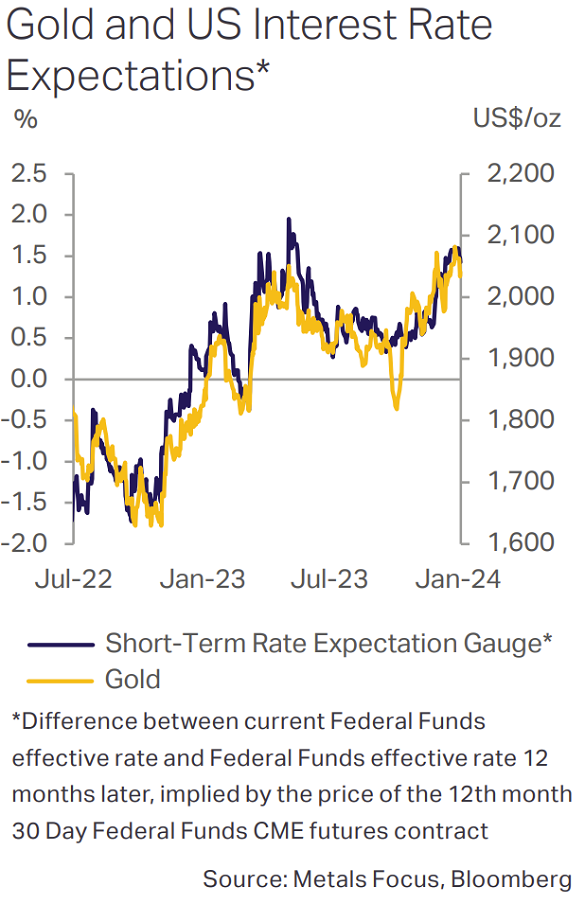
- Federal Reserve policy: With no rate cuts expected until late 2026, real yields on Treasury bonds remain compelling for investors seeking returns.
- Inflation expectations: Trump’s comments have revived concerns about energy price volatility, which could keep the Fed cautious.
According to Reuters, gold futures fell 1.8% on Monday, with spot prices trading around $4,340 per ounce by midday. The decline follows a 3.2% weekly gain that saw gold briefly hit its highest level since March, driven by hopes of a U.S.-Iran détente and weaker oil prices.
Why Did Gold Rally Earlier This Week?
Gold’s recent surge was fueled by three key factors:
- Middle East peace hopes: Reports of indirect U.S.-Iran talks—sparked by Saudi mediation—lifted expectations of reduced oil price volatility, a major driver of inflation fears. Lower oil prices historically reduce pressure on central banks to keep interest rates high.
- Weaker U.S. Dollar: A brief dip in the dollar’s value (measured by the DXY index) made gold more appealing to foreign investors, particularly from Asia.
- Safe-haven rotation: As equity markets faced profit-taking, gold absorbed capital from riskier assets, pushing prices toward $4,709 per ounce by Friday, per Bloomberg data.
Trump’s Iran Comments Trigger the Reversal
The shift began over the weekend when Trump, in a series of posts on Truth Social, suggested that the U.S. Could respond militarily to Iranian attacks on shipping lanes in the Strait of Hormuz. While Trump has not assumed office, his influence over U.S. Foreign policy remains significant, and his remarks sent ripples through global markets.
“The world is watching Iran’s aggression. If they attack our allies or our ships, there will be a price to pay. The U.S. Is not backing down.”
The comments revived fears of escalating regional conflict, which typically boosts gold as a hedge. However, this time the reaction was muted because:
- Inflation fears outweighed safe-haven demand: Traders interpreted the remarks as a signal that the Fed might delay rate cuts further, keeping real yields attractive.
- The dollar strengthened: The U.S. Currency rose against major peers, including the euro and yen, as investors sought liquidity in the world’s reserve currency.
- Gold’s rally had run its course: After a 5% gain in April, many investors had already taken profits, reducing buying pressure.
What’s Next for Gold? Key Factors to Watch
With gold now trading near $4,340 per ounce, the path forward depends on three critical developments:
1. U.S.-Iran Diplomatic Progress (or Lack Thereof)
Any confirmation of direct or indirect talks between Washington and Tehran could reignite safe-haven demand for gold. Conversely, further escalation—such as Iranian attacks on U.S. Or allied forces—would likely send gold prices higher. Investors will be watching:

- Statements from the U.S. State Department on diplomatic channels.
- Reports from Reuters or BBC on Saudi or EU mediation efforts.
- Iranian responses via state media, such as IRNA.
2. Federal Reserve Policy Signals
The Fed’s next move on interest rates will be the single biggest driver of gold’s trajectory. Key data points to monitor:
- June 19 CPI report: If inflation cools further, the Fed may signal a September rate cut, which would weaken the dollar and support gold.
- Fed Chair Jerome Powell’s testimony on May 22 before the Senate Banking Committee. Any hints about the dot plot projections could move markets.
- U.S. Treasury yields: If the 10-year yield (currently ~4.1%) rises above 4.2%, gold could face further pressure.
3. Geopolitical Risks Beyond Iran
Gold is also sensitive to broader conflicts, including:
- Red Sea shipping disruptions: Attacks by Houthi rebels (backed by Iran) have already raised insurance costs for global trade.
- Ukraine war developments: Any major escalation could trigger another wave of safe-haven buying.
- China’s economic data: Weakness in the world’s second-largest gold buyer could limit upside.
Key Takeaways for Investors
- Short-term outlook: Gold is likely to remain range-bound between $4,300–$4,500 per ounce until Fed policy clarity emerges.
- Safe-haven demand is still intact but overshadowed by inflation fears and dollar strength.
- Trump’s influence on markets persists, especially on geopolitical risks.
- Mining stocks (e.g., Barrick Gold, Newmont) may underperform gold itself if the metal stays volatile.
- Watch the June jobs report (May 3) for further Fed hints on rate cuts.
What Should Investors Do Now?
Given the uncertainty, here are three strategies to consider:

- Dollar-hedged gold exposure: Investors in euros or yen may benefit from gold’s relative strength against the dollar.
- Gold ETFs vs. Physical: ETFs like SPDR Gold Shares (GLD) offer liquidity, while physical gold remains a hedge against systemic risks.
- Diversify into silver and platinum: These metals often move differently than gold and can provide additional downside protection.
For the latest updates, monitor:
- World Gold Council for market reports.
- CME Group for gold futures data.
- U.S. Global Investors for gold-related commentary.
Next Checkpoint: Fed Testimony & Jobs Data
The next major catalyst will be Federal Reserve Chair Jerome Powell’s testimony on May 22, where he is expected to address inflation concerns and the outlook for rate cuts. The May jobs report (May 3) will be critical in determining whether the Fed stays the course or signals a pivot.
Until then, gold traders will remain glued to developments in the Middle East, U.S. Treasury yields, and any further remarks from Trump or other political figures. With no clear resolution in sight, the metal’s volatility is likely to persist.
What are your thoughts on gold’s next move? Share your analysis in the comments below, or follow our Business section for real-time updates.