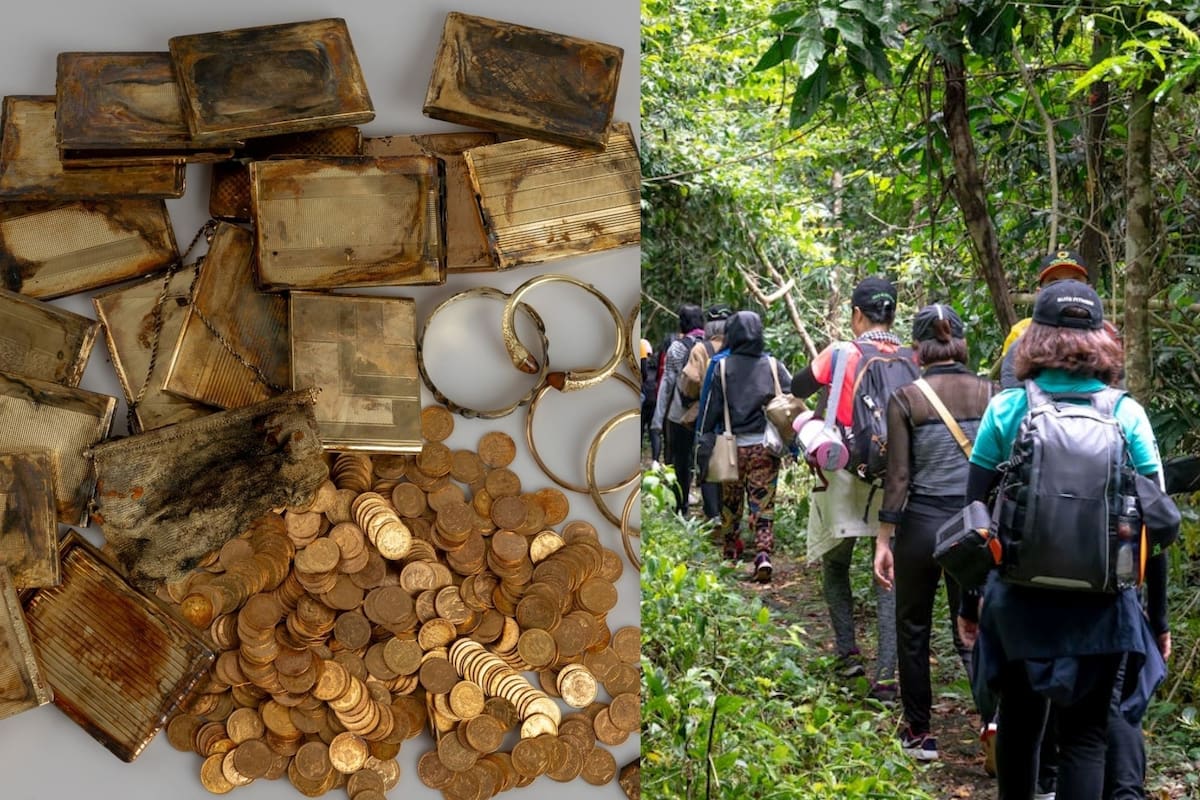
Two hikers exploring the Krkonoše Mountains in the Czech Republic made an extraordinary discovery in 2025 when they uncovered a hidden cache containing nearly 600 gold coins and other valuable artifacts, according to verified reports from multiple regional news sources.
The find, which included an aluminum canister and an iron box, has been valued at approximately $330,000 based on the gold content alone, with additional historical significance attributed to the diverse origins of the coins and accompanying jewelry. Experts at the Museum of Eastern Bohemia in Hradec Králové assessed the collection, confirming the coins date from between 1808 and 1915 and represent several European nations, including France, Turkey, Belgium, Romania, Italy, Russia, and Austria-Hungary.
Upon discovering the aluminum container protruding from a stone wall, the hikers excavated the site and found 598 gold coins in remarkably preserved condition. A short distance away, they located a second container — an iron box — containing personal items such as jewelry, cigarette tins, and other objects crafted from precious metals. Both containers were subsequently handed over to the museum for preservation and study.
Museum officials confirmed that the treasure had remained hidden for approximately 100 years before its discovery. Even as the exact circumstances of how the cache came to be buried remain under investigation, specialists note that concealing valuables during periods of instability was a known historical practice in the region. The museum’s director, Petr Grulich, stated that it was not possible to determine whether the treasure originated from Czech, German, or Jewish sources due to the complex mix of nationalities represented in the coinage.
As part of an agreement with the finders, the museum has committed to providing the hikers with a 10% commission of the total assessed value of the discovery. The institution has also assumed full custody of the collection and plans to display the artifacts to the public, emphasizing their value not only as precious metal but as historical evidence of personal wealth preservation during turbulent times.
The discovery has sparked interest among historians and numismatists, who view the assortment of coins from multiple empires and kingdoms as indicative of either extensive trade networks or deliberate efforts to diversify holdings ahead of potential currency devaluations or political upheavals. Yet, no definitive link has been established to any specific individual, group, or historical event, and researchers continue to analyze the context in which the items were concealed.
While the monetary value of the gold has been quantified, museum representatives stress that the cultural and historical importance of the find may ultimately surpass its material worth. The preservation of everyday personal items alongside formal currency offers rare insight into the lives of individuals who sought to safeguard their belongings during uncertain periods in Central European history.
As of April 2025, the Museum of Eastern Bohemia continues to catalog and study the collection, with plans to integrate the artifacts into its permanent exhibition on regional history and economic resilience. No further public announcements regarding additional research findings or exhibition dates have been made at this time.
Readers interested in updates about this discovery or similar archaeological finds are encouraged to follow official communications from the Museum of Eastern Bohemia and verified cultural heritage institutions in the Czech Republic.
Related reading