Google’s Bold infrastructure play: Custom Silicon, Advanced Cooling, and the Future of AI Inference
The artificial intelligence landscape is undergoing a seismic shift. While nvidia currently dominates the AI accelerator market,a new wave of investment in custom silicon by major cloud providers - spearheaded by Google – is challenging that dominance and reshaping the future of AI infrastructure. This isn’t just about building faster chips; it’s a strategic move to control the entire AI stack, from model research to deployment, and deliver unparalleled performance and efficiency to customers.
The Rise of Custom Silicon: A Response to Growing Demand & Economic Pressures
For years, Nvidia has held an estimated 80-95% market share in AI accelerators, largely due to the maturity and widespread adoption of its CUDA platform. However, the escalating costs and limitations of relying solely on off-the-shelf GPUs are driving cloud providers to explore alternative solutions. Amazon Web services (AWS) led the charge with its Graviton Arm-based CPUs, Inferentia, and Trainium AI chips. Microsoft followed suit with Cobalt processors and ongoing development of dedicated AI accelerators. Now,Google is positioning itself as the leader with the most comprehensive custom silicon portfolio among the major players.
This isn’t a simple cost-cutting exercise. Developing custom chips requires significant upfront investment – often billions of dollars – and carries inherent risks. The software ecosystem for specialized accelerators is still maturing, lagging behind the established CUDA framework. Moreover, the rapid evolution of AI model architectures introduces the possibility that today’s optimized silicon could become obsolete tomorrow.
Tho, Google argues that the benefits outweigh the challenges. Their approach, honed over a decade with the development of the Tensor Processing Unit (TPU), centers on vertical integration.As Google points out, the original TPU unlocked the invention of the Transformer architecture - the foundation of many modern AI applications – precisely because of this tight coupling between model research, software, and hardware development. This holistic approach allows for optimizations simply unattainable with generic hardware.
Ironwood & Beyond: Google’s Latest Innovations in AI inference
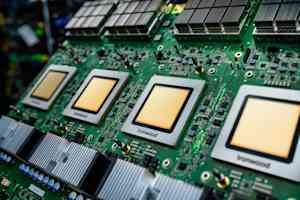
Google recently unveiled its latest advancements, including the Ironwood accelerator, specifically designed for AI inference - the process of using trained models to make predictions. Early testing with Anthropic, a leading AI safety and research company, has been so promising that they’ve committed to accessing up to one million Ironwood chips. This commitment underscores the potential of Google’s custom silicon to deliver significant performance gains and cost efficiencies.
Beyond the chips themselves, Google is tackling another critical challenge: cooling. As AI accelerator chips become increasingly powerful, dissipating 1,000 watts or more, traditional air cooling becomes insufficient. Water, with its superior heat transfer capabilities (approximately 4,000 times more heat per unit volume than air), is essential.Google has deployed liquid cooling “at GigaWatt scale across more than 2,000 TPU Pods in the past seven years,” achieving an impressive fleet-wide availability of approximately 99.999%. Demonstrating their commitment to open innovation, Google is contributing its fifth-generation cooling distribution unit design to the Open Compute Project, fostering collaboration and accelerating advancements in data center cooling technology.
Why This Matters: The Infrastructure Layer as a Competitive Advantage
The implications of Google’s strategy extend far beyond simply offering faster AI processing. As the AI industry matures and transitions from research to large-scale production deployments serving billions of users, the underlying infrastructure – the silicon, software, networking, power, and cooling – will become increasingly critical.
This infrastructure layer represents a significant competitive advantage.By controlling the entire stack, Google can:
* Optimize for Specific Workloads: Custom silicon allows for tailoring hardware to the unique demands of specific AI models and applications.
* Reduce Costs: Improved efficiency translates to lower energy consumption and reduced operational expenses.
* Accelerate Innovation: Tight integration between hardware and software fosters faster iteration and the development of cutting-edge AI capabilities.
* Offer Differentiated Services: Google can provide customers with access to infrastructure that delivers superior performance and cost-effectiveness compared to generic cloud offerings.
Lightricks, a developer of creative AI tools, has already reported “highly enthusiastic” results from early Ironwood testing, anticipating the creation of “more nuanced, precise, and higher-fidelity image and video generation.” This real-world feedback highlights the tangible benefits of Google’s approach.
Looking Ahead: Sustainability, Scalability, and the Future of AI
Several key questions remain. Can the industry sustain the current level of infrastructure investment, with companies collectively committing hundreds of billions of dollars? Will custom silicon ultimately prove more economically viable than relying on Nvidia GPUs? And how will
Related reading