
For years, the phrase Hey Google
served as the primary bridge between drivers and their vehicles. Google Assistant became the industry standard for voice-activated navigation, hands-free calling, and media control, offering a predictable, command-based interface that prioritized utility over conversation. However, the era of the rigid voice command is drawing to a close as Google pivots toward a more fluid, generative future.
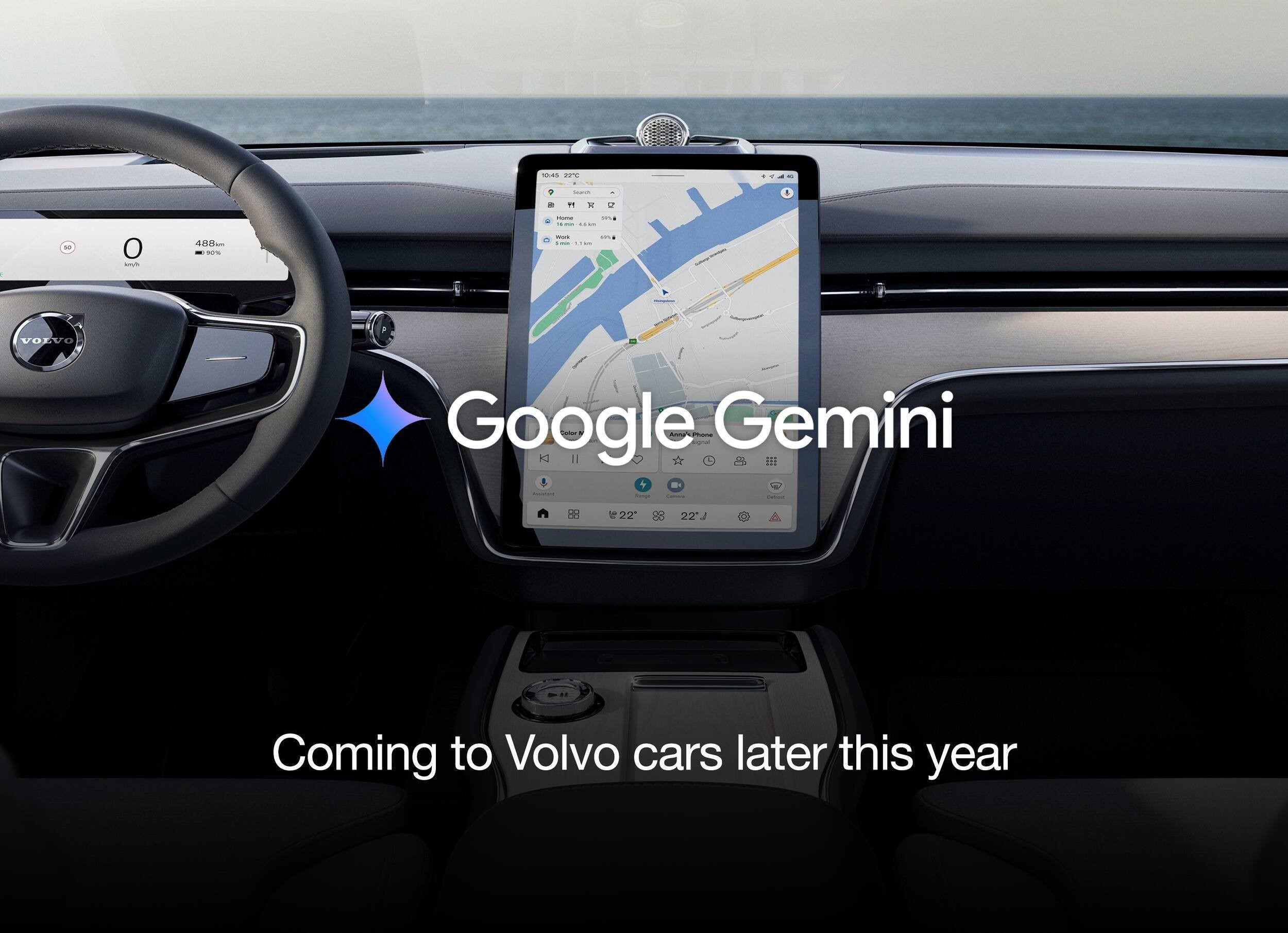
Google is systematically replacing the traditional Google Assistant with Gemini, its suite of multimodal large language models (LLMs). This transition is not limited to smartphones; it extends deeply into the automotive ecosystem, specifically targeting Android Automotive OS—the comprehensive operating system embedded directly into a vehicle’s hardware, as opposed to Android Auto, which merely projects a phone’s interface onto a screen.
This shift represents a fundamental change in how humans interact with machines while driving. While Google Assistant relied on a library of pre-defined intents—essentially a sophisticated “if-this-then-that” system—Gemini leverages generative AI to understand nuance, context, and complex multi-step requests. For the global driver, In other words the dashboard is evolving from a tool that executes commands into a digital co-pilot capable of reasoning.
The Evolution from Assistant to Gemini in the Cabin
The transition to Gemini is part of a broader strategic overhaul by Google to integrate generative AI across its entire product surface. In the automotive context, this means moving away from the “command-and-control” model. Google Assistant was efficient for tasks like set a timer for 10 minutes
or navigate to the nearest gas station
, but it often struggled with ambiguity or conversational follow-ups.
Gemini for Android Automotive is designed to handle these complexities. According to official announcements from Google’s official blog, the AI is capable of summarizing long email threads or text messages and drafting context-aware responses, allowing drivers to stay informed without reading lengthy screens. This multimodal capability allows the system to process information across different formats, ensuring that the interaction is as natural as speaking to a passenger.
It is critical to distinguish between the two automotive platforms during this rollout. Android Auto remains a projection service for mobile devices, while Android Automotive OS (AAOS) is the full-stack OS used by manufacturers like Volvo, Polestar, and General Motors. Gemini’s integration into AAOS allows the AI to interact more deeply with the car’s native systems, potentially managing climate control, seat adjustments, and vehicle diagnostics with a level of conversational fluidity previously unavailable.
Comparison: Google Assistant vs. Google Gemini
| Feature | Google Assistant (Legacy) | Google Gemini (Next-Gen) |
|---|---|---|
| Logic Base | Intent-based (Pre-defined scripts) | LLM-based (Generative reasoning) |
| Conversation | Linear, command-driven | Contextual, multi-turn dialogue |
| Message Handling | Reads messages verbatim | Summarizes long threads |
| Complexity | Simple, single-action tasks | Complex, multi-step requests |
| Integration | App-level triggers | Deep OS-level integration (AAOS) |
What This Means for the Driving Experience
The practical application of Gemini in the car extends beyond mere convenience; it addresses the “cognitive load” of the driver. Traditional assistants often required a specific phrasing to work; if the user deviated from the expected syntax, the system would frequently return the dreaded I don’t understand
response. Gemini eliminates this friction by understanding natural language patterns.
For example, instead of saying Navigate to a highly-rated Italian restaurant that is open now and has parking
, a driver can simply ask Where should I eat dinner tonight? I’m craving pasta and don’t want to hunt for parking
. The AI can process these preferences, cross-reference them with real-time Google Maps data, and provide a reasoned recommendation rather than just a list of search results.
the integration of Gemini allows for a more sophisticated “contextual awareness.” If a driver receives a series of messages about a changing meeting location, Gemini can summarize the final consensus and ask if the driver would like to update their destination, rather than reading every individual message in the thread. This reduction in auditory clutter is a significant safety improvement, reducing the time a driver spends focused on the interface rather than the road.
Technical Challenges: Latency, Safety, and Privacy
Moving from a local or lightweight cloud-based intent system to a massive LLM introduces significant technical hurdles, primarily regarding latency. For a voice assistant in a car, a three-second delay in response is not just an inconvenience; it is a safety hazard that may tempt the driver to look at the screen to see if the system is working.
To combat this, Google is employing a hybrid approach, utilizing smaller, optimized versions of the Gemini model that can run closer to the edge or via highly optimized cloud pipelines. The goal is to maintain the “instant” feel of Google Assistant while providing the intelligence of Gemini. This optimization is essential for maintaining the safety standards required for automotive certification.
Privacy also remains a primary concern. The transition to generative AI means the system is processing more complex, personal data to provide better summaries and responses. Google has stated that its AI principles guide these deployments, but the movement of voice data to the cloud for LLM processing remains a point of scrutiny for privacy advocates. Users will likely see more granular controls within the Android Automotive settings to manage how their data is used to train or refine these models.
Who is Affected and When?
The rollout of Gemini as the replacement for Google Assistant is occurring in phases. It began with the transition on mobile devices, where users can opt-in to replace Assistant with Gemini. In the automotive sector, the rollout is more complex as it requires coordination with Original Equipment Manufacturers (OEMs).
Vehicles already running Android Automotive OS are the primary candidates for over-the-air (OTA) updates. Owners of newer Volvo, Polestar, and GM vehicles are likely to see these capabilities appear as part of system updates. For those using Android Auto via a smartphone, the Gemini integration is tied more closely to the mobile app’s update cycle, meaning the “co-pilot” experience will arrive as soon as the Gemini app is fully integrated into the Android Auto projection layer.
Google is not removing the basic functionality of Assistant overnight. The “foundational” tasks—like turning on the lights or starting a call—will still function, but they will be powered by the Gemini engine. This ensures that there is no loss of utility during the migration.
Key Takeaways for Vehicle Owners
- Not a simple update: This is a change in the underlying AI architecture from intent-based to generative.
- Android Automotive vs. Android Auto: The deepest integration is happening in Android Automotive OS (the built-in system), though Android Auto (the phone projection) will also benefit.
- Enhanced Utility: Expect better message summarization, more natural conversations, and the ability to handle complex, multi-part requests.
- Safety Focus: The goal is to reduce driver distraction by providing concise, AI-generated summaries rather than long, verbatim read-outs.
The Road Ahead: The AI-Native Vehicle
The transition from Google Assistant to Gemini is a signal that the industry is moving toward the “AI-native vehicle.” In this vision, the car is no longer just a machine with a screen, but an intelligent agent that understands the driver’s habits, preferences, and real-time needs.
Looking forward, You can expect Gemini to integrate more deeply with vehicle telemetry. Imagine an AI that notices your tire pressure is low and, instead of just showing a warning light, says: Your front-left tire is low. I’ve found three service centers on your current route to work; would you like me to book an appointment at the closest one for 9:00 AM?
This is the leap from a reactive assistant to a proactive agent.
As Google continues to refine these models, the boundary between the driver and the vehicle’s OS will continue to blur. The success of this transition will depend entirely on Google’s ability to balance the immense power of generative AI with the uncompromising safety requirements of the automotive environment.
The next major milestone for this integration will be the wider release of Gemini-powered features across more OEM partners throughout the remainder of 2026, with further details expected in upcoming developer briefings and automotive partnership announcements.
Do you think generative AI makes driving safer by reducing screen time, or does it add too much complexity to the cabin? Share your thoughts in the comments below.
Worth a look