Google, Microsoft, and Nvidia are collaborating through the Open Compute Project to establish an 800-volt direct current standard for powering next-generation artificial intelligence data centers. As artificial intelligence workloads drive power consumption sharply higher, traditional electrical distribution methods are hitting physical limits, pushing the industry to rethink how electricity flows into compute hardware.
The push toward an open electrical standard aims to reduce infrastructure complexity as power demands soar. According to technical documentation provided by Nvidia, the rapid expansion of artificial intelligence factories has caused data centers to quickly outgrow traditional power delivery methods, rendering legacy 54-volt standards a significant operational bottleneck.
By moving to a unified 800-volt direct current architecture, operators can decrease conversion and routing volumes within the compute space while minimizing overall distribution losses, according to Nvidia. The shift addresses the immense power draw of modern graphics processing units, which current low-voltage infrastructure struggles to handle efficiently at scale.
Engineering and Financial Advantages of 800V DC Infrastructure
The engineering differences between alternating current and direct current systems yield major efficiency gains. Standard alternating current distribution typically relies on a four-wire setup, whereas a direct current facility operates on two wires, creating substantial wiring savings. Furthermore, higher voltage yields lower current, and lower current drastically cuts down on heat generation, allowing data facilities to run cooler.
These thermal and electrical efficiencies translate into concrete financial and material savings for hyperscale operators. According to Open Compute Project data, adopting high-voltage direct current results in a 50% to 80% reduction in copper usage. Facilities can also achieve an 8% to 12% reduction in annual energy-related operating expenses by cutting conversion and distribution losses.
For large-scale builds, the financial impact is substantial. Artificial intelligence-first facilities can realize capital expenditure savings between $4 million and $8 million per 10-megawatt build by reducing upstream alternating current equipment. In a massive one-gigawatt data center, this architectural shift saves several million pounds of copper wire.
Supply Chain Alignment and the Open Compute Project Workstream
The initiative has moved well past initial demonstrations of technical feasibility. Google, Microsoft, and Nvidia began presenting their high-voltage direct current work through the Open Compute Project in 2025, gradually shaping formal specifications that can be adopted across the entire data center supply chain.
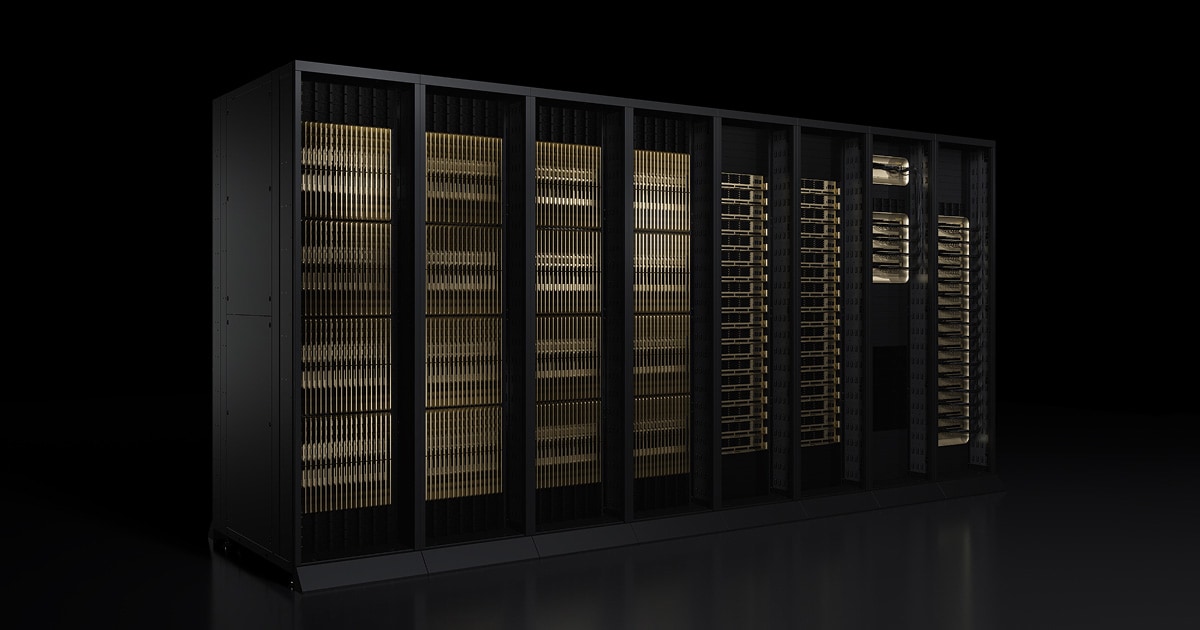
Participating companies have initiated a dedicated Open Compute Project workstream focused on converting medium-voltage alternating current power directly into 800-volt direct current. The engineering groups are also aligning requirements for power quality, power smoothing, and end-to-end system interfaces to ensure safety and scalability across different manufacturer equipment.
This open approach could transform the equipment manufacturing market. Instead of custom-engineering separate power systems for every major cloud provider, equipment vendors can build hardware around a common industry specification, much like standard server design.
Amazon Web Services and the High-Density AI Race
While the Open Compute Project initiative brings together major artificial intelligence heavyweights, one prominent hyperscaler is notably absent from the current announcement. Amazon Web Services has made no public commitment toward the 800-volt direct current standard nor announced its own timeline for adoption.
Even without joining the open standard announcement, Amazon is aggressively redesigning its artificial intelligence data centers for much higher-density systems. The company’s internal initiative, known as Titus, is focused on next-generation infrastructure capable of supporting advanced hardware classes while increasing overall capacity and improving power and cooling efficiency.
As power density continues to climb across the sector, the industry-wide convergence on high-voltage direct current highlights a broader race to establish common electrical foundations before surging compute demands outpace traditional data center capabilities entirely.
Keep reading