Google is bringing wrist-based metabolic monitoring to its consumer wearables with a new software feature designed to track shifting insulin resistance patterns over time. The company announced that its upcoming Insulin Resistance Trends feature will roll out in September, expanding sophisticated wellness analytics to multiple generations of hardware rather than reserving the capability for newly released devices.
The addition arrives as part of Google’s broader Health Guardian suite, which aims to help users catch early metabolic changes before they manifest as clinical health problems like pre-diabetes. According to reports from Gadgets & Wearables, the tool will be available on the Pixel Watch 3, Pixel Watch 4, Pixel Watch 5, and the screenless Fitbit Air, though users will need a Google Health Premium subscription to access the monthly insights.
For millions of adults navigating metabolic risks, the capability promises a low-friction window into internal changes. Public health data indicates that a vast majority of people with pre-diabetes remain unaware of their condition, making non-invasive trend monitoring a potentially significant shift in consumer health technology.
How Wrist-Based Insulin Resistance Tracking Works
A common point of clarification surrounding the new software is that neither the Pixel Watch nor the Fitbit Air contains a physical blood glucose sensor. Instead, the system analyzes physiological signals that the smartwatch is already collecting continuously, including heart rate variability, resting heart rate, sleep quality, skin temperature, and accelerometer movement patterns.
Google’s underlying computational approach relies on its SensorFM model, which was trained using more than one trillion minutes of wearable data collected from five million consenting users across more than 20 Fitbit and Pixel Watch models, as detailed by Gadgets & Wearables. Furthermore, the feature is grounded in published clinical research, including the WEAR-ME study published in Nature in March 2026, which involved 1,165 participants and evaluated how wearable data could predict metabolic shifts.
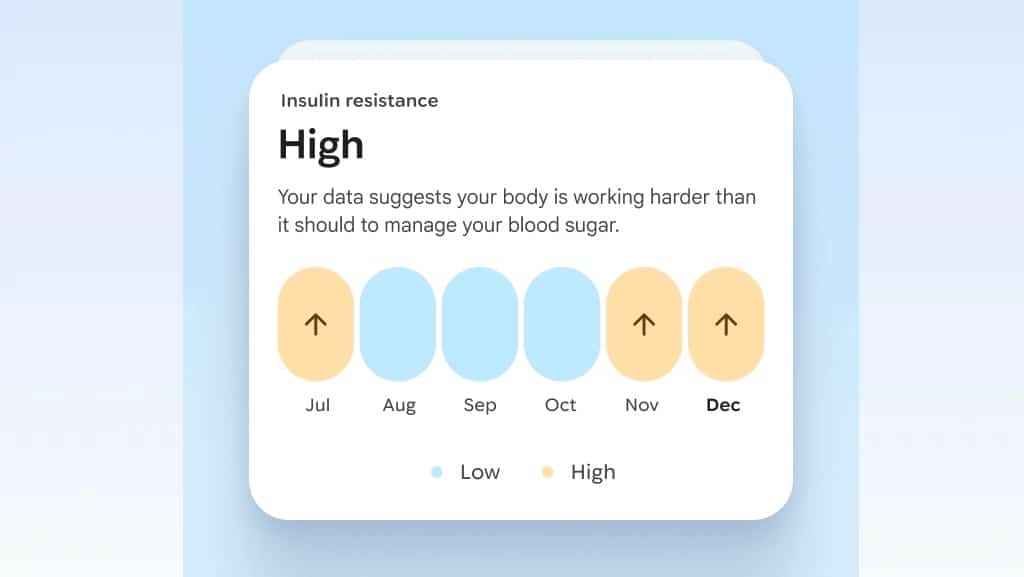
Because the algorithm looks for broader physiological patterns rather than reacting to isolated moments, the feature requires approximately 30 days of continuous wear before generating its first detailed summary. Users will not receive a continuous numerical glucose reading or a definitive medical diagnosis. Instead, the Health Guardian summary will display trends marked simply as “High” or normal, functioning much like an automotive warning light that signals when something unusual is happening beneath the surface.
Device Compatibility and Subscription Requirements
By making the feature accessible across multiple hardware generations, Google is positioning the upgrade as a software-driven expansion rather than an exclusive selling point for its newest flagship device. Owners of the Pixel Watch 3 and Pixel Watch 4 will receive the update alongside Pixel Watch 5 buyers. Even the screenless Fitbit Air is slated to receive the capability, demonstrating how background sensor collection can power advanced health insights without requiring a high-resolution display.
However, device ownership alone is not enough. Access to the monthly Insulin Resistance Trends reports and the corresponding guidance from Google Health Coach sits behind a Google Health Premium subscription tier. When the system flags an unusual trend, Google Health Coach steps in to explain what the algorithms have detected, offering contextual suggestions regarding physical activity, daily nutrition, and sleep hygiene.
Medical experts and industry reviewers emphasize that these tools are strictly classified as wellness features rather than diagnostic medical instruments. Because the consumer version relies entirely on passive sensor data rather than the physical blood biomarkers utilized in initial clinical validation studies, clinicians and regulators will continue to monitor how effectively the wrist-based estimates translate to real-world health outcomes.
Next Steps and Rollout Timeline
The Insulin Resistance Trends feature is scheduled to begin rolling out to compatible devices in September. Users who meet the hardware and subscription requirements will need to wear their devices consistently for a full 30-day baseline period before their initial monthly trend summary becomes available in the Health Guardian interface.
Readers interested in monitoring future software updates or reviewing official device compatibility guidelines can consult the official Google Health support pages and wearable product comparison portals. Please share your thoughts or questions about wearable metabolic tracking in the comments below.
Keep reading