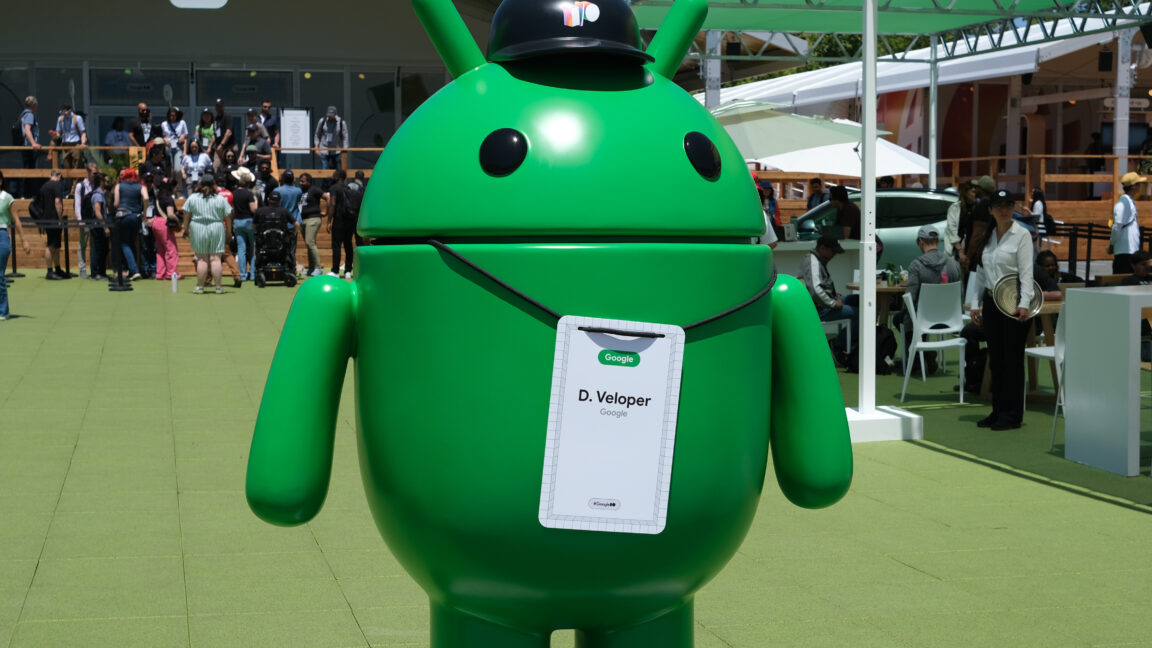
Google has updated its Android Bench platform, a specialized testing framework designed to evaluate how large language models (LLMs) perform in mobile application development. The update introduces a streamlined evaluation process and expands the leaderboard to include eight new models, aiming to provide developers with clearer data on which AI agents are most effective for coding tasks.
Launched in March, Android Bench functions as a standardized test suite covering 100 distinct tasks relevant to the Android development lifecycle. By moving beyond general-purpose coding benchmarks, Google intends to help developers distinguish between high-performing AI assistants and those that produce inaccurate or inefficient code. With this latest iteration, the company has integrated new metrics focusing on cost and computational efficiency, alongside support for various open-weight models, to better reflect the priorities of real-world software engineering.
Expanding the LLM Leaderboard
The updated Android Bench leaderboard now incorporates several prominent models that have recently entered the development ecosystem. The newly added models include Claude Fable 5, Claude Sonnet 5, Claude Opus 4.8, GLM 5.2, Kimi K2.7 Code, MiniMax M3, Qwen 3.7 Plus, and Qwen 3.7 Max. These additions allow for a broader comparative analysis, giving developers insight into how different architectures handle complex Android-specific programming requirements.

As the field of AI-assisted programming evolves, the ability to benchmark these tools has become increasingly critical. Developers often face a trade-off between the speed of a model and the accuracy of its output. By providing a dedicated environment to test these variables, Google is attempting to create a more transparent standard for AI performance in mobile development. The inclusion of open-weight models is particularly noteworthy, as it offers a path for teams that require local execution or greater control over their development infrastructure.
Evaluating Performance and Efficiency
Efficiency has become a primary pillar of the Android Bench framework. In professional software development, an AI tool that generates code quickly but requires extensive debugging or excessive token usage may ultimately prove more costly than a slower, more precise model. The updated metrics allow users to quantify the cost-to-performance ratio of these models, which is a significant departure from earlier, accuracy-only assessment methods.
The shift toward a more user-friendly framework also encourages community participation. Google has invited developers to run their own tests and submit feedback, a move that could shift the future trajectory of the benchmark. By crowdsourcing the evaluation process, the platform aims to better mirror the diverse environments in which Android applications are built, from small-scale projects to large enterprise deployments.
Gemini and the Competitive Landscape
For developers, the data provided by Android Bench serves as a practical guide for tool selection. As the industry moves away from “one-size-fits-all” AI assistants, benchmarks like this are essential for identifying which models excel in specific contexts—such as writing UI code, debugging memory leaks, or managing API integrations in Kotlin and Java. The platform is expected to undergo further iterations as the underlying AI technology continues to advance, with stakeholders looking for continued transparency in how these evaluations are conducted.

Developers interested in the latest performance rankings can access the updated documentation and testing resources via the official Android developer portals. As the platform evolves, the focus remains on closing the gap between AI capabilities and the rigorous demands of mobile application development. Further updates regarding the benchmark’s methodology are expected in the coming quarters as the community provides additional feedback on the current test suite.