
New research published in Nature indicates that emerging conversational artificial intelligence models can now perform medical diagnostic and treatment planning tasks with a level of accuracy comparable to that of human physicians. The study evaluates two distinct systems—Google’s Articulate Medical Intelligence Explorer (AMIE) and the Medical Intelligence for Reasoning and Action (MIRA) model—marking a significant step in the integration of large language models into clinical workflows. According to the research findings, these tools demonstrated high performance across multiple stages of patient management, potentially offering a scalable solution to support clinical decision-making in diverse healthcare settings.
As a physician, I have observed the rapid evolution of medical AI from simple triage algorithms to complex systems capable of nuanced clinical reasoning. This latest development, detailed in the journal Nature, provides a rigorous framework for assessing how these technologies translate clinical data into actionable medical advice. While human oversight remains a non-negotiable standard in patient care, these results highlight a shift in the capabilities of deep learning models to replicate the diagnostic process.
Evaluating Performance: How AMIE and MIRA Function
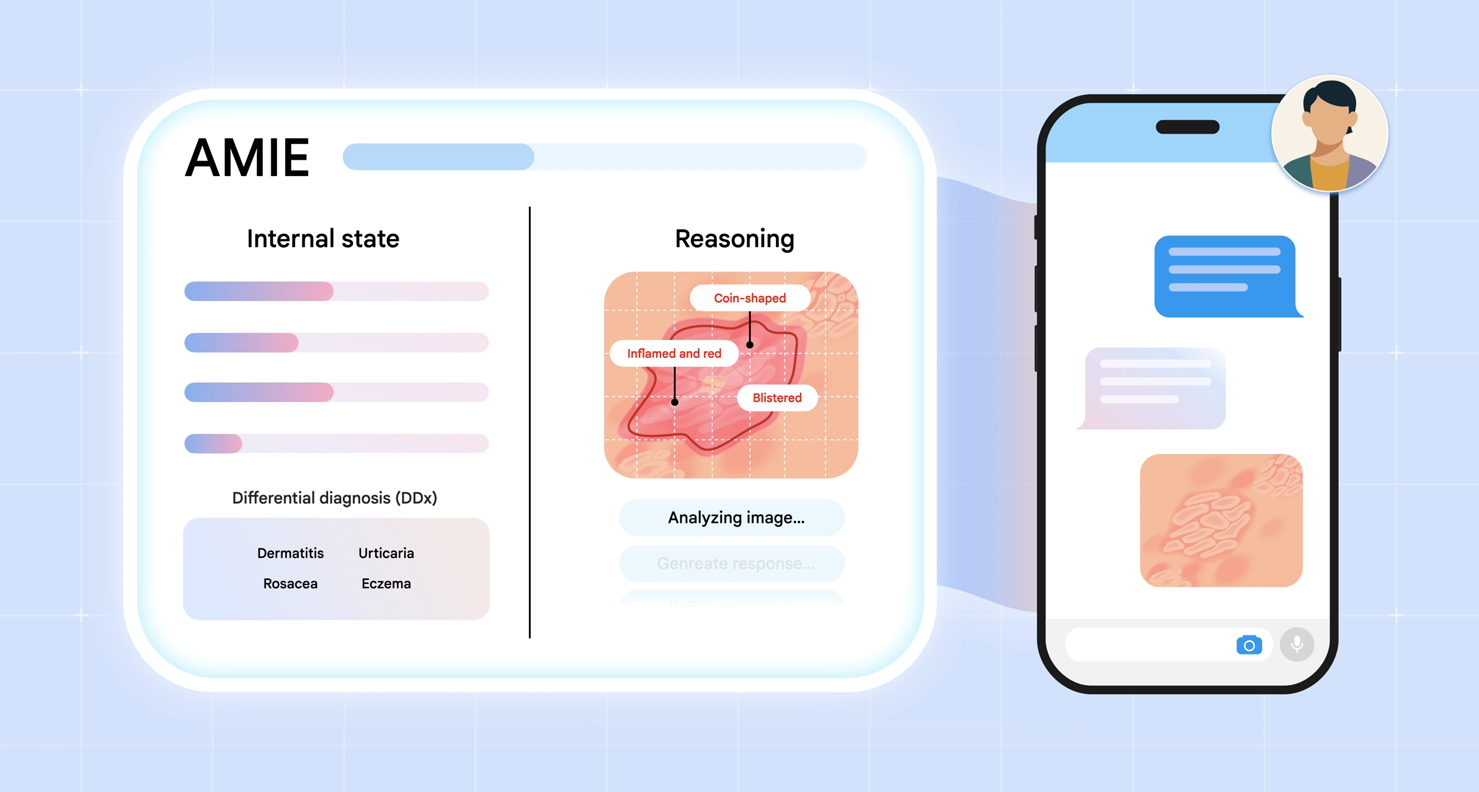
The research focuses on the ability of AI to interact with patients, gather relevant history, and propose diagnostic pathways. Google’s AMIE is designed as a conversational agent, trained specifically to emulate the consultative style of a physician. In controlled evaluations, AMIE was assessed on its ability to obtain a comprehensive patient history and provide accurate clinical explanations. Researchers found that the model’s diagnostic accuracy was statistically non-inferior to that of primary care physicians, as documented in the official technical report from Google Research.

MIRA, meanwhile, approaches clinical management through a multi-step reasoning framework. Unlike standard chatbots that may rely on pattern matching, MIRA is engineered to perform iterative reasoning, breaking down complex symptoms into manageable diagnostic hypotheses. By evaluating these models against human benchmarks, researchers aimed to quantify not just the final diagnosis, but the quality of the interaction and the safety of the proposed treatment plans. These findings are foundational for future clinical validation studies required by international health regulators.
Clinical Accuracy and the Role of Conversational AI
The primary hurdle for medical AI has historically been the “black box” problem—the inability to trace how a system reaches a specific conclusion. The models described in the current research address this by generating step-by-step explanations for their diagnostic suggestions. According to the data published in Nature, both AMIE and MIRA exhibited a high degree of concordance with human specialists in scenarios involving common internal medicine conditions. This transparency is essential for clinicians who must verify AI-generated recommendations before they are applied to patient care.
However, the study also notes critical limitations that prevent these systems from acting independently. Even high-performing models can exhibit “hallucinations”—a phenomenon where the AI generates plausible-sounding but factually incorrect medical information. Furthermore, the current evaluation environments, while sophisticated, do not fully replicate the chaotic, multi-variable reality of an emergency department or a busy clinic. The researchers emphasize that these tools are intended to function as “physician-in-the-loop” assistants rather than replacements for licensed medical professionals.
Challenges for Widespread Clinical Adoption
Transitioning these models from the research lab to the clinic involves significant regulatory and ethical hurdles. In the European Union, for instance, the EU AI Act classifies medical AI systems as high-risk, requiring stringent conformity assessments before they can be deployed in hospitals. Issues such as data privacy, algorithmic bias, and the potential for over-reliance by less experienced clinicians remain at the forefront of the debate regarding how these tools should be governed.
Bias in training data is a particular concern for global health equity. If an AI is trained primarily on data from specific populations, its diagnostic accuracy may drop when applied to patients from different socioeconomic or ethnic backgrounds. Developers are currently working to include more diverse datasets to ensure that these diagnostic aids perform reliably across all demographics. As these technologies mature, health systems will need to establish clear protocols for when and how AI input is documented in the patient’s medical record.
What Happens Next for Medical AI Integration?
The next phase of research will likely shift from simulated environments to prospective clinical trials. To move toward real-world implementation, these systems must undergo rigorous testing in hospital settings where the stakes involve actual patient outcomes. We can expect to see further updates from developers regarding the integration of these models into Electronic Health Record (EHR) systems, which would allow for real-time diagnostic support during patient consultations.

For patients and clinicians alike, the takeaway is clear: artificial intelligence is becoming a more sophisticated partner in healthcare. While we are not yet at the point of autonomous AI diagnosis, the gap between human and machine performance is narrowing. As these tools continue to be refined, the focus will remain on patient safety and the preservation of the essential human connection in medicine. I encourage readers to follow the upcoming publications from the World Health Organization regarding global standards for the ethical use of AI in health, as these will likely shape the regulatory landscape for years to come.
If you found this analysis helpful, please share this article with your colleagues and join the conversation below. Your insights on the future of clinical technology are valued.
Worth a look
- The Power of the Blood of Christ: Mercy, Forgiveness, and Eternal Life
- ICECAP Trial Finds Extended Hypothermia Fails to Improve Cardiac Arrest Outcomes
- Cliff Vesting vs. Graded Vesting: What Your 401(k) Match Pays (daybreakwire.com)
- Google Pixel Watch 5 Leaks Reveal 64 GB Storage and August Launch (archyworldys.com)