
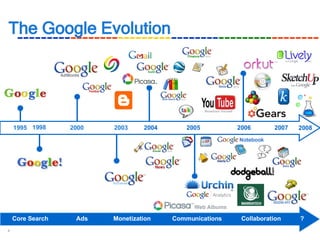
For years, Wall Street and the broader financial community viewed Alphabet—Google’s parent company—as the ultimate digital advertising powerhouse. The company’s business model was synonymous with search-based marketing, a reliable engine that fueled consistent, double-digit growth. However, in the current market cycle, we are witnessing a fundamental shift in how investors and analysts evaluate the tech giant. Google is no longer being valued merely as an advertising firm; instead, It’s being recalibrated as a diversified infrastructure and artificial intelligence powerhouse.
The primary catalyst for this shift is the explosive growth of Google Cloud, which has transitioned from a secondary business unit into a vital pillar of the company’s revenue strategy. According to Alphabet’s Q4 2025 financial results, cloud computing services have become a significant driver of top-line growth, signaling to the market that Alphabet’s valuation must now account for enterprise software scale and high-margin infrastructure demand rather than just ad-click volume.
The Structural Shift: Beyond Ad Revenue
The transition in market perception is not incidental. It is a calculated response to the integration of generative AI across the company’s entire product suite. By embedding advanced large language models into its search, workspace, and cloud offerings, Google has fundamentally altered its value proposition. Investors are increasingly looking at the company’s capital expenditure on data centers and custom silicon—such as its Tensor Processing Units (TPUs)—as long-term assets rather than just operational costs.
This recalibration reflects a broader industry trend where tech companies are judged by their ability to own the “AI stack.” As noted in the company’s latest 10-K filing, the sustained investment in research and development, particularly in AI-optimized infrastructure, is intended to secure a competitive moat that transcends traditional digital advertising. This move effectively de-risks the company from the inherent volatility of the global ad market, providing a more stable, recurring revenue stream through enterprise software subscriptions and cloud service agreements.
Why Google Cloud is the New North Star
For many years, the “Google Cloud” narrative was one of catch-up. Today, that narrative has been rewritten. The cloud division has achieved consistent profitability, a milestone that has fundamentally changed the conversation on earnings calls. By leveraging its proprietary AI capabilities, Google has managed to attract enterprise clients who are looking to build their own AI-driven applications using Google’s underlying infrastructure.

The market is essentially applying a “software-as-a-service” (SaaS) multiple to a larger portion of Alphabet’s revenue. When you evaluate the company through this lens, the growth in cloud revenue—which reached significant double-digit year-over-year increases in the most recent reporting cycle—becomes the primary anchor for its current stock performance. This shift allows the company to decouple its valuation from the cyclical nature of digital marketing budgets.
Key Takeaways for Investors
- Diversification: Google’s revenue mix is evolving, with Cloud and “Other Bets” contributing a larger share of growth compared to historical search-only dependence.
- AI Integration: The deployment of AI across Search and Cloud is not just a feature upgrade; it is a defensive and offensive strategy to maintain market share.
- Capital Allocation: Market analysts are closely monitoring the company’s heavy investment in physical infrastructure, viewing it as a prerequisite for future dominance in the cloud and AI space.
- Market Sentiment: The recalibration suggests that investors are willing to pay a premium for consistent, non-advertising growth, provided the cloud margins remain stable.
The AI Factor: A Double-Edged Sword
While the market is optimistic about the AI-driven future, it is not without risks. The cost of running large-scale AI models—often referred to as “inference costs”—remains a point of scrutiny. Investors are watching closely to see if Google can maintain its operating margins while aggressively deploying these new tools. The latest SEC filings highlight that while efficiency gains are being realized through automation, the sheer scale of the hardware deployment requires massive ongoing investment.

However, the prevailing sentiment among analysts is that Google’s ability to monetize these AI tools through its cloud platform provides a clear path to profitability that its competitors may struggle to match. By offering a comprehensive ecosystem—ranging from hardware infrastructure to developer tools and end-user applications—Google has positioned itself as the “plumbing” of the modern AI economy.
Looking Ahead: The Next Milestone
The market will continue to look for evidence that this recalibration is sustainable. The next critical checkpoint for investors will be the Q1 2026 earnings report, expected in late April or early May, which will provide further clarity on the sustainability of cloud margins and the impact of new AI features on search engagement. As always, keeping an eye on the official Alphabet Investor Relations portal is the best way to stay updated on official filings and upcoming conference calls.
This transition is not just a passing trend; it represents a fundamental change in the identity of one of the world’s most influential companies. Whether this strategy will yield the long-term returns the market expects remains to be seen, but one thing is certain: Google is no longer the company we knew a decade ago.
What are your thoughts on Google’s strategic shift? Are you viewing them as a cloud company or an ad company in your own portfolio? Join the conversation below and share your perspective.