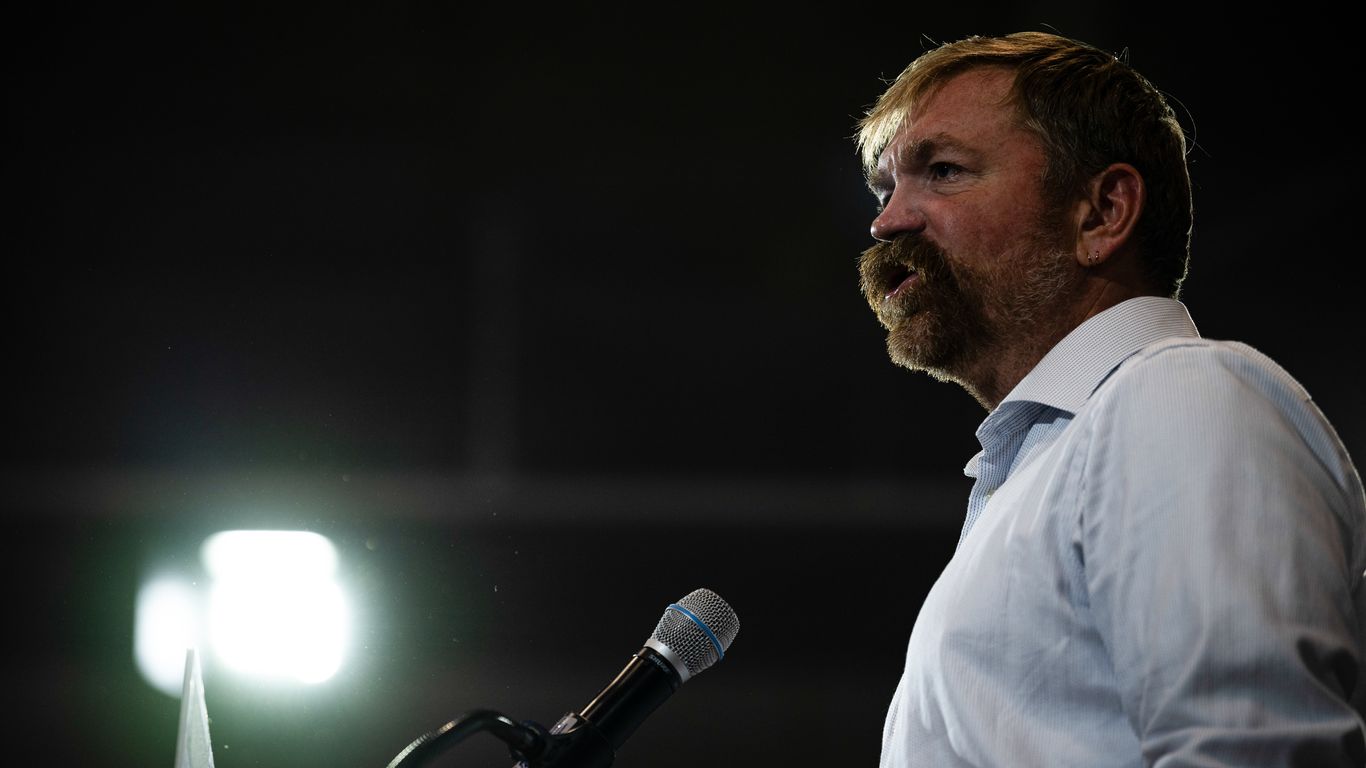
Democrat Graham Platner officially withdrew from the Maine Senate race on Friday, filing the necessary paperwork to remove his name from the ballot. His departure concludes a brief and contested campaign to challenge Republican incumbent Sen. Susan Collins. The move, executed ahead of a critical Monday deadline, enables the Maine Democratic Party to designate a replacement nominee for the upcoming November election, which remains a focal point in the broader national strategy to secure a majority in the U.S. Senate.
Platner announced his decision to campaign staff via a Signal message, later confirming the submission of his withdrawal to the Maine Division of Elections. In a formal letter addressed to the Maine Secretary of State, Platner reflected on the support he received during his candidacy. “On June 9, 156,084 Mainers voted for a new kind of politics,” he wrote. “One that is representative of people down here in the real world — not billionaires, oligarchs or the political establishment.”
The Path to Candidate Replacement
By filing his withdrawal on Friday, Platner satisfied this legal requirement, providing the Maine Democratic Party with a window to organize a nominating convention to select a new candidate. The party announced its intention to hold such a convention earlier in the week, shortly before Platner publicly confirmed his plans to exit the race.

The nominating process is expected to involve approximately 600 delegates, composed of 500 individuals selected from county-level party organizations and 100 members of the state committee. This structure has sparked internal debate within the party. While some moderates suggest the delegate-heavy approach could favor activist segments of the party, progressive voices have expressed concerns that the convention model may lean toward an “insider-driven” selection process. Platner himself advocated for a more open approach, stating in a video posted to social media that the selection protocol “needs to be driven not from back rooms, but by the will of the people.”
Campaign Controversy and Conclusion
Platner’s withdrawal follows a period of friction within his own ranks. Reports had previously circulated that the campaign was struggling to finalize its exit strategy, with some Democrats criticizing the pace at which the transition was being managed. These tensions surfaced after reports suggested a potential delay in filing the withdrawal paperwork, nearing the “drop-dead” Monday deadline.
In his exit letter, Platner maintained his focus on the platform he built during his run, though he did not shy away from unconventional rhetoric. He concluded his official correspondence with a series of political slogans: “F*ck ICE. Free Palestine. Up the Hearts.” In his private message to staff, he expressed no regrets regarding his time as a candidate. “I just submitted this to the division of elections,” he wrote in the Signal chat. “Thank you all so much, this was the best thing I have done in my life. I’d do it all over again in a heartbeat. I love you all.”
The Stakes in the Maine Senate Race
The Senate seat currently held by Sen. Susan Collins is a high-priority target for national Democrats. As the party works to maintain or expand its influence in the upper chamber of Congress, the selection of a new candidate is viewed as a strategic necessity.

The outcome of this process will determine the final Democratic presence on the November ballot, a decision that carries significant weight for both state-level political actors and national party strategists.