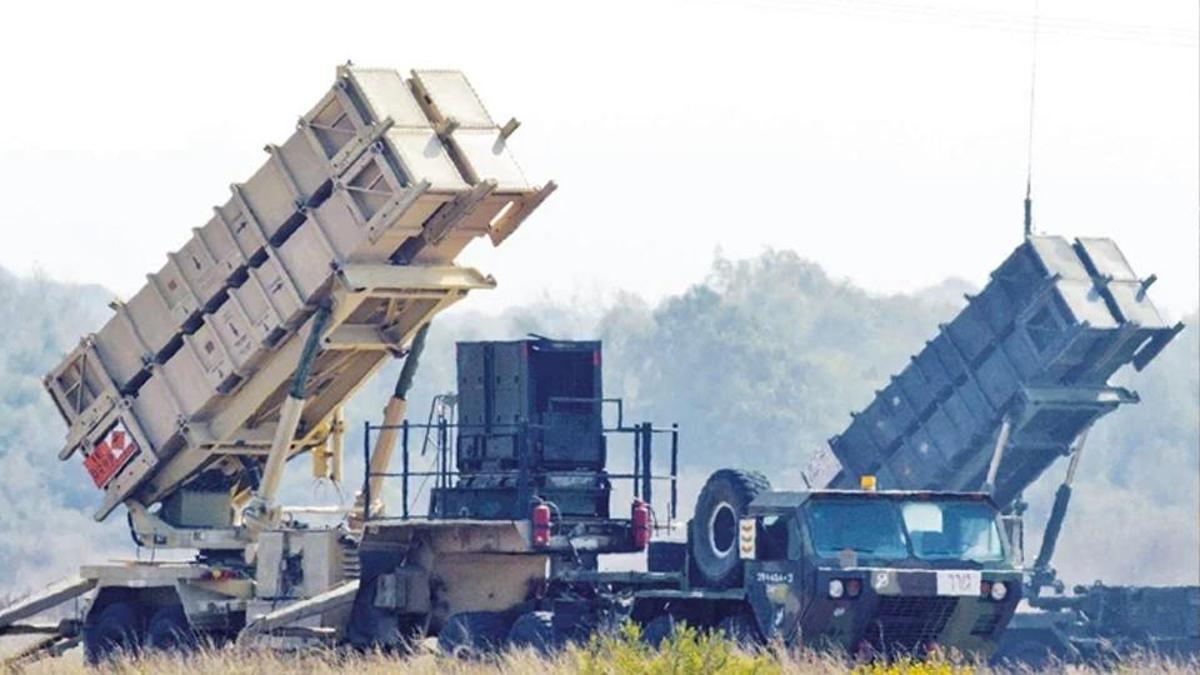
Athens, Greece – Rising tensions in the Aegean Sea are once again at the forefront of international concern as Greece moves to deploy military assets to islands near the Turkish coast. The move, ostensibly aimed at bolstering regional security and protecting Bulgarian infrastructure, has sparked renewed debate over sovereignty, treaty obligations, and the delicate balance of power in the Eastern Mediterranean. Specifically, reports indicate the Greek government intends to station F-16 fighter jets on Limni Island, and maintain a Patriot missile system near the Bulgarian border, raising questions about compliance with the 1923 Treaty of Lausanne.
The situation underscores a complex web of historical grievances, strategic calculations, and escalating military posturing between Greece, and Turkey. While Greek officials frame the deployments as defensive measures responding to perceived threats, Turkey views them as a violation of international law and a provocation. The core of the dispute lies in the interpretation of the demilitarized status of several islands in the Aegean, a status established by the Treaty of Lausanne nearly a century ago. This latest development follows a previous instance of contention regarding the deployment of similar systems to the island of Crete, further straining relations between the two NATO allies.
Lozan Treaty and Aegean Island Demilitarization
The Treaty of Lausanne, signed on July 24, 1923, formally ended the conflict between the Ottoman Empire and the Allied Powers following World War I. As detailed by the Turkish Wikipedia, the treaty meticulously defined the borders of modern Turkey and addressed numerous outstanding issues, including the status of the Aegean Islands. Crucially, the treaty stipulated that certain islands, including Limni, were to remain permanently demilitarized. This provision was intended to ensure security and stability in the region, preventing either side from establishing a military advantage that could threaten the other.
The precise interpretation of “demilitarization” has been a source of contention for decades. Greece argues that its deployments are justified by legitimate self-defense concerns and do not constitute a violation of the treaty, pointing to Turkey’s own military buildup in the region. Turkey, yet, maintains that any military presence on these islands, beyond a limited security force, is a clear breach of the treaty’s terms. The treaty’s original texts were prepared in both English and French, adding another layer of complexity to interpretation.
Bulgaria’s Request and the Patriot Missile System
The current escalation began with a request from Bulgaria for enhanced air defense capabilities, citing concerns about potential ballistic missile threats. According to reports, the Greek government responded by proposing the deployment of a Patriot missile system to the Greek-Bulgarian border, extending protection to Bulgarian territory. This move, coupled with the planned deployment of F-16s to Limni Island, has drawn sharp criticism from Turkey. Nikos Dendias, the Greek Defense Minister, stated that the request originated from Bulgaria, but details surrounding the specific nature of the perceived threat remain somewhat opaque.
The Patriot missile system is a long-range, all-altitude, all-weather air defense system designed to counter tactical ballistic missiles, cruise missiles, and advanced aircraft. Its deployment near the Bulgarian border is intended to safeguard critical energy infrastructure along the Black Sea coast, a region of increasing strategic importance. However, Turkey views the placement of such a sophisticated weapons system so close to its borders as a deliberate act of provocation, raising concerns about potential miscalculation and escalation.
Turkish Response and Regional Implications
Turkey has strongly condemned the Greek deployments, accusing Athens of violating international law and undermining regional stability. The Turkish Foreign Ministry issued a statement expressing “deep concern” over the moves, asserting that they were incompatible with the demilitarized status of the islands as defined by the Treaty of Lausanne and the 1947 Paris Peace Treaty. The statement further emphasized Turkey’s commitment to protecting its rights and interests in the Aegean Sea.
This latest dispute comes amid a broader pattern of escalating tensions between Greece and Turkey. Recent disagreements have centered on maritime boundaries, energy exploration rights in the Eastern Mediterranean, and the status of the 12 Islands near the Turkish coast. In a separate incident, the deployment of a Patriot missile system to the island of Crete, also considered demilitarized under the treaties, drew a similar rebuke from Ankara. CNN Türk reports that these actions are seen as part of a broader Greek strategy to enhance its military presence in the Aegean and assert its influence in the region.
The Broader Strategic Context
Analysts suggest that Greece’s actions are motivated by a desire to project power in the Balkans and the Eastern Mediterranean, and to strengthen its strategic partnership with the United States and other Western allies. Athens is also seeking to capitalize on growing concerns about Russian aggression in the region and to position itself as a key security partner for NATO. Turkey, is determined to assert its regional dominance and to protect its interests in the Aegean Sea, which it considers vital for its economic and strategic security.
The escalating tensions also reflect a broader geopolitical competition between Turkey and Greece, fueled by diverging interests and historical animosities. Both countries are vying for influence in the Eastern Mediterranean, and their rivalry extends to issues such as energy exploration, maritime boundaries, and the treatment of minority populations. The involvement of external actors, such as the United States, the European Union, and Russia, further complicates the situation.
International Law and Potential Resolutions
The legal basis for the dispute rests on the interpretation of the Treaty of Lausanne and the 1947 Paris Peace Treaty. While the Treaty of Lausanne clearly stipulates the demilitarized status of certain Aegean Islands, the precise scope of that demilitarization remains open to interpretation. Greece argues that It’s entitled to maintain a limited military presence on the islands for self-defense purposes, while Turkey insists that any military deployment beyond a minimal security force constitutes a violation of the treaty.
Potential resolutions to the dispute could involve a renewed commitment to dialogue and negotiation, as well as a clarification of the terms of the Treaty of Lausanne. Some analysts have suggested that a joint monitoring mechanism could be established to ensure compliance with the treaty’s provisions. However, given the deep-seated mistrust and historical grievances between Greece and Turkey, reaching a lasting settlement will likely prove challenging. The involvement of international mediators, such as the United Nations or the European Union, could also be helpful in facilitating a peaceful resolution.
The current situation highlights the importance of upholding international law and respecting treaty obligations. A failure to resolve the dispute peacefully could have serious consequences for regional stability and could potentially escalate into a wider conflict. The international community has a responsibility to encourage dialogue and to support efforts to find a mutually acceptable solution that respects the rights and interests of all parties involved.
As of March 8, 2026, the situation remains fluid. Further developments are expected in the coming weeks as Greece proceeds with its planned deployments and Turkey responds accordingly. The international community will be closely monitoring the situation, hoping to prevent a further escalation of tensions in the Aegean Sea. The next key event to watch will be the response from the Turkish government following the completion of the F-16 deployment to Limni Island, and any potential formal complaints lodged with international bodies.
World Today Journal will continue to provide updates on this developing story as it unfolds. Share your thoughts and perspectives in the comments below.