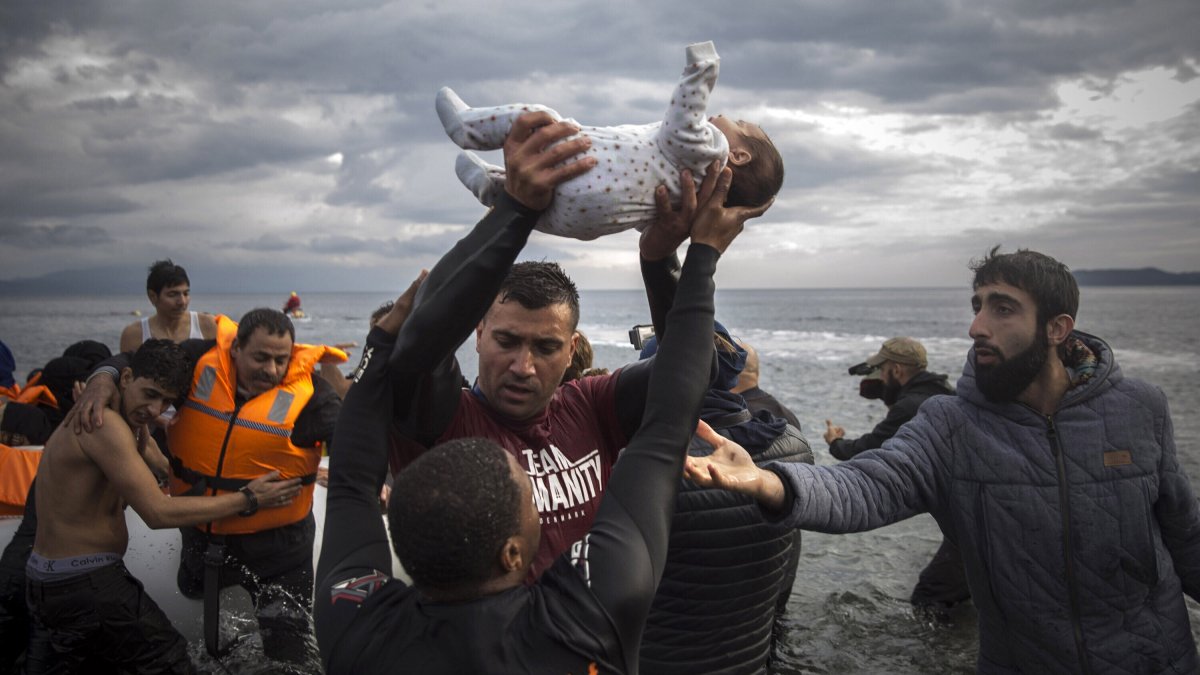
Greece has reach under increasing international scrutiny for its treatment of migrants and asylum seekers arriving via the Aegean Sea, with multiple human rights organizations documenting allegations of pushbacks, unlawful detentions, and degrading treatment at the hands of Greek authorities. These reports, spanning several years, describe a pattern of actions that critics say violate both international and European Union law, particularly the principle of non-refoulement, which prohibits returning individuals to countries where they face persecution or torture.
The issue gained renewed attention in early 2024 following investigations by outlets such as Lighthouse Reports and Der Spiegel, which cited whistleblower testimony and forensic analysis suggesting coordinated efforts by Greek coast guard and police units to intercept migrant boats and return them to Turkish waters without allowing individuals to seek asylum. Greek officials have consistently denied these allegations, maintaining that all operations comply with legal frameworks and that Greece is fulfilling its duties as an external EU border state under significant migratory pressure.
Understanding the roots of this controversy requires examining Greece’s unique geopolitical position, its strained asylum system, and the broader context of EU migration policy. As a frontline state in Europe’s migration landscape, Greece has borne a disproportionate share of arrivals since the 2015 refugee crisis, when over one million people crossed into Europe via the Eastern Mediterranean route. Though numbers have fluctuated, the country continues to receive thousands of asylum seekers annually, primarily from Afghanistan, Syria, and countries in Africa and South Asia.
This article explores the verified facts behind the allegations of harsh treatment, the legal and humanitarian concerns raised by observers, and the responses from Greek and European institutions. It draws on official statements, court rulings, reports from international bodies, and credible journalism to provide a nuanced account of a deeply polarizing issue that touches on sovereignty, human rights, and the future of European asylum policy.
Documented Allegations and Investigative Findings
Multiple independent investigations have produced detailed accounts of alleged pushback operations in Greek territorial waters. A 2023 report by the European Parliament’s Subcommittee on Human Rights cited credible evidence suggesting that Greek authorities had intercepted migrant vessels and returned them to Turkey without conducting individual asylum assessments, a practice that may breach Article 3 of the European Convention on Human Rights and Article 18 of the EU Charter of Fundamental Rights.
Further scrutiny came from a joint investigation by Lighthouse Reports, Der Spiegel, and ARD, published in January 2024, which analyzed GPS data, satellite imagery, and whistleblower statements from former Hellenic Coast Guard personnel. The report described incidents in which migrant boats were allegedly intercepted, their engines disabled, and individuals left in life rafts or towed back toward Turkish waters. Greek authorities rejected the findings as “baseless” and “part of a coordinated disinformation campaign,” according to a statement issued by the Ministry of Migration and Asylum in February 2024.
The United Nations High Commissioner for Refugees (UNHCR) has repeatedly expressed concern over reports of pushbacks. In its 2023 annual report on Greece, UNHCR noted “persistent allegations” of summary returns and called for independent monitoring mechanisms to be established at land and sea borders. The organization emphasized that even as Greece faces genuine challenges in managing mixed migration flows, any response must uphold international legal obligations.
In March 2024, the European Court of Human Rights (ECtHR) ruled in the case of M.S.S. V Belgium and Greece that Greece had violated Article 3 (prohibition of inhuman or degrading treatment) and Article 13 (right to an effective remedy) of the European Convention on Human Rights due to systemic deficiencies in its asylum reception system, including overcrowding, poor sanitation, and lack of access to legal aid. Although the case originated in 2009, the court affirmed that structural shortcomings persisted in subsequent years, influencing ongoing evaluations of Greece’s compliance with human rights standards.
Legal Framework and State Obligations
Greece, as a member of the European Union and a signatory to the 1951 Refugee Convention and its 1967 Protocol, is legally bound to assess asylum claims individually and cannot return individuals to territories where their life or freedom would be threatened. The principle of non-refoulement is considered customary international law and is reinforced by EU directives such as the Asylum Procedures Directive (2013/32/EU) and the Returns Directive (2008/115/EC).
Despite these obligations, Greek authorities have argued that exceptional migratory pressures justify stringent border controls. In 2021, Greece enacted Law 4800/2021 on International Protection, which introduced accelerated procedures for certain nationalities deemed to come from “safe third countries” or “safe countries of origin.” Critics, including the Greek Council for Refugees (GCR), contended that the law undermined substantive asylum rights by limiting appeals and increasing reliance on accelerated border procedures that offer minimal procedural safeguards.
The European Commission has monitored Greece’s compliance with EU asylum law through its annual Rule of Law reports. In the 2023 edition, the Commission acknowledged improvements in asylum processing times and reception conditions but noted “ongoing concerns” regarding access to territory, particularly on islands, and the need for stronger guarantees against collective expulsions. The report urged Athens to ensure that all interception operations are conducted in full respect of fundamental rights and subject to effective oversight.
Humanitarian Impact and Reception Conditions
Beyond allegations of pushbacks, humanitarian organizations have highlighted deteriorating conditions in migrant reception and identification centers, especially on the Aegean islands of Lesbos, Samos, Chios, Kos, and Leros. Facilities such as Mavrovouni (built after the destruction of Moria in 2020) have been described by Doctors Without Borders/Médecins Sans Frontières (MSF) as overcrowded, with limited access to healthcare, mental health support, and legal information.
A 2023 assessment by the European Committee for the Prevention of Torture (CPT) found that while some improvements had been made since previous visits, persistent issues included inadequate sanitation, delays in registering asylum claims, and reports of intimidation by security personnel. The CPT recommended that Greek authorities ensure all migrants are informed of their rights in a language they understand and that any leverage of force be strictly proportionate and documented.
Children and unaccompanied minors remain particularly vulnerable. According to data from the Greek Ministry of Migration and Asylum, over 5,000 unaccompanied minors were present in Greece as of December 2023, with many housed in temporary shelters or safe zones due to a lack of long-term placement options. UNICEF has urged the government to expedite family reunification and expand community-based care models to reduce reliance on institutional settings.
Government Responses and Policy Justifications
Greek officials have consistently rejected claims of systematic pushbacks, framing such allegations as politically motivated attempts to undermine national security. In a parliamentary address in January 2024, Minister for Migration and Asylum Dimitris Kairidis stated that Greece “protects its borders rigorously but lawfully,” emphasizing that the country had prevented over 90,000 irregular entries in 2023 through coordinated patrols and surveillance.
The government points to declining arrival numbers as evidence of effective border management. According to Frontex, the EU Border and Coast Guard Agency, detections of illegal crossings on the Eastern Mediterranean route fell to approximately 18,000 in 2023, down from over 60,000 in 2022—a trend Greek authorities attribute to enhanced cooperation with Turkey and improved coastal monitoring.
Athens has also sought to shift focus toward integration and relocation. In 2023, Greece participated in the EU’s voluntary relocation scheme, transferring over 1,200 asylum seekers to other member states. The government launched a modern integration strategy in mid-2023 aimed at improving language access, employment opportunities, and housing for recognized refugees, supported by funding from the EU’s Asylum, Migration and Integration Fund (AMIF).
Nevertheless, critics argue that deterrence-focused policies risk undermining humanitarian obligations. The Greek Council for Refugees has called for an independent investigation into alleged pushbacks, greater transparency in maritime operations, and the establishment of a national preventive mechanism under the Optional Protocol to the Convention Against Torture (OPCAT) to monitor places of detention.
European Oversight and Accountability Mechanisms
The European Commission has the authority to launch infringement proceedings against member states that fail to comply with EU law, including asylum and fundamental rights obligations. While no formal infringement procedure has been initiated against Greece specifically over pushback allegations as of mid-2024, the Commission has maintained dialogue with Greek authorities through regular reporting cycles and technical exchanges.
The European Ombudsman has also received complaints regarding Frontex’s potential involvement in operations linked to pushback allegations. In 2021, the Ombudsman opened an inquiry into whether Frontex adequately monitored fundamental rights compliance during joint operations, particularly in the Aegean. The investigation concluded in 2022 with recommendations for stronger whistleblower protections and clearer operational guidance, though Frontex denied any systematic wrongdoing.
At the international level, the Council of Europe’s Commissioner for Human Rights has conducted multiple visits to Greece, issuing reports that acknowledge the country’s challenges while urging adherence to human rights standards. In a 2023 statement following a visit to Lesbos, Commissioner Dunja Mijatović urged Greece to “end all forms of collective expulsion” and ensure that every person seeking protection has access to a fair and effective asylum procedure.
What This Means for Asylum Seekers and Regional Stability
For individuals fleeing conflict, persecution, or extreme poverty, Greece represents both a gateway to Europe and a site of profound uncertainty. The outcome of asylum applications can determine access to housing, employment, education, and family reunification—or lead to detention and potential return to unsafe conditions. Advocacy groups stress that transparent, fair procedures are not only legal requirements but also essential for maintaining public trust and social cohesion.
The broader implications extend to EU-Turkey relations and the stability of the Eastern Mediterranean. Greece’s role as a frontline state means its policies influence regional migration dynamics, diplomatic engagements, and burden-sharing debates within the European Union. Any perception of unilateral or unlawful actions risks straining cooperation with neighboring countries and undermining the credibility of EU solidarity mechanisms.
Looking ahead, the sustainability of Greece’s approach will depend on balancing security concerns with humanitarian imperatives. Experts suggest that investments in asylum processing capacity, alternatives to detention, and regional cooperation models could offer a more durable and rights-respecting path forward—one that aligns with both legal obligations and long-term stability.
As of June 2024, no new judicial rulings or official investigations into pushback allegations have been announced by Greek courts or European oversight bodies. The next scheduled review of Greece’s asylum system by the European Commission is expected in the autumn of 2024 as part of the annual Rule of Law cycle.
We encourage readers to share their perspectives and engage with this important topic. Your insights help foster informed discussion on migration, human rights, and the values that shape our societies.
Related reading