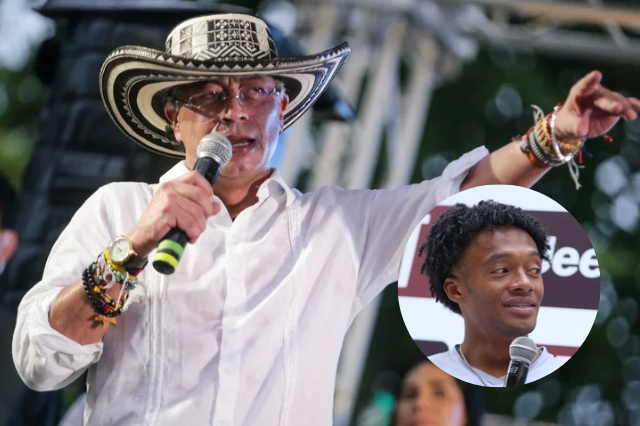
Colombian President Gustavo Petro and national football team player Juan Guillermo Cuadrado are at the center of a public controversy following an exchange on social media regarding the athlete’s interactions with lawyer Abelardo de la Espriella. The dispute began after Cuadrado participated in a video call with De la Espriella, a vocal critic of the current administration, during which the player remarked that the “horrible night has ceased,” a phrase often associated with the Colombian national anthem but used by the lawyer in a political context.
Following the circulation of the video on social media, President Petro reacted to the interaction by referencing the personal history of the player, specifically mentioning the murder of Cuadrado’s father. The President’s comment, which included the phrase “I hope you do not regret it,” prompted widespread debate regarding the boundaries of political discourse and the involvement of public figures in ideological conflicts.
The Origin of the Controversy
The tension surfaced after a video call between Juan Guillermo Cuadrado, Yerry Mina, and lawyer Abelardo de la Espriella gained traction online. In the recording, the players were seen engaging in a friendly conversation with De la Espriella, who has historically maintained a firm opposition to President Petro’s government. During the call, the phrase “cesó la horrible noche” (the horrible night has ceased) was invoked, a sentiment that served as a rallying cry for opponents of the current administration.
The public nature of the call, contrasted with the government’s official messages to the national team during the Copa América, led to significant commentary across social media platforms.
President Petro’s Response and Personal Reference
President Petro’s direct response to the video call drew immediate scrutiny due to his inclusion of details regarding Cuadrado’s family tragedy. In his reaction, the President addressed the player’s choice to interact with De la Espriella by highlighting the circumstances surrounding the death of Cuadrado’s father, who was murdered when the footballer was a child. The President’s message, “I hope you do not regret it,” was interpreted by some observers as an attempt to leverage a traumatic personal event to critique the player’s political associations.
This approach by the head of state sparked questions about the appropriateness of using personal histories in political debates. Political analysts and social media users debated whether the President had “crossed the line” by bringing a private, painful family history into a public argument about a sportsman’s social interactions.
Broader Political Context
Erasmo Zuleta, the Governor of Córdoba, entered the discourse by issuing a message to the President, stating, “The elections have already passed.” His comment reflected a broader sentiment among some regional leaders who have urged the administration to move past campaign-style rhetoric and focus on governance.
This friction highlights a recurring theme in the current administration’s communications strategy, where the President frequently utilizes social media to engage directly with critics and public figures.
The situation remains a subject of ongoing discussion in Colombian media, as the country navigates the thin line between freedom of expression and the expectations placed on national representatives.
The public debate continues as both supporters and detractors of the administration reflect on the limits of presidential engagement with private citizens.
We invite our readers to share their perspectives on this interaction in the comments section below. How should public figures balance their personal associations with their roles as national representatives?