UN Secretary-General António Guterres has arrived in Haiti to address a deepening security crisis characterized by widespread gang violence and the displacement of approximately 1.5 million people. His visit focuses on the operationalization of the Multinational Security Support (MSS) mission, a UN-authorized force intended to reclaim territory from armed groups and stabilize the nation’s collapsing institutions.
Guterres made his first official stop at the headquarters of the new gang-suppression force, a mission sanctioned by the UN Security Council to provide immediate tactical support to the Haitian National Police (HNP). The visit comes as the country faces a total breakdown of state authority in much of the capital, Port-au-Prince, where criminal coalitions now control a significant portion of the urban landscape.
The Secretary-General’s presence underscores the international community’s attempt to pivot from diplomatic discussions to active security intervention. While the MSS mission is not a traditional UN peacekeeping operation, it operates under a UN mandate to support the Haitian government in restoring order and protecting essential services, including ports, airports, and hospitals.
The Security Vacuum and the Rise of Gang Dominance
The escalation of violence in Haiti is driven by powerful gang coalitions that have transitioned from local criminal groups to organized paramilitary forces. According to reports from the United Nations Integrated Office in Haiti (BINUH), these groups have increasingly used kidnapping, sexual violence, and control of food supply routes as tools of political and territorial leverage.
In Port-au-Prince, gangs such as the “Viv Ansanm” alliance have effectively besieged key neighborhoods, cutting off access to the capital’s main arteries. This siege has paralyzed the movement of goods and people, leading to a sharp increase in the cost of basic necessities. Security analysts note that the vacuum left by the resignation of former Prime Minister Ariel Henry in early 2024 has allowed these groups to expand their influence, as political transitions remain slow and contested.
The violence is not merely opportunistic crime; it is a systemic challenge to the state. Gangs frequently target government buildings and police precincts, forcing the Haitian National Police to retreat to fortified positions. This retreat has left vast swaths of the population without any form of law enforcement, creating a cycle of impunity that the MSS mission is specifically designed to break.
A Humanitarian Emergency: 1.5 Million People Displaced
The human cost of the ongoing conflict is reflected in the massive movement of people across the country. Humanitarian agencies, including the International Organization for Migration (IOM), have documented a staggering rise in internal displacement. Current estimates suggest that the number of people affected by insecurity, including those displaced or facing imminent displacement, has reached approximately 1.5 million.

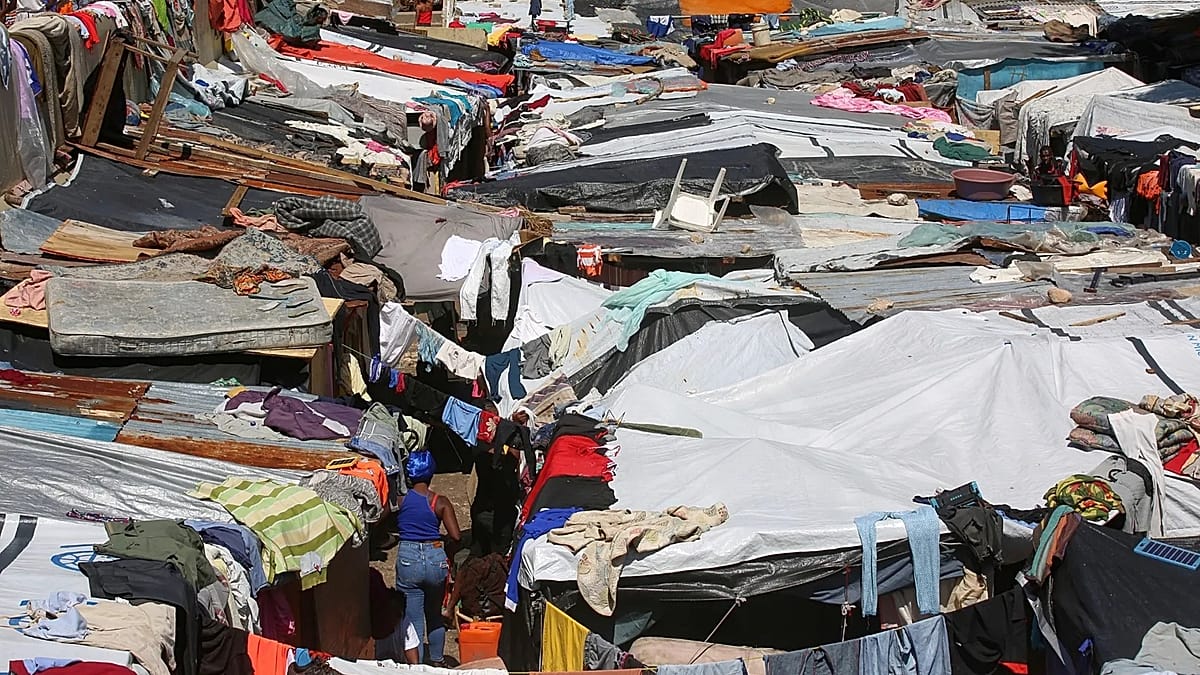
Displaced populations are largely concentrated in makeshift camps on the outskirts of Port-au-Prince. These sites often lack basic sanitation, clean water, and medical supplies, making them breeding grounds for disease. The IOM has highlighted that the displacement is not only a matter of physical movement but a loss of economic agency, as families flee with nothing, leaving behind their livelihoods and homes.
Food insecurity has reached critical levels alongside the displacement. Because gangs control the main roads leading to the capital, the delivery of humanitarian aid is frequently interrupted. The World Food Programme (WFP) has repeatedly warned that without secure corridors for aid delivery, the risk of widespread famine in the most affected areas will continue to climb.
The impact on children and women has been particularly acute. Reports of gender-based violence used as a tactic of war by gang members have surged. International human rights organizations have called for immediate protections, noting that the breakdown of the judicial system means there is currently little to no recourse for victims of these crimes.
The Role of the Multinational Security Support (MSS) Mission
The MSS mission represents a unique and controversial approach to international intervention in Haiti. Unlike traditional UN peacekeeping missions, such as the former MINUSTAH, the MSS is a non-UN-funded mission authorized by the UN Security Council to support local authorities. The mission is led by Kenya, with several other nations expressing interest in contributing personnel and resources.
The primary objectives of the MSS, as outlined in the UN mandate, include:
- Securing critical infrastructure, including the international airport and major shipping ports.
- Providing tactical support to the Haitian National Police (HNP) to regain control of gang-held territories.
- Assisting in the creation of secure environments to allow for the delivery of humanitarian aid.
- Supporting the eventual transition toward democratic elections.
The headquarters visited by Guterres serves as the nerve center for this coordination. The mission’s success depends heavily on the seamless integration of international police officers with the HNP. However, logistical challenges remain significant. The mission requires substantial funding, which must be secured through voluntary contributions from UN member states, a process that has faced delays and political hurdles.
While the UN Security Council approved the framework for this intervention, the operational reality remains complex. The mission must navigate a landscape where the line between criminal activity and political influence is often blurred, requiring a high degree of intelligence-led policing rather than just brute force.
Comparison of Security Interventions in Haiti
To understand the current strategy, it is helpful to compare the current MSS mission with the previous UN peacekeeping mission, MINUSTAH, which operated in Haiti from 2004 to 2017.

| Feature | MINUSTAH (Previous) | MSS Mission (Current) |
|---|---|---|
| Funding Source | UN Assessed Contributions | Voluntary Member State Contributions |
| Mandate Type | Full UN Peacekeeping | Multinational Security Support |
| Primary Goal | Stabilization and institution building | Gang suppression and infrastructure security |
| Leadership | UN-appointed Force Commander | Kenya-led coalition |
Political Hurdles and the Path to Stability
Military and police intervention alone cannot resolve the Haitian crisis. The security mission is intended to create the stability necessary for political reform, but the political landscape remains fragmented. The Transitional Presidential Council (TPC), established to guide the country toward elections, faces the monumental task of rebuilding trust in state institutions while under constant threat from gang activity.
A significant challenge for the MSS is the sustainability of its presence. Without a clear plan for how the Haitian National Police will eventually take over the responsibilities of the international force, there is a risk that the mission will only provide a temporary reprieve rather than a long-term solution. Strengthening the HNP through training, equipment, and increased salaries is a critical component of the broader stabilization strategy.
Furthermore, the international community’s commitment must be consistent. The reliance on voluntary funding means that the mission’s longevity is subject to the political whims of donor nations. If funding gaps emerge, the MSS may struggle to maintain the presence required to hold territory against resilient gang coalitions.
Frequently Asked Questions
What is the difference between the MSS and UN Peacekeeping?
Traditional UN Peacekeeping is funded by mandatory UN dues and follows a strict UN command structure. The MSS is a multinational force authorized by the UN but funded by voluntary contributions from individual countries, and it is led by a coalition of nations rather than the UN directly.
Why are so many people displaced in Haiti?
The displacement is primarily caused by gang violence, which includes targeted killings, kidnappings, and the occupation of residential neighborhoods. As gangs expand their control, residents are forced to flee to avoid violence or because their homes have been destroyed.
When will elections be held in Haiti?
The Transitional Presidential Council is working toward a timeline for elections, but no official date has been set. The security situation and the ability to conduct safe voting remain the primary obstacles to holding a national poll.
How is the MSS mission being funded?
The mission is not funded by the central UN budget. Instead, it relies on voluntary financial commitments from individual member states. This has created challenges in ensuring a steady stream of resources for long-term operations.
The next major checkpoint for the mission will be the upcoming UN Security Council briefing on the operational progress and funding status of the MSS, expected in the coming weeks. This briefing will determine the scale of the next phase of troop deployment and the adequacy of current resources.
What are your thoughts on the international community’s approach to Haiti? Please share your views in the comments below and share this article to keep the conversation going.
Related reading