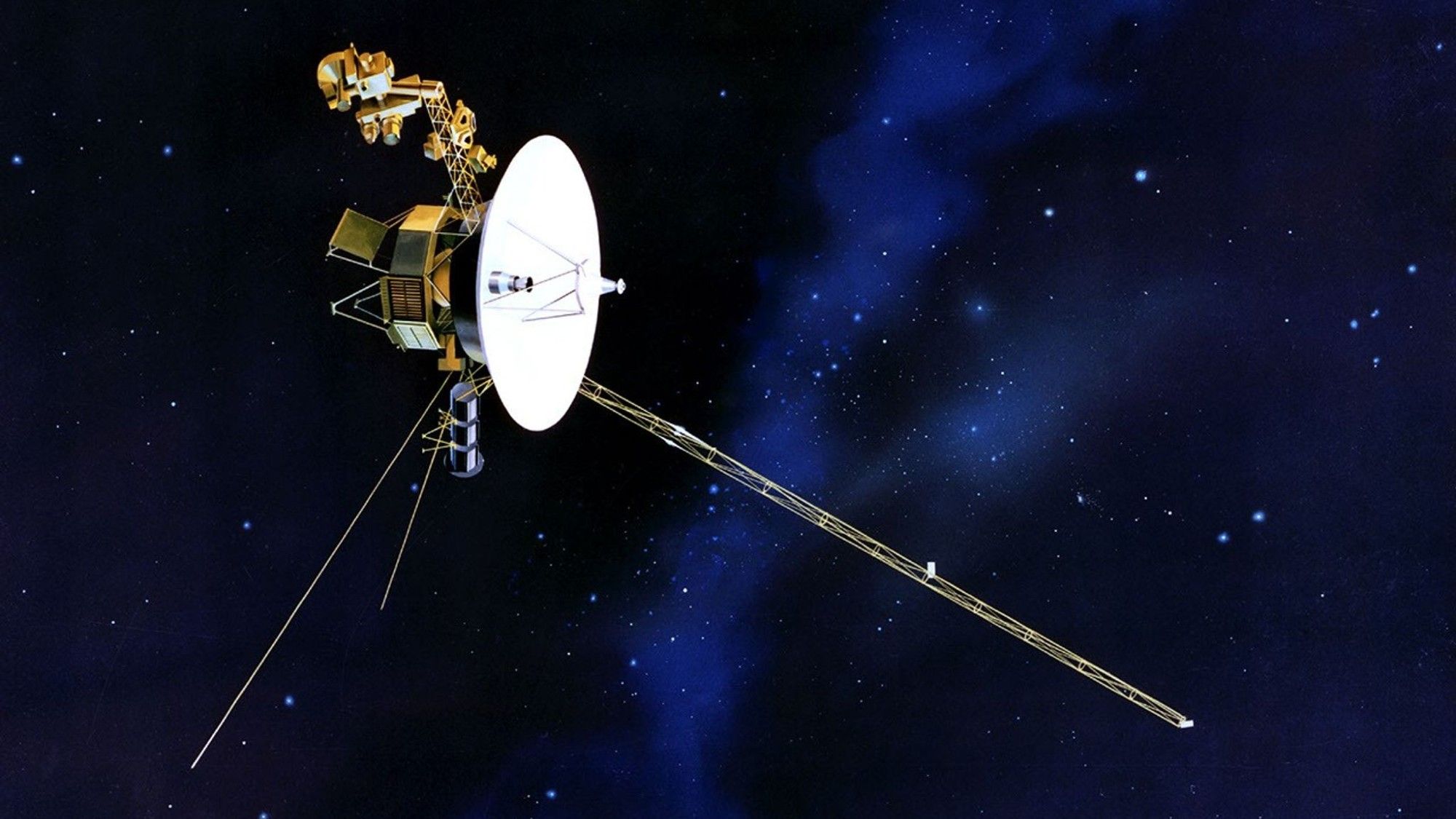
NASA has extended the operational life of Voyager 2, keeping the 48-year-old interstellar probe functioning in deep space through power management adjustments rather than turning off its science instruments. Launched in August 1977, the spacecraft currently operates more than 13 billion miles from Earth, well beyond the heliosphere in the interstellar medium. Project managers announced that recent power adjustments successfully delayed the shutdown of a key science instrument, allowing the mission to continue gathering unique data from the outer edges of the solar system.
Operating in the extreme cold of deep space presents constant engineering challenges, particularly as the spacecraft’s nuclear power source slowly degrades. According to NASA’s Jet Propulsion Laboratory (JPL), Voyager 2 draws power from a radioisotope thermoelectric generator (RTG) that loses roughly four watts of electrical output every year as its plutonium fuel decays. To compensate for this ongoing power loss, engineers previously developed a plan to turn off one of the spacecraft’s five remaining science instruments to preserve voltage and keep the mission running.
Power Management and Interstellar Science
The spacecraft’s longevity relies on careful resource allocation managed from Earth, where commands take nearly a day to reach the probe. In late 2023, mission controllers faced a critical decision regarding the depletion of the RTG. By adjusting a backup voltage safety margin—a system designed to protect hardware during electrical fluctuations—engineers found a way to keep all science instruments powered on for an additional year, according to updates from NASA’s Jet Propulsion Laboratory.
This adjustment avoids sacrificing data collection from instruments that measure plasma, magnetic fields, and energetic particles. Operating far beyond the planets, Voyager 2 provides scientists with continuous readings of the interstellar medium, measuring how the solar wind interacts with the thin gas and dust found between star systems. Its twin, Voyager 1, crossed the heliopause in 2012, followed by Voyager 2 in 2019, making both spacecraft the only human-made objects currently sampling interstellar space directly.
Engineering Challenges at the Edge of the Solar System
Maintaining contact with a probe nearly 13 billion miles away requires specialized hardware, including NASA’s Deep Space Network, a global array of massive radio antennas. Signal strength decreases drastically over these vast distances, meaning data transmission rates are remarkably slow by modern standards. Telemetry from Voyager 2 reaches Earth at a rate of just 160 bits per second.
Hardware aging adds another layer of complexity for the flight operations team. Components built in the 1970s continue to function, but thermal management and power distribution require constant monitoring. Engineers must account for the decreasing output of the plutonium-238 heat source, which also lowers the temperature of internal electronics, forcing teams to weigh whether turning off specific heaters might expose sensitive components to damaging cold.
Next Steps for the Voyager Mission
As Voyager 2 continues its journey through the Milky Way, mission planners will reassess power budgets as the spacecraft’s electrical output continues its steady decline. No final date has been set for the ultimate end of the mission, though eventual instrument shutdowns will become necessary as power drops further. NASA officials indicate that telemetry monitoring and routine health checks will continue on a daily basis.
What are your thoughts on the longevity of NASA’s historic probes? Share your perspective in the comments below.