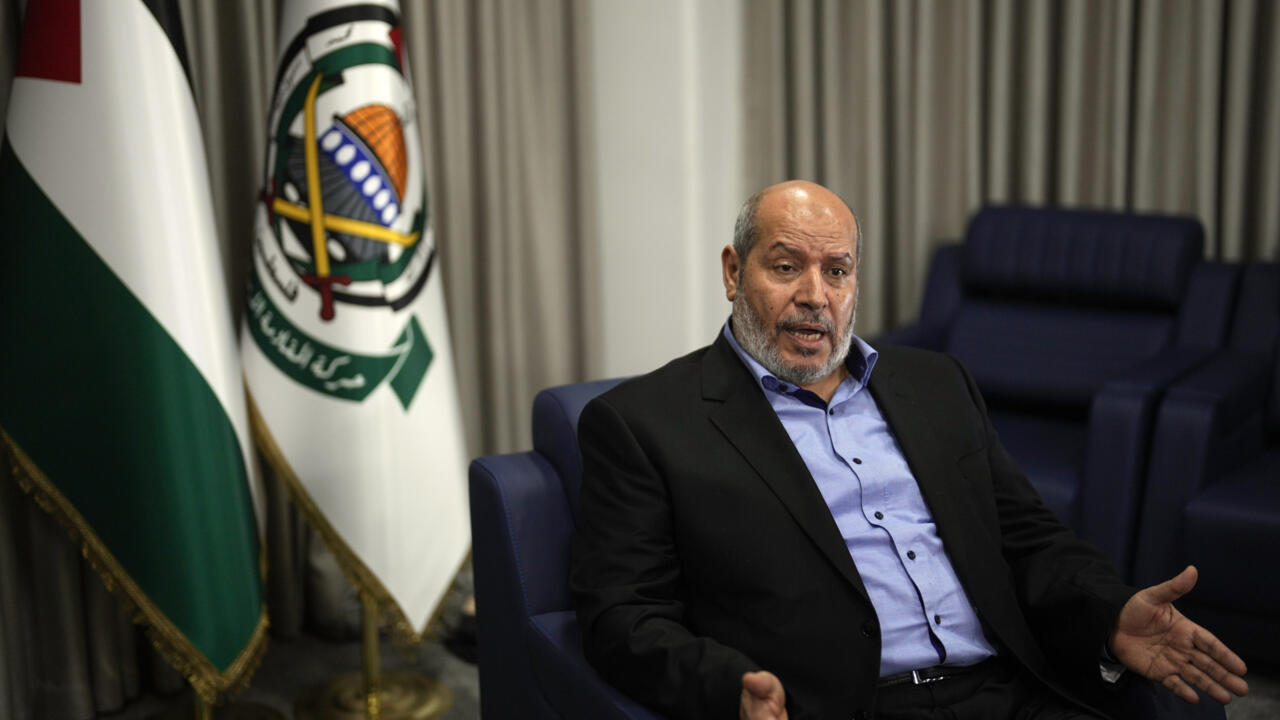
Hamas Signals Willingness to Disarm in Gaza Under Specific Conditions: A Path Towards Lasting Peace?
the fragile ceasefire in Gaza has sparked renewed discussion about the future of the region, and a recent statement from Hamas offers a potentially notable progress. Khalil al-Hayya, a key Hamas negotiator, announced the group’s readiness to relinquish its weapons arsenal in the Gaza Strip - but only under very specific conditions. This move, while conditional, represents a shift in rhetoric and could open doors to a more stable, long-term solution. But what exactly are those conditions, and what does this mean for the future of Gaza, Israel, and the broader Palestinian-Israeli conflict?
The Core Condition: End of Israeli Occupation
Hamas’s central demand is inextricably linked to the ongoing Israeli occupation. According to al-Hayya, “Our weapons are linked to the existence of the occupation and the aggression.” The group maintains that its armed resistance is a direct response to the Israeli military presence and actions in the region.
Thus, Hamas proposes a complete handover of its weaponry to a governing Palestinian Authority only after a full Israeli withdrawal. This isn’t simply about a ceasefire; it’s about achieving a sovereign and autonomous Palestinian state. This stance reflects a long-held position within hamas, viewing armed struggle as legitimate until self-determination is realized.
UN Monitoring and Rejection of International Forces
Beyond the end of occupation, Hamas has also expressed a willingness to accept a role for the United Nations. They propose the deployment of UN forces as a “separation force,” tasked with monitoring borders and ensuring adherence to a ceasefire agreement.
Though, crucially, Hamas has explicitly rejected the idea of an international force entering Gaza with the primary mission of disarming them.This distinction is vital. They appear open to external oversight for peace maintenance, but not external intervention aimed at dismantling their military capabilities. This suggests a desire for Palestinian control over security,even within a post-conflict framework.
The Shadow of Continued Violence: A Troubled Truce
While the current ceasefire has brought a halt to the most intense fighting, the situation remains deeply precarious. Recent reports indicate a disturbing trend: even during the truce, violence continues. According to gaza health officials, over 360 Palestinians have been killed by Israeli forces as the ceasefire began on October 10th.https://www.france24.com/en/middle-east/20251206-gaza-truce-incomplete-without-full-withdrawal-by-israel-qatar-pm-says This underscores the fragility of the agreement and the urgent need for a more comprehensive resolution.
Understanding the Context: Hamas, Gaza, and the Palestinian Authority
To fully grasp the significance of Hamas’s statement, it’s significant to understand the key players and the complex history of the region.
* Hamas: A Palestinian Sunni-Islamist fundamentalist institution responsible for governing the Gaza Strip as 2007. Often labeled a terrorist organization by various countries, Hamas views itself as a legitimate resistance movement.
* Gaza Strip: A self-governing palestinian territory on the eastern coast of the Mediterranean Sea. It’s one of the most densely populated areas in the world,facing significant humanitarian challenges.
* Palestinian Authority (PA): The interim self-governing body established to govern parts of the West Bank and Gaza Strip. Currently, the PA primarily controls areas of the West Bank.
* Israeli-Palestinian Conflict: A decades-long dispute over land and self-determination, rooted in competing claims to the same territory.
What Does This Mean for the Future? Potential Scenarios
Hamas’s willingness to disarm, contingent on an end to the occupation, presents several potential scenarios:
- Negotiated Settlement: This is the most optimistic outcome. It would involve Israel agreeing to a full withdrawal, leading to the establishment of a sovereign Palestinian state. This would then pave the way for Hamas to transfer its weapons to the PA.
- Continued Stalemate: If Israel refuses to withdraw,
Worth a look