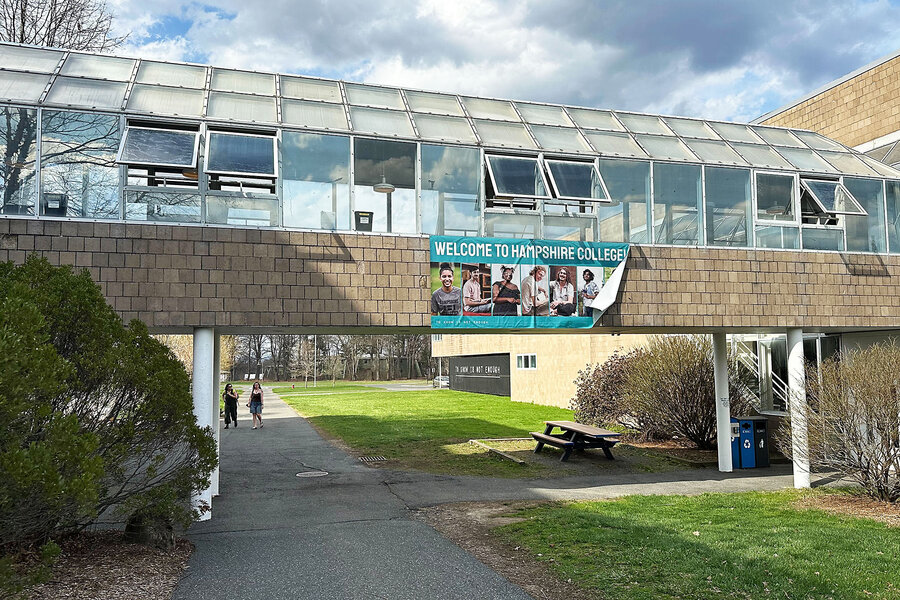
Hampshire College, the small liberal arts institution in Amherst, Massachusetts known for its experimental approach to education, will cease operations as a degree-granting college after the spring 2025 semester. The announcement, made by the college’s board of trustees in February 2024, came despite a recent $55 million fundraising campaign that had raised hopes for a turnaround. The decision underscores the deepening financial and demographic pressures facing small private colleges across the United States, even those with distinctive pedagogical models and loyal alumni networks.
Founded in 1965 as a pioneer of alternative education, Hampshire College rejected traditional academic structures such as letter grades, majors, and standardized curricula. Instead, students designed their own interdisciplinary concentrations and received narrative evaluations. This model attracted learners seeking autonomy and creativity, but it also posed challenges in terms of scalability, external validation, and financial sustainability. Over the past decade, declining enrollment, rising operational costs, and shifting student preferences have strained the college’s budget, prompting repeated efforts to stabilize its finances through fundraising, partnerships, and restructuring.
The $55 million capital campaign, launched in 2021 under the banner “Hampshire Forever,” was intended to secure the college’s future by boosting its endowment, upgrading facilities, and supporting financial aid. According to the college’s 2022 annual report, the campaign exceeded its initial goal of $50 million, reaching $55 million by mid-2023. However, officials acknowledged that even this substantial sum would not be sufficient to cover long-term operating deficits without structural changes. In a statement released alongside the closure announcement, the board noted that the funds were restricted to specific uses—such as endowment growth and campus improvements—and could not be redirected to cover annual operating losses, which had reached tens of millions of dollars in recent years.
Enrollment data from the Integrated Postsecondary Education Data System (IPEDS) shows a steep decline in Hampshire’s student body over the past decade. In fall 2013, the college enrolled 1,357 undergraduate students. By fall 2022, that number had dropped to 712—a reduction of nearly 48 percent. The trend continued into 2023, with preliminary figures indicating further decline. This drop reflects broader challenges facing small liberal arts colleges, including demographic shifts in the college-aged population, increased competition from larger universities and online programs, and growing skepticism about the return on investment of a liberal arts education.
Financial pressures were compounded by rising costs related to faculty salaries, healthcare, technology infrastructure, and compliance with federal regulations. Unlike larger institutions with diversified revenue streams, Hampshire relied heavily on tuition income, which covered approximately 80 percent of its operating budget before discounts and aid. As tuition discounts increased to attract and retain students, net revenue per student fell, widening the gap between income and expenses. The college’s audited financial statements for fiscal year 2022 showed an operating deficit of over $20 million, a figure that had persisted for several consecutive years despite cost-cutting measures.
Efforts to address the crisis included exploratory talks with other institutions about potential partnerships or mergers. In 2022, Hampshire entered into discussions with the University of Massachusetts Amherst about a possible affiliation, but those talks did not result in a formal agreement. The college also considered transitioning to a non-degree-granting entity focused on lifelong learning or continuing education programs, but ultimately concluded that such a model would not preserve its core mission or identity.
The decision to close was met with disappointment and sorrow among current students, faculty, staff, and alumni. Many expressed concern about the disruption to students’ academic progress and the loss of a unique educational experiment. In response, the college pledged to teach out current students, ensuring that all enrolled undergraduates would have the opportunity to complete their degrees by spring 2025. Hampshire also committed to preserving access to student records and transcripts through a third-party service, and to offering career and transfer counseling to support students in transitioning to other institutions.
Hampshire College’s closure adds to a growing list of small private colleges that have shut down or suspended operations in recent years. Institutions such as Antioch College, Marylhurst University, and Finch University have faced similar fates, often citing financial unsustainability and enrollment declines. Higher education analysts warn that without intervention, more colleges—particularly those with small endowments, limited geographic reach, or niche missions—may face similar challenges in the coming years.
What Made Hampshire College Different
Hampshire College’s educational philosophy centered on student-driven learning and intellectual exploration. Rather than declaring a major, students worked with faculty committees to design individualized programs of study that could span multiple disciplines. Assessment was based on portfolios, projects, and narrative feedback rather than exams or letter grades. This approach was influenced by the progressive education movements of the 1960s and drew inspiration from institutions like Antioch College and the Experimental College at the University of Wisconsin.
The college emphasized hands-on learning, social justice, and environmental sustainability. Its campus in western Massachusetts featured sustainable building practices, organic farming initiatives, and a strong commitment to diversity and inclusion. Hampshire was also one of the first U.S. Colleges to divest from fossil fuels, a decision made in 2014 after student-led advocacy. These values resonated with a segment of students seeking an education aligned with personal ethics and global citizenship.
Despite its innovations, the lack of traditional metrics such as GPAs and majors sometimes created hurdles for graduates applying to graduate programs or seeking employment in fields that rely on standardized credentials. While many alumni reported success in careers ranging from the arts and education to technology and social entrepreneurship, the college occasionally faced questions about how its model translated to conventional academic or professional pathways.
Financial Realities Behind the Fundraising Success
The $55 million raised through the Hampshire Forever campaign represented a significant achievement for a college of its size. For context, the college’s endowment stood at approximately $65 million in 2021, meaning the campaign nearly doubled its long-term investment capital. Donations came from alumni, foundations, and supporters who valued the college’s mission and wanted to ensure its survival.
However, endowment funds are typically restricted to specific purposes and generate only a limited amount of spendable income each year—usually around 4 to 5 percent of the total value under standard spending policies. Even if the entire $55 million were added to the endowment and invested conservatively, the annual payout would amount to roughly $2.2 to $2.75 million, far below the college’s annual operating budget, which exceeded $60 million in recent years. This mismatch between capital growth and operational needs meant that fundraising, while vital, could not solve the underlying imbalance between revenue and expenses.
a significant portion of the campaign’s proceeds was earmarked for capital projects, such as renovating academic buildings and upgrading student housing. These investments, while important for campus quality and safety, do not generate ongoing revenue and may even increase long-term maintenance costs. The financial boost from the campaign, though meaningful, was insufficient to offset structural deficits driven by declining enrollment and fixed costs.
Who Is Affected and What Comes Next
The closure will directly impact approximately 700 current undergraduate students, most of whom are expected to complete their degrees by May 2025. Faculty and staff will be offered severance packages and assistance with job transitions, though many face uncertainty in a competitive higher education labor market. Alumni, numbering over 20,000 worldwide, have expressed both grief and determination to preserve the college’s legacy through informal networks, digital archives, and potential future initiatives focused on lifelong learning.
Officials have stated that the college’s physical campus will be maintained during the teach-out period and may be repurposed afterward for educational, nonprofit, or community uses. No immediate buyer or successor operator has been identified, but the board has said it will explore all viable options to honor the institution’s history and serve the public good.
The next key milestone is the completion of the teach-out process, with the final cohort of students expected to graduate in spring 2025. After that, Hampshire College will cease to exist as a degree-granting institution under its current charter. The college has committed to providing regular updates through its website and direct communications with affected parties.
For students seeking official transcripts or enrollment verification, the college has partnered with the National Student Clearinghouse to ensure continued access to records. Alumni and others wishing to stay informed can follow updates via the college’s official website and social media channels.
Hampshire College’s story serves as a case study in the challenges facing innovative but financially vulnerable institutions in American higher education. While its educational model inspired many, the realities of declining demographics, rising costs, and limited revenue streams ultimately proved tricky to overcome—even with a successful fundraising campaign. As the college prepares to close its doors, its legacy will live on in the lives of those it educated and the broader conversation about the purpose and sustainability of liberal arts education in the 21st century.
We invite readers to share their thoughts and experiences related to Hampshire College or the future of small liberal arts institutions in the comments below. If you found this article informative, please consider sharing it with others who may be interested in the evolving landscape of higher education.
Worth a look