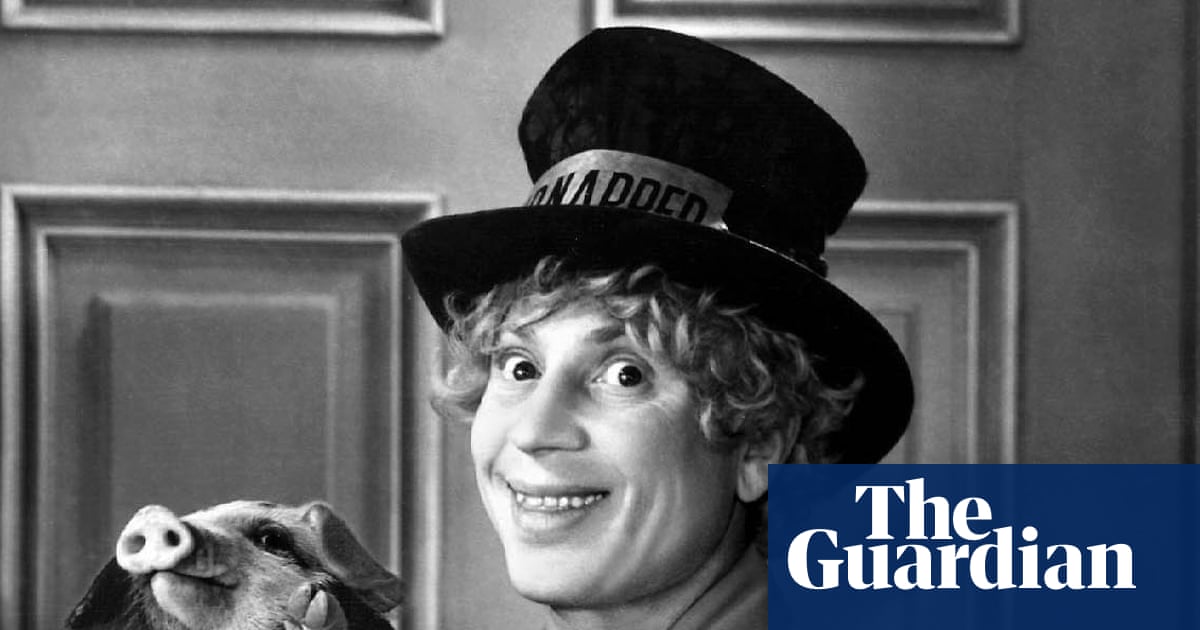
For decades, the image of Harpo Marx was etched into the collective consciousness of the American public as the ultimate pantomime. With his trademark curly red wig, tattered trench coat, and a silence as profound as it was comedic, he navigated the chaotic world of the Marx Brothers with nothing but a bicycle horn and a harp. However, new archival evidence has recently surfaced, offering a rare and surprising glimpse into the voice behind the legend. A 1964 recording has emerged, capturing the silent clown speaking to an audience, a discovery that challenges the long-held myth of his absolute stage-bound muteness.
The revelation of Harpo Marx speaking to an audience provides a fascinating postscript to a career that defined 20th-century slapstick. While fans have long known that Harpo’s silence was a deliberate, masterful performance choice—often cited as a reaction to his early stage nerves—hearing his actual voice in a public forum serves as a poignant reminder of the man beneath the greasepaint. This discovery has ignited fresh discussions among film historians and classic comedy enthusiasts, shedding light on how one of the most enigmatic figures in Hollywood history maintained his persona until the very end.
The Origins of a Silent Icon
Born Adolph Marx in New York City in 1888, the performer who would become known as Harpo began his career alongside his brothers in the vaudeville circuit around 1910, according to historical accounts archived by the Library of Congress. The transition to his iconic silent persona occurred roughly around 1915. This pivot was not merely a stylistic flourish; it was a pragmatic response to the harsh realities of the era’s critical reception. In his own autobiography, Harpo Speaks!, he recounted how his early attempts at speaking on stage were met with unfavorable reviews, leading him to abandon dialogue in favor of the expressive, physical comedy that would make him an international star.


This commitment to silence became his trademark, elevating him from a mere comedian to a master of visual storytelling. His ability to convey complex emotions, desire, and mischief without uttering a single syllable influenced generations of performers, from silent film legends to modern-day physical comedians. Despite the immense pressure to conform to the talkie era of the 1930s and 40s, Harpo remained steadfast. The industry lore often highlights his refusal to speak even when offered significant financial incentives, such as the widely documented anecdote regarding the film A Night in Casablanca, where he reportedly turned down a substantial sum to speak a single word.
Unearthing the 1964 Recording
The recent emergence of the 1964 audio recording captures Harpo near the end of his life, providing an intimate, unscripted moment that contrasts sharply with his stage persona. While the Marx Brothers were known for their tightly choreographed routines and sharp, acerbic wit—anchored by Groucho’s rapid-fire delivery and Chico’s distinct dialect—Harpo’s contribution was always the surreal, the musical, and the wordless. This recording, however, strips away the artifice, allowing listeners to hear the man who, in his private life, was known to be articulate, thoughtful, and deeply devoted to his family.
The significance of this find cannot be overstated for scholars of American entertainment. It serves as a reminder that the “silent” Harpo was a character, a mask worn by a man who possessed a full range of human expression. The recording underscores the discipline required to maintain such an iconic persona over five decades. As noted in biographies, including research supported by the Encyclopaedia Britannica, Harpo’s life outside the studio was vastly different from the chaotic, raincoat-clad figure seen on screen, further emphasizing the depth of his craft.
Why the Silence Mattered
To understand the weight of this recording, the cultural climate of the mid-20th century. The Marx Brothers represented a specific kind of subversion—a chaotic, anti-establishment energy that resonated during the Great Depression and through the post-war era. Harpo’s silence was the perfect foil to the noise of the world around him. By choosing not to speak, he became a blank canvas upon which the audience could project their own interpretations. He was the innocent in a world of grifters and wits.
The fact that he occasionally spoke in character during these later years suggests that his silence was always a tool, rather than a physical limitation or a psychological crutch. It was a choice he made to serve the comedy. When he did speak, it was often with a sense of warmth and humor that reflected his real-life personality, which those who knew him described as gentle and kind. This new audio evidence confirms what many close to him had long maintained: Harpo was not a man who couldn’t speak, but a man who understood that his power lay in remaining quiet.
Legacy of the Marx Brothers
The brothers—Groucho, Chico, Harpo, and Zeppo—collectively transformed the landscape of comedy. While their films remain highly accessible on streaming platforms and through digital archives, the discovery of this recording adds a new layer to our understanding of their collaborative process. The dynamic between them was essential; without Harpo’s silent, musical interludes, the films would have lacked the surrealist edge that made them timeless.

For those interested in the history of the Marx Brothers, official archives and the International Marx Brothers Fan Club provide extensive resources on their filmography and off-screen lives. These platforms remain the primary source for verified updates regarding the brothers’ estate and any further archival discoveries. As we continue to re-examine the lives of these legends, their influence on modern comedy remains unparalleled. The ability to revisit these moments, even decades after their passing, ensures that their craft remains a subject of study and admiration for new audiences worldwide.
Key Takeaways
- The Persona: Harpo’s silence was a deliberate artistic choice, adopted around 1915 to overcome stage nerves and refine his unique brand of physical comedy.
- The Discovery: The 1964 recording offers a rare, verified instance of the performer breaking his silent character in a public setting.
- The Man Behind the Mask: Despite his on-screen antics, Harpo was an accomplished, self-taught harpist and a thoughtful individual, contrary to the “childlike” character he portrayed.
- Historical Context: The find highlights the importance of archival preservation in understanding the evolution of 20th-century performance art.
As historians continue to catalog and analyze these newly surfaced recordings, the industry anticipates further insights into the brothers’ later years. While no further public hearings or official estate releases are scheduled at this time, fans are encouraged to monitor reputable film history databases for future updates. We invite our readers to share their thoughts on the enduring appeal of the Marx Brothers in the comments section below, and to join the conversation on how these rare glimpses into the past change our appreciation for the golden age of Hollywood.