
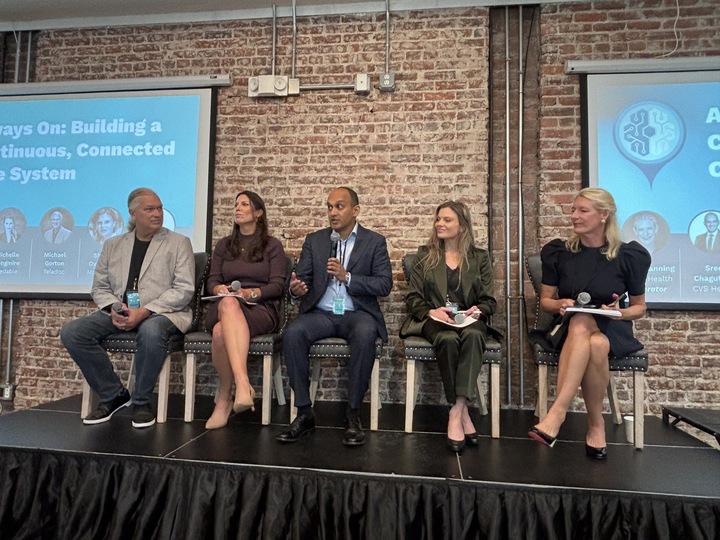
Healthcare Innovation needs a Reality check: Top Priorities from Industry Leaders
The future of healthcare is being actively shaped right now. At the recent Healthcare 2030 summit hosted by the Digital Medicine Society in Washington, D.C., a panel of seasoned healthcare executives and entrepreneurs pinpointed critical areas were innovation needs to focus – and it’s not always the flashiest tech. Thes leaders emphasized practical solutions to deeply rooted problems, offering a valuable roadmap for innovators looking to make a real impact.
Here’s a breakdown of the key issues they highlighted, and what it means for the future of your health:
1.AI as a Safety net: Reducing Medical Errors
Imagine a doctor with a real-time AI assistant, quietly double-checking decisions. That’s the vision Michael Gorton, founder and former CEO of Teladoc Health, shared.Medical errors tragically contribute to roughly 250,000 deaths annually.
Gorton argues that these aren’t necessarily failures of skill, but consequences of overwhelming workloads. AI can act as a crucial safety net, offering a second opinion and perhaps preventing devastating mistakes.Think of it as a constant, supportive voice saying, “Perhaps consider this alternative.”
2. Get Your Boots on the Ground: The Importance of Clinical Reality
Too many healthcare startups have brilliant ideas on paper, but lack real-world experience. Sree chaguturu, President of Healthcare Delivery at CVS Health, stressed the need to live the problem.
He pointed to Teladoc’s early success as a prime example. They didn’t just build a virtual care platform; they collaborated directly with clinicians to understand their daily challenges and integrate seamlessly into existing workflows. The takeaway? The closer you are to the problem, the better your solution will be.
3. You Own Your Health Data: Time for Patient Empowerment
For Shauna Overgaard, Senior Director of AI Strategy & Frameworks at mayo Clinic, patient data ownership is the most pressing issue in healthcare today. You make decisions about your health every single day.
overgaard believes it’s time to democratize that control. She envisions a future where you have your own secure database of health information, deciding exactly how – and with whom – it’s shared. This growing movement puts you in the driver’s seat of your healthcare journey.
4. Strengthening the Foundation: The Power of the PCP Relationship
A strong relationship with a primary care provider (PCP) isn’t just good for your health; it’s good for the healthcare system. Ann Allen, COO and Director of Health System Partnerships at Amazon One Medical, highlighted the potential cost savings.
According to Allen, prioritizing PCP-patient relationships could save an estimated $67 billion annually by reducing needless emergency room visits and specialist care.It’s a simple concept with a potentially massive impact: invest in the foundation of care.
What does this mean for you?
These insights aren’t just for tech developers. They’re a signal to all of us that the most impactful healthcare innovations will be those that:
* Prioritize safety and error reduction.
* Are deeply rooted in clinical realities.
* Empower patients with control over their data.
* Strengthen the core relationship between patients and their doctors.
The future of healthcare isn’t about replacing human connection with technology. It’s about enhancing that connection with smart, practical solutions that address the real needs of patients and providers alike.





