Hospital at Home: A Viable Solution for Rural Healthcare Access and Cost Reduction?
The challenges facing rural healthcare are well-documented: limited access to specialists, strained resources, and escalating costs.But a growing body of evidence suggests a promising solution is within reach – the hospital-at-home model.Recent research, published this month, reinforces the potential of bringing acute care directly to patients in rural communities, demonstrating comparable outcomes to conventional hospital stays with the possibility of notable cost savings and dramatically improved patient satisfaction.
Study Highlights: Positive Outcomes Across the Board
A study spearheaded by researchers at Mass General Brigham, and involving three rural healthcare facilities – Blessing Hospital in Illinois, Hazard Appalachian Regional Healthcare Regional Medical Center in kentucky, and Wetaskiwin Hospital and Care Center in Alberta, Canada – investigated the efficacy of hospital-at-home programs. The research encompassed 161 adult patients admitted for acute conditions commonly seen in rural populations, including heart failure, COPD, asthma, and infections.
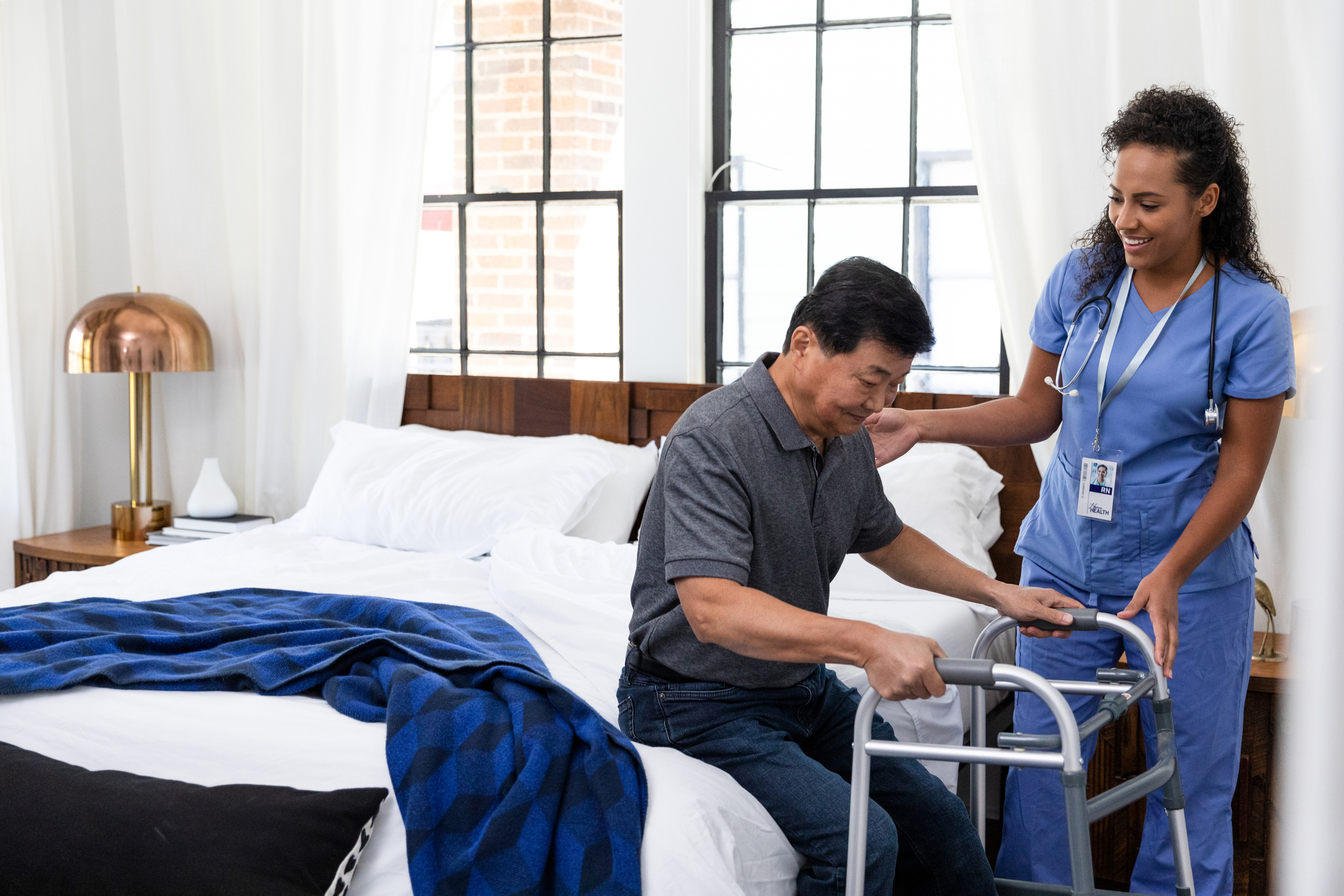
Patients were divided into two groups: 82 continued care in a traditional hospital setting, while 79 received comprehensive care in their homes. The at-home care model wasn’t reliant on cutting-edge technology, but rather a robust combination of consistent, high-touch support: twice-daily visits from nurses and paramedics, coupled with daily virtual check-ins with a physician or advanced practice provider.
The results were compelling. While overall costs between the two groups were statistically similar, a clear trend emerged. Patients transitioned to the hospital-at-home program within the first three days of their hospital stay experienced a remarkable 27% reduction in costs compared to those receiving standard inpatient care.
Dr. David Levine,the study’s lead researcher,explains this finding: “The key is early transition. Patients who spent a significant portion of their care at home realized the cost benefits of that lower-cost setting. Those who remained in the hospital for several days before transitioning saw that advantage diminished.”
Safety and Patient Experience: No compromises
Crucially, the study found no compromise in patient safety. 30-day readmission rates and the incidence of adverse events were comparable between both groups. This addresses a primary concern surrounding at-home care – ensuring patients receive the same level of monitoring and intervention as they would in a hospital.
beyond safety, the patient experience was significantly enhanced. Those treated at home demonstrated a notably higher level of physical activity, averaging 700 more steps per day, and reported nearly double the satisfaction with their care, as measured by net promoter scores. This speaks to the comfort, convenience, and personalized attention inherent in receiving care within familiar surroundings.
Feasibility and Future Directions
One of the most encouraging aspects of this research is the practicality of implementation. The technology utilized was readily available,suggesting that scaling these programs doesn’t require considerable investment in novel infrastructure.Dr. Levine notes the importance of considering cell service reliability in rural areas,but emphasizes this isn’t an insurmountable barrier.
Looking ahead, Dr. Levine and his team at Mass General are conducting further analyses focusing on the critical role of family caregivers and a deeper understanding of physical activity patterns in rural patient populations. They are also advocating for research into hospital-at-home models that are fully self-reliant of brick-and-mortar facilities, perhaps unlocking even greater efficiencies and access.
This research, supported in part by ARPA-H funding aimed at improving health outcomes in rural America, underscores a pivotal shift in healthcare delivery. Hospital-at-home isn’t simply a trend; it’s a potentially transformative solution for bridging the healthcare gap in rural communities, offering a path towards more accessible, affordable, and patient-centered care.
Worth a look