
The World Health Organization (WHO) has issued updated heat-health prevention guidelines following reports that approximately 200,000 people in Europe died due to heat-related causes over a four-year period. These new strategies focus on mitigating extreme cardiovascular and respiratory risks through enhanced early warning systems and improved urban infrastructure.
The WHO’s directive comes as climate data confirms an increase in the frequency and intensity of heatwaves across the European continent. Health officials warn that rising temperatures are no longer just a matter of discomfort but a significant driver of preventable mortality, particularly among populations with pre-existing medical conditions.
The updated guidance emphasizes the need for national governments to move beyond reactive emergency measures toward proactive, long-term heat-health action plans. These plans aim to address the physiological strain that extreme heat places on the human body, which often manifests as acute cardiovascular failure.
The rising toll of extreme heat in Europe
Recent environmental health studies and mortality data indicate that heat-related deaths in Europe have reached critical levels. During a recent four-year window of extreme weather events, an estimated 200,000 deaths were linked to high temperatures across the region. While heat-related mortality is difficult to track because it often presents as underlying conditions like heart failure, researchers have identified a clear correlation between temperature spikes and hospital admissions.
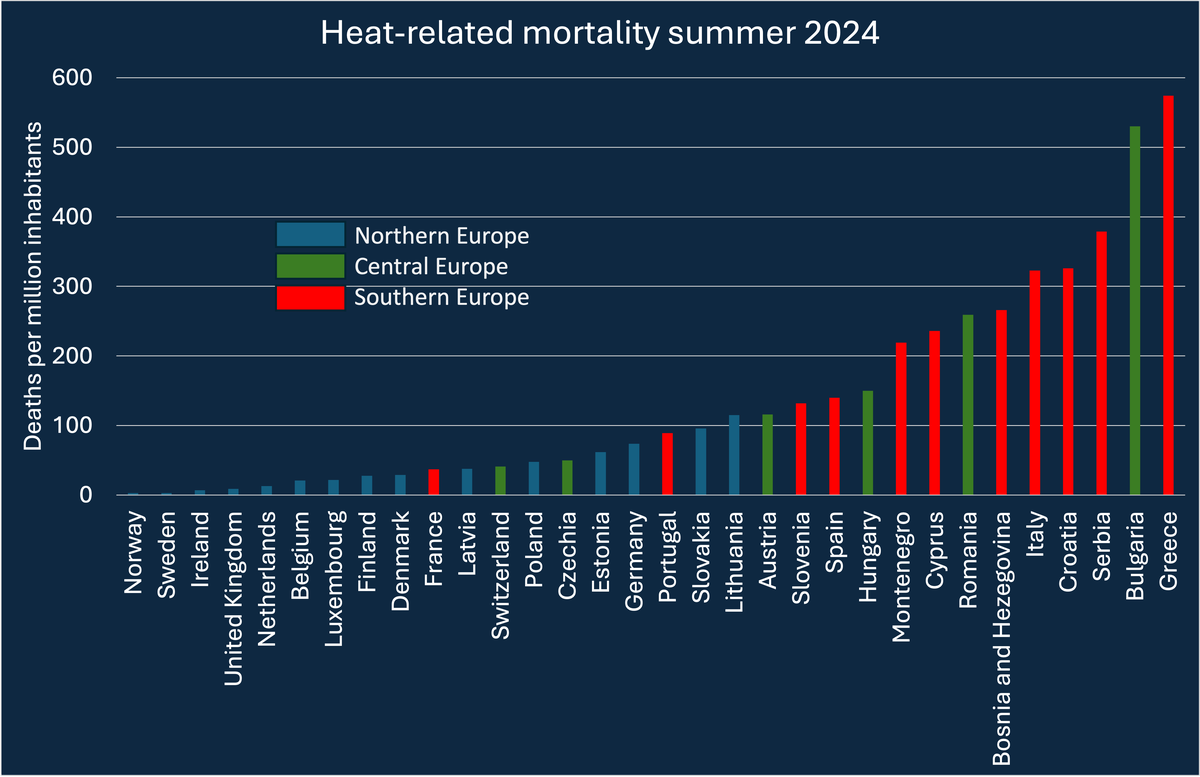
The impact is not uniform across the continent. Southern European nations, including Spain, Italy, and Greece, have frequently reported higher mortality rates during summer months. However, Northern European countries are seeing a rise in heat-related incidents as their infrastructure and populations are less adapted to sustained high temperatures. This shift suggests that the geographic scope of heat-related health crises is expanding.
Climate scientists note that the “heatwave” phenomenon is evolving. Instead of brief spikes in temperature, Europe is increasingly experiencing “heat domes”—periods of high pressure that trap hot air over a region for extended durations. This lack of nocturnal cooling prevents the human body from recovering from daytime heat stress, a factor that contributes significantly to the mortality figures cited by health experts.
How extreme heat increases cardiovascular risk
The World Health Organization highlights a direct link between rising ambient temperatures and increased cardiovascular strain. When the body is exposed to extreme heat, it initiates several physiological responses to maintain a stable internal temperature, many of which place immense pressure on the heart and circulatory system.
To cool down, the body undergoes vasodilation, where blood vessels near the skin expand to facilitate heat release through sweating. This process requires the heart to pump blood more rapidly and forcefully to the periphery. For individuals with weakened hearts or existing coronary artery disease, this increased cardiac output can lead to arrhythmia, myocardial infarction, or sudden cardiac arrest.
Dehydration also plays a critical role in cardiovascular complications. As the body loses fluids through sweat, blood volume decreases, causing the blood to become more viscous or “thick.” This increased viscosity makes it harder for the heart to circulate blood and raises the risk of blood clots, which can lead to strokes or pulmonary embolisms. The combination of high heart rates and thickened blood creates a high-risk environment for cardiovascular events during heatwaves.
Beyond the heart, the kidneys are also at risk. Reduced blood flow and dehydration can trigger acute kidney injury (AKI), which further complicates the body’s ability to manage electrolyte balances. These imbalances, in turn, can trigger further cardiac irregularities, creating a dangerous physiological feedback loop.
The WHO’s new heatwave prevention framework
In response to these escalating risks, the WHO has outlined a framework for “Heat-Health Action Plans” (HHAPs). These plans are designed to be multi-sectoral, involving not just health departments but also urban planners, meteorologists, and emergency services. The new guidelines prioritize four key pillars of intervention:
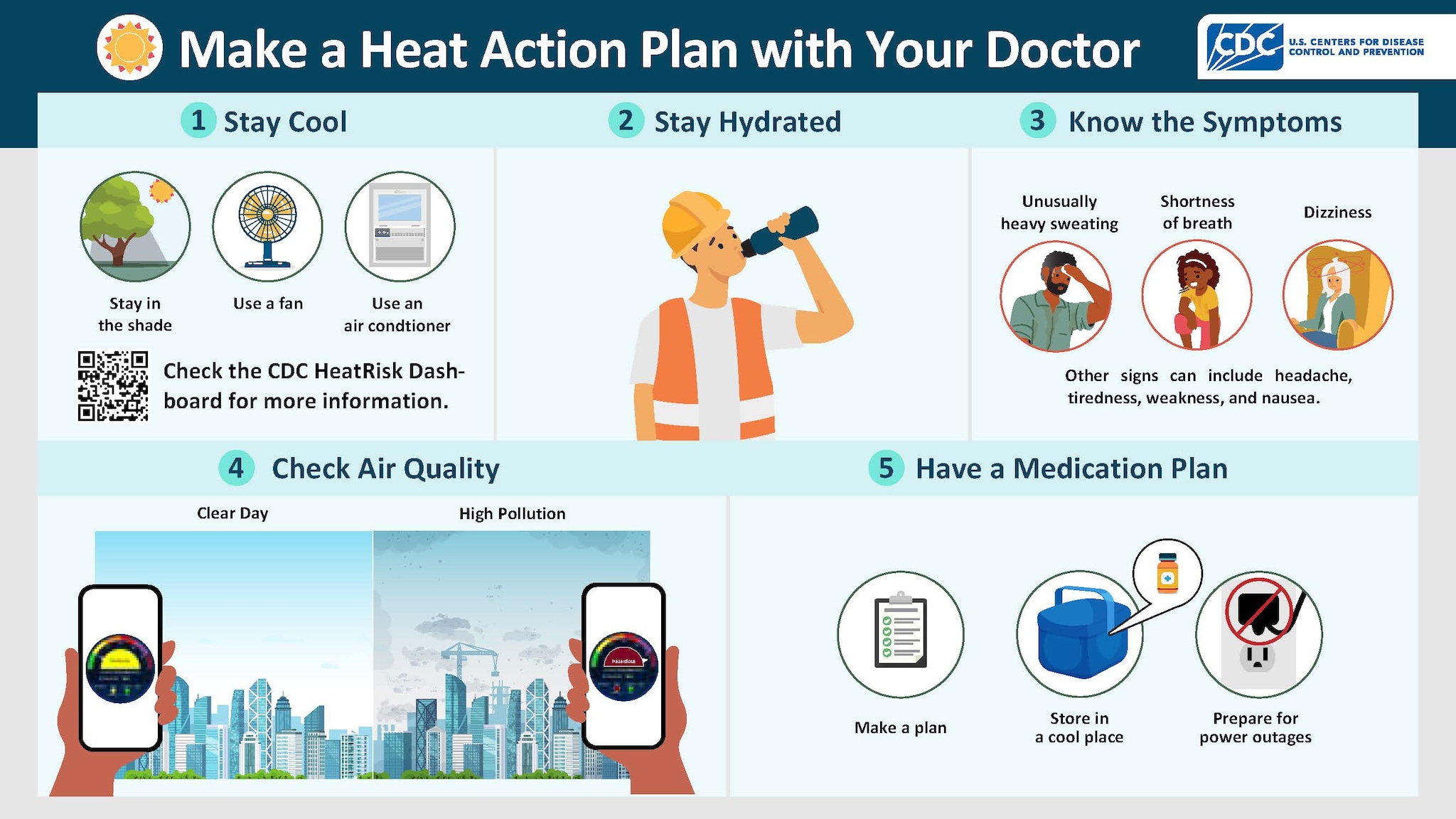
- Early Warning Systems (EWS): Implementation of highly localized, accurate weather forecasting that triggers specific public health responses before temperatures reach dangerous thresholds.
- Public Communication: Standardized messaging to inform citizens of the risks and provide actionable advice, such as hydration protocols and the identification of heatstroke symptoms.
- Health System Preparedness: Ensuring hospitals and clinics are equipped to handle surges in heat-related admissions, including adequate cooling facilities and specialized training for staff.
- Urban and Structural Adaptation: Long-term changes to the built environment to reduce heat retention in cities.
The WHO stresses that an effective early warning system must do more than just predict heat; it must communicate the specific risk to different demographic groups. For example, a warning might trigger a “check-on-your-neighbor” protocol for elderly residents or a mandatory rest period for outdoor laborers.
Protecting the most vulnerable populations
Health data consistently shows that the impact of heatwaves is not distributed equally. Certain groups face significantly higher risks of mortality and morbidity. The WHO identifies the following populations as being at the highest risk during extreme heat events:

The Elderly: As people age, the body’s ability to thermoregulate—the process of maintaining a stable internal temperature—diminishes. Older adults often have a reduced sensation of thirst, leading to dehydration, and may have diminished sweat gland function. Additionally, many elderly individuals rely on medications, such as diuretics or beta-blockers, which can interfere with the body’s ability to respond to heat stress.
Individuals with Chronic Conditions: Those with pre-existing cardiovascular, respiratory, or renal diseases are at much higher risk. The physiological strain of heat can exacerbate chronic obstructive pulmonary disease (COPD) or cause a sudden worsening of congestive heart failure.
Outdoor Workers: Laborers in construction, agriculture, and logistics are often exposed to direct sunlight and high ambient temperatures for extended periods. Without mandatory shade breaks, hydration access, and regulated work schedules, these workers face high rates of heat exhaustion and heatstroke.
Socio-economically Disadvantaged Groups: Access to air conditioning and climate-controlled environments is a major determinant of survival. Populations living in poorly insulated housing or in areas with limited green space are more likely to suffer during prolonged heat events.
Urban planning as a long-term defense
A significant component of the new WHO guidance involves addressing the “Urban Heat Island” (UHI) effect. This phenomenon occurs when cities replace natural land cover with dense concentrations of pavement, buildings, and other surfaces that absorb and retain heat. As a result, urban areas can be several degrees warmer than surrounding rural areas, even at night.
To combat this, the WHO recommends several urban design interventions:
- Expansion of Green Infrastructure: Increasing the number of parks, street trees, and green roofs to provide natural shade and facilitate evaporative cooling.
- Use of Reflective Materials: Implementing “cool roofs” and light-colored pavements that reflect rather than absorb solar radiation.
- Water Features: Integrating fountains, canals, and misting stations into public spaces to provide localized cooling.
- Ventilation Corridors: Designing city layouts that allow for natural wind flow to dissipate trapped heat.
These structural changes are viewed as essential for making cities resilient to the projected temperature increases of the coming decades. While the initial investment in green infrastructure can be high, the WHO suggests that the long-term savings in healthcare costs and lost labor productivity far outweigh the implementation expenses.
Comparative Heat Risk Summary
| Risk Factor | Physiological Mechanism | Primary Target Group |
|---|---|---|
| Dehydration | Reduced blood volume and increased blood viscosity. | Elderly, children, and those with limited mobility. |
| Vasodilation Strain | Increased heart rate to facilitate surface cooling. | Individuals with cardiovascular disease. |
| Respiratory Stress | Increased breathing rate and potential for poor air quality. | People with asthma or COPD. |
| Direct Heatstroke | Failure of the body’s thermoregulation system. | Outdoor workers and athletes. |
The data suggests that while heatstroke is the most visible symptom of heat exposure, the “silent” cardiovascular and renal failures are the primary drivers of the mortality figures reported in Europe. Addressing these underlying physiological risks requires a shift in how public health agencies approach heatwave management.
As international climate negotiations continue, the WHO’s updated guidelines will likely serve as a blueprint for national health policies. The organization has signaled that it will continue to monitor mortality trends and update its recommendations as new longitudinal studies on heat-health interactions become available.
The next major update regarding global heat-health protocols is expected to be presented during the upcoming World Health Assembly, where member states will discuss the integration of these guidelines into national emergency frameworks.
Please share this article to help spread awareness about heat safety and cardiovascular protection. For more updates on global health and climate policy, follow World Today Journal.