
The halls of the Austrian National Council, typically a site of measured legislative debate, have recently become a flashpoint for one of the most contentious linguistic and political battles in modern Europe. At the center of this storm is Herbert Kickl, the leader of the populist Freedom Party of Austria (FPÖ), whose repeated use of the term “remigration” has ignited a firestorm of criticism from political opponents, civil rights advocates, and parliamentary leadership.
The controversy is not merely a dispute over semantics; We see a profound clash over the future of Austrian identity and the limits of democratic discourse. While Kickl and the FPÖ defend the term as a legitimate policy discussion regarding the repatriation of undocumented migrants, critics argue the word serves as a “dog whistle” for a much more radical agenda: the mass deportation of people with migrant backgrounds, including those who hold Austrian citizenship.
The tension reached a boiling point when Kickl faced formal reprimands within the parliament. These disciplinary actions follow a series of inflammatory statements that opponents claim violate the decorum of the National Council and threaten the social cohesion of the nation. As the FPÖ continues to see a surge in domestic popularity, the debate over “remigration” has moved from the fringes of extremist forums into the very heart of the Austrian state.
The Semantic Battlefield: Defining ‘Remigration’
To understand why a single word has caused such a political earthquake, one must look at the divergent ways “remigration” is being defined in the current European landscape. In a literal, dictionary sense, remigration refers to the process of people returning to their country of origin. For the FPÖ, Here’s presented as a pragmatic solution to the migration challenges facing the European Union, focusing on the enforcement of existing laws regarding the return of individuals whose asylum claims have been rejected.

However, in the context of far-right political movements across Germany and Austria, the term has acquired a much more sinister connotation. Human rights organizations and political analysts point out that “remigration” is frequently used by extremist groups to advocate for the large-scale removal of entire communities based on ethnic or religious identity. This includes “naturalized” citizens—individuals who have legally acquired Austrian nationality but are viewed by hardliners as “not truly Austrian.”
This distinction is critical to the current parliamentary friction. When Kickl uses the term, his supporters often interpret it as a call for stricter border controls and lawful deportations. Conversely, his detractors see it as a euphemism for ethnic cleansing or a “Great Replacement” agenda—a conspiracy theory suggesting that indigenous European populations are being deliberately replaced by non-European migrants. The ambiguity of the term allows the FPÖ to maintain a degree of plausible deniability while signaling radical intentions to its most fervent base.
The Rise of Herbert Kickl and the FPÖ
The intensity of this controversy cannot be decoupled from the current political trajectory of the Freedom Party of Austria. Under Herbert Kickl’s leadership, the FPÖ has transitioned from a niche populist party into a dominant force in Austrian politics. The party has successfully tapped into widespread anxieties regarding inflation, the cost of living, and the perceived loss of national sovereignty due to European Union migration policies.
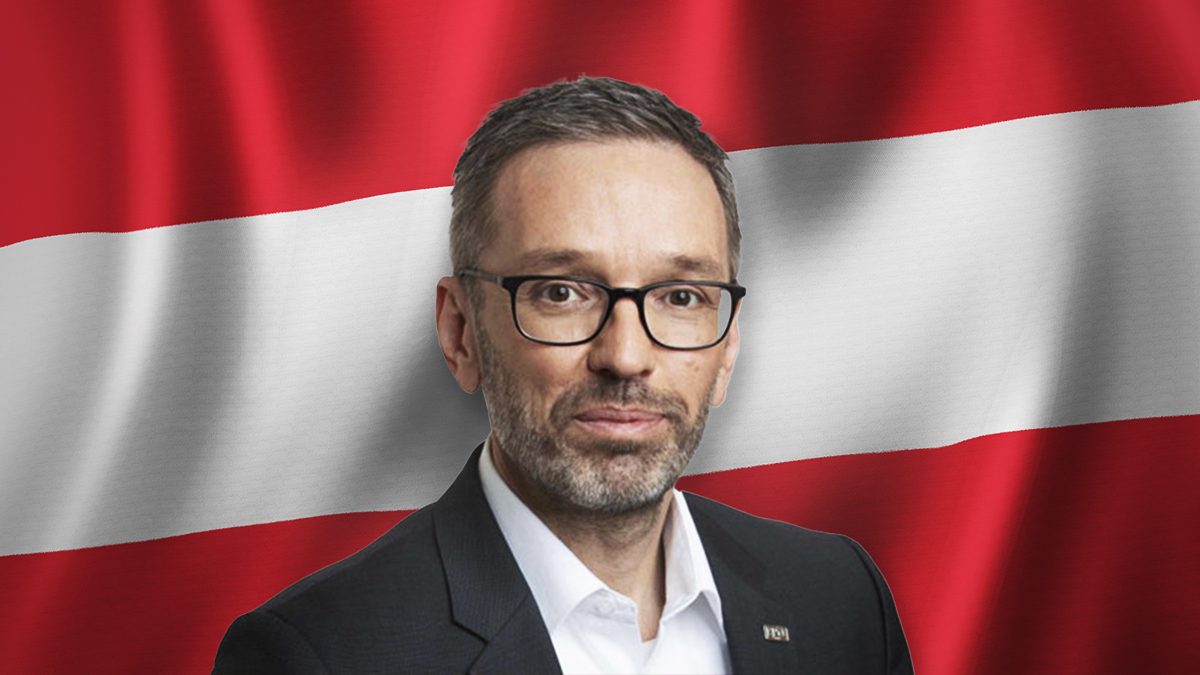
Kickl himself has become a polarizing figure, known for a combative and unapologetic rhetorical style. Unlike many mainstream politicians who seek to moderate their language to appeal to a broader electorate, Kickl has leaned into the confrontation. This strategy has yielded significant results at the ballot box, with the FPÖ consistently polling at the top of recent national surveys, often leading the center-right People’s Party (ÖVP) and the Social Democrats (SPÖ).
This rise has fundamentally altered the dynamics of the Austrian government. The FPÖ’s strength has made it increasingly challenging for traditional parties to form stable coalitions without addressing the populist demands for much stricter immigration controls. As Kickl moves closer to a position of significant executive power, his use of terms like “remigration” is no longer seen as mere campaign rhetoric, but as a potential blueprint for future government policy.
Parliamentary Fallout and the Mechanism of Reprimand
The formal reprimands issued to Kickl in the National Council are a direct response to what parliamentary leadership deems a breach of the rules of order. In the Austrian parliamentary system, the President of the National Council has the authority to maintain decorum and can issue warnings or reprimands to members who use language that is deemed insulting, inflammatory, or disruptive to the dignity of the institution.
The decision to reprimand Kickl stems from his tendency to use the parliamentary floor to deliver highly charged speeches that target specific ethnic or religious groups. Critics argue that by using “remigration” in a legislative setting, Kickl is attempting to “normalize” extremist concepts, bringing them from the fringes of political thought into the official record of the state. This, they argue, undermines the parliament’s role as a space for inclusive and respectful democratic deliberation.
The FPÖ has responded to these reprimands with characteristic defiance. The party often frames these disciplinary actions as “censorship” or “an attempt by the political establishment to silence the voice of the people.” By casting himself as a victim of a “system” that is afraid of the truth, Kickl further strengthens his bond with his electorate, turning a procedural reprimand into a political rallying cry.
The ‘Potsdam Meeting’ and the Extremist Connection
A significant portion of the public outcry regarding “remigration” was fueled by revelations concerning a private meeting held in Potsdam, Germany, in early 2024. While the meeting was not held in Austria, the participants and the topics discussed—specifically the concept of “remigration”—had profound implications for the Austrian political landscape.
Reports indicated that high-ranking members of various far-right parties and extremist activists gathered to discuss plans for the mass deportation of migrants and people with “non-indigenous” backgrounds. The meeting allegedly involved members of the Identitarian Movement, a group known for its radical anti-immigrant stances. The revelation that “remigration” was a central theme of such a gathering provided critics with the “smoking gun” they needed to argue that the term was not a benign policy proposal, but a coordinated extremist goal.
For the Austrian opposition, the Potsdam connection serves as proof that the FPÖ’s rhetoric is aligned with a broader, more dangerous European movement. They argue that the party’s leadership is either actively participating in these extremist circles or, at the very least, providing them with political cover. This connection has forced the conversation away from technical migration statistics and toward the fundamental question of whether the FPÖ’s ideology is compatible with the democratic values of the Austrian Republic.
Implications for Austrian Democracy and Social Cohesion
The debate over “remigration” carries heavy implications for the social fabric of Austria. Beyond the political maneuvering in Vienna, the rhetoric has a tangible impact on the lived experiences of Austria’s diverse population. For many migrant communities, the term is not a theoretical political concept but a direct threat to their sense of belonging and security.
Sociologists warn that the normalization of such language can lead to increased social polarization and a rise in hate crimes. When political leaders use terms that suggest certain groups of people are “out of place” or “temporary,” it can embolden radical elements of society to act on those sentiments. This creates a cycle of distrust that makes social integration more difficult and further fuels the populist narrative of a “divided nation.”
the controversy poses a challenge to the institutional stability of the Austrian state. If a major political party is perceived as being aligned with extremist ideologies, it complicates the ability of the state to maintain a unified democratic consensus. The struggle currently unfolding in the National Council is, in many ways, a test of whether Austrian democratic institutions can withstand the pressure of a highly polarized and populist-driven political era.
Key Takeaways
- The Term: “Remigration” is used by the FPÖ as a policy term for legal deportations, but is viewed by critics as a euphemism for mass ethnic deportation.
- The Leader: Herbert Kickl has leveraged this rhetoric to drive the FPÖ to the forefront of Austrian politics, often defying parliamentary decorum.
- The Context: The controversy is linked to broader European far-right movements and extremist gatherings, such as the meeting in Potsdam.
- The Stakes: The debate impacts not just policy, but the social cohesion of Austria and the fundamental norms of its democratic institutions.
As the political landscape in Austria continues to shift, all eyes remain on the next session of the National Council. The upcoming electoral cycles will likely serve as the ultimate referendum on Herbert Kickl’s rhetoric and the FPÖ’s vision for the country. Whether “remigration” remains a controversial talking point or becomes a pillar of official state policy is a question that will define the next decade of Austrian governance.
What are your thoughts on the use of “remigration” in European political discourse? Does it represent a legitimate policy debate or a threat to democratic norms? Let us know in the comments below and share this article to join the conversation.
Next Checkpoint: Monitor the upcoming parliamentary debates in the Austrian National Council for any further official rulings or formal statements from the Presidency regarding parliamentary decorum.
Worth a look