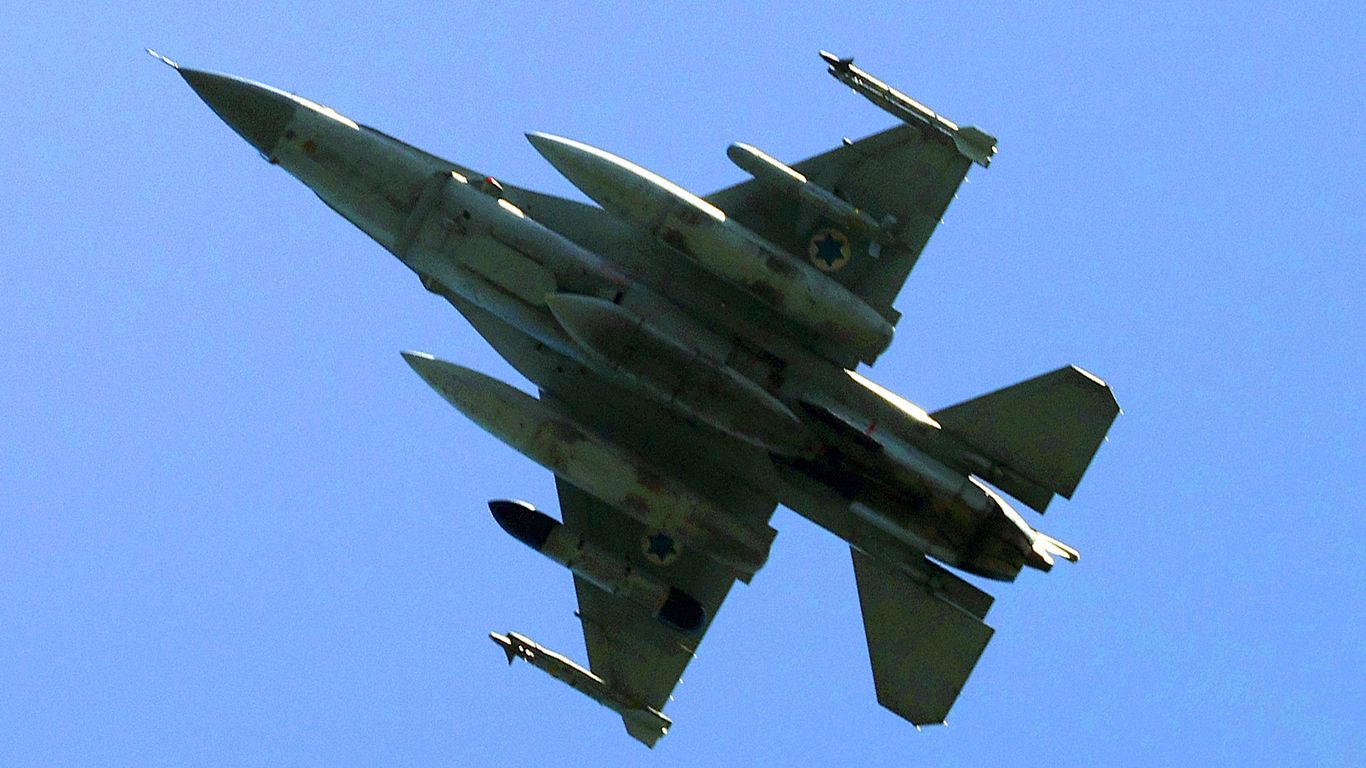
Israel Strikes hezbollah: Assassination of Haytham Ali Tabatabai and Escalating Tensions
Beirut, Lebanon – In a significant escalation of ongoing tensions, the Israel Defense Forces (IDF) conducted a targeted airstrike in Beirut on Sunday, resulting in the death of Haytham Ali Tabatabai, a top military commander within Hezbollah. While Hezbollah has yet to officially confirm Tabatabai’s death, the strike marks the most significant Israeli action against Hezbollah leadership since the ceasefire agreement reached a year prior, and the first direct strike within Beirut in five months.
This event raises critical questions about the future of the fragile peace along the Israel-lebanon border and signals a potential shift in Israel’s strategy regarding Hezbollah’s military buildup.
The Context: Rising Tensions and Accusations
The assassination follows weeks of increased Israeli airstrikes within Lebanon, justified by Israeli officials as a response to Hezbollah’s efforts to rearm and strengthen its military capabilities. Israel alleges that Hezbollah has been actively working to circumvent existing agreements and rebuild its arsenal, posing a renewed threat to Israeli security.
Intelligence assessments presented by Israeli officials paint Tabatabai as a key figure driving this rearmament. They claim he was a leading internal voice within Hezbollah advocating against adherence to the Lebanese government’s calls for disarmament and actively pushing for a resumption of hostilities with Israel. This portrayal positions Tabatabai not merely as a military commander, but as a central architect of escalating conflict.
Netanyahu’s Declaration and the Details of the Strike
Israeli Prime Minister benjamin Netanyahu confirmed the operation, stating that the IDF targeted Hezbollah’s chief of staff, responsible for overseeing the institution’s armament and build-up efforts. He emphasized that the decision to strike was made following recommendations from the defense minister and IDF chief of staff, and underscored Israel’s resolve to “pursue its objectives anywhere and at any time.”
The strike itself involved missile strikes targeting the fourth and fifth floors of a ten-story building in Beirut’s southern suburbs, a known Hezbollah stronghold. Lebanon’s health ministry has reported at least five fatalities and over 20 injuries as a direct result of the attack.
IDF Statement and Justification
following the strike, the IDF issued an official statement declaring the “elimination” of Haytham Ali Tabatabai. The statement detailed Tabatabai’s role as commander of the majority of Hezbollah’s units and his central involvement in restoring the organization’s war readiness.
“The IDF will act against attempts to rebuild and rearm Hezbollah and will operate forcefully to remove any threat against Israel,” the statement affirmed.Notably, the IDF also reiterated its commitment to the existing understandings between Israel and Lebanon, a statement likely intended to signal that the strike was a targeted operation against a specific individual and not a broader escalation of conflict.
U.S. awareness and the Lack of Prior Notification
The operation has also raised questions regarding coordination with the United States. According to a senior U.S. official, Israel did not provide advance notification of the strike in Beirut, informing Washington only after it was carried out.
While U.S. intelligence had indicated an expectation of escalating Israeli strikes in Lebanon in the days leading up to the event, the timing, location, and specific target remained undisclosed. An Israeli official confirmed the lack of prior notification to the U.S., suggesting a deliberate decision to maintain operational secrecy.
Haytham Ali Tabatabai: A Profile of a Wanted Terrorist
Haytham Ali Tabatabai has been a long-standing target of the U.S. government. Designated as a Specially Designated Global Terrorist by the State Department in 2016,the U.S. has offered a $5 million reward for data leading to his capture through the Rewards for Justice program.
Israeli officials have described Tabatabai as the second-most influential figure within Hezbollah, ranking directly below political leader Naeem Qassem. His appointment as military leader followed the assassinations of his predecessors, highlighting a pattern of targeted attacks by Israel against key Hezbollah personnel.
Green Section: Timeless Insights into Proxy Warfare and Regional Stability
The assassination of Haytham ali Tabatabai is not an isolated incident, but rather a manifestation of a decades-long pattern of proxy warfare in the Middle East. The Israel-Hezbollah conflict operates within a complex web of regional alliances and geopolitical interests, where direct confrontation is frequently enough avoided in favor of supporting and utilizing non-state actors.
This approach, while seemingly mitigating the risk of all-out war, carries its own inherent dangers. It can prolong conflicts, exacerbate sectarian tensions, and destabilize entire regions.The lack of clear accountability and the potential for miscalculation
![NYC Transit Deserts: Ridership Growth Highlights Urgent Need | [Advocacy Group Name]](https://i0.wp.com/www.amny.com/wp-content/uploads/2022/05/8883003291_a2c67ec6ff_o.jpg?resize=150%2C150&ssl=1 "NYC Transit Deserts: Ridership Growth Highlights Urgent Need | [Advocacy Group Name]")