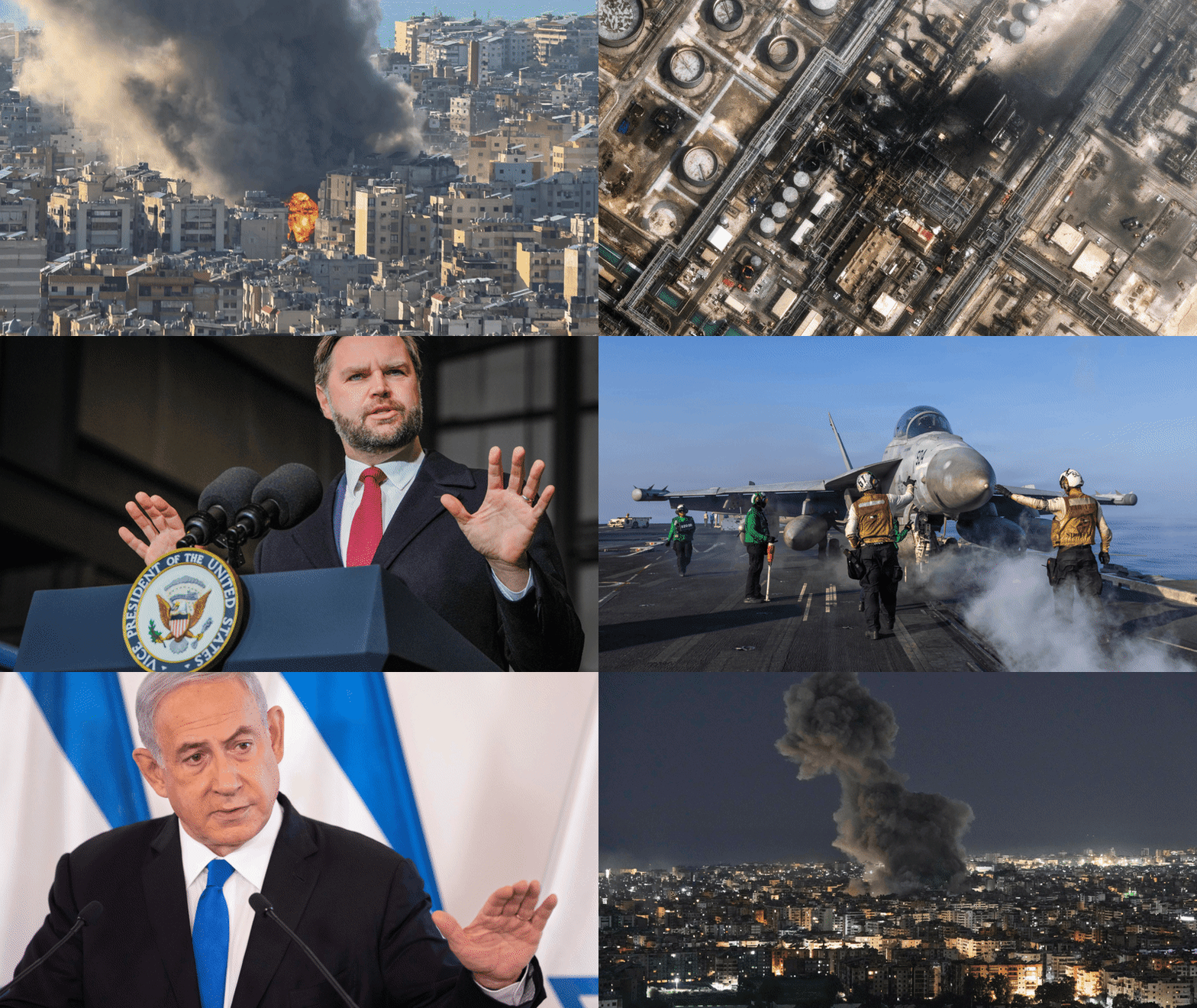
The Middle East is bracing for further escalation as tensions continue to rise between Israel and Hezbollah, with reverberations felt across global energy markets and even impacting military installations in the Gulf region. Recent Israeli airstrikes targeting Lebanon, coupled with warnings from former U.S. President Donald Trump regarding potential U.S. Involvement, paint a volatile picture. Simultaneously, concerns are mounting over the potential closure of the Strait of Hormuz, a critical waterway for global oil and gas supplies, and reports of an attack on a key air base in Dubai add further complexity to the unfolding crisis. The situation demands careful monitoring as the region teeters on the brink of a wider conflict.
The immediate trigger for the latest escalation appears to be a series of rocket attacks launched by Hezbollah into Israel. In response, Israel has intensified its military operations within Lebanon, conducting airstrikes targeting what it claims are Hezbollah infrastructure, and personnel. This exchange of fire follows a period of heightened animosity, with Hezbollah accusing Israel of continued violations of Lebanese airspace and sovereignty. The current situation represents a significant deterioration in security, raising fears of a full-scale war reminiscent of the 2006 conflict between the two sides. The potential for miscalculation and unintended consequences is high, given the complex geopolitical dynamics at play and the involvement of multiple actors.
Israel Intensifies Strikes, Hezbollah Vows Retaliation
Israeli forces have been conducting increasingly aggressive strikes within Lebanon, focusing on areas south of the Litani River, a region historically controlled by Hezbollah. Al Jazeera reports that these strikes are aimed at dismantling Hezbollah’s military capabilities and preventing future attacks. However, Hezbollah has vowed to retaliate with equal force, raising the specter of a prolonged and devastating conflict. A senior Hezbollah official, Mohamoud Komati, stated that the group’s patience had run out after over a year of Israeli strikes, leaving them with “no option but to return to resistance” and fight an open war with Israel, according to reports.
The escalation comes amidst a broader regional context of heightened tensions, particularly in light of the ongoing conflict in Gaza and the increasing involvement of Iran-backed proxies. Israel views Hezbollah as a key component of Iran’s regional network and a direct threat to its security. The potential for the conflict to expand and draw in other actors, including Iran, remains a significant concern for international policymakers. The United States has repeatedly urged restraint and called for a de-escalation of tensions, but its influence may be limited given the deeply entrenched animosity between Israel and Hezbollah.
Trump Warns of US Strikes, Strait of Hormuz Concerns
Adding another layer of complexity to the situation, former U.S. President Donald Trump issued a warning about potential U.S. Strikes in the region. While the specifics of his warning remain unclear, it underscores the growing U.S. Concern over the escalating conflict and the potential for it to destabilize the entire Middle East. Trump’s comments, reported by various news outlets, suggest a willingness to take decisive action to protect U.S. Interests and allies in the region. However, the Biden administration has not yet indicated whether it would consider similar measures.
Meanwhile, the threat of disruption to global energy supplies is looming large. The Strait of Hormuz, a narrow waterway connecting the Persian Gulf to the Arabian Sea and the Indian Ocean, is a critical chokepoint for oil and gas tankers. Any closure of the Strait, even temporarily, would have a significant impact on global energy prices and could trigger a global economic slowdown. According to the BBC, rising tensions in the region are putting increasing pressure on petrol and gas prices, as traders anticipate potential supply disruptions. The possibility of Iran, which controls significant portions of the Strait, taking action to disrupt shipping lanes is a major concern for international markets.
Dubai Air Base Targeted in Attack
Further complicating the security landscape, reports have emerged of an attack on Al Minhad air base in Dubai, a facility frequently used by the United States and other international forces. Details surrounding the attack remain scarce, and the identity of the perpetrators is currently unknown. However, the incident underscores the vulnerability of military installations in the region and the potential for the conflict to spill over into neighboring countries. The United Arab Emirates has not yet issued an official statement regarding the attack, but security has reportedly been heightened at other key facilities throughout the country.
Al Minhad air base serves as a crucial logistical hub for military operations in the Middle East, providing support for forces deployed in Iraq, Syria, and Afghanistan. An attack on the base could disrupt these operations and further escalate tensions in the region. The incident raises questions about the effectiveness of existing security measures and the potential for future attacks on critical infrastructure.
Hezbollah’s Capabilities and Regional Impact
Hezbollah, established in the early 1980s, is a Lebanese Shia Islamist political party and militant group. It has grown into a powerful force in Lebanon, wielding significant political influence and maintaining a well-equipped military wing. The group receives substantial support from Iran, which provides funding, training, and weapons. Hezbollah’s military capabilities include a large arsenal of rockets and missiles, as well as a network of tunnels and bunkers. Its stated goals include resisting Israeli occupation and defending Lebanon’s sovereignty. However, Israel views Hezbollah as a terrorist organization and a major threat to its security.
The potential for a wider conflict involving Hezbollah has significant implications for the entire region. A full-scale war between Israel and Hezbollah could devastate Lebanon’s infrastructure and economy, and could also draw in other actors, such as Syria and Iran. The conflict could also exacerbate existing sectarian tensions and lead to a humanitarian crisis. The international community is urging all parties to exercise restraint and to seek a peaceful resolution to the crisis.
Key Takeaways
- Israel has intensified airstrikes on Lebanon in response to rocket attacks by Hezbollah.
- Hezbollah has vowed to retaliate, raising the specter of a full-scale conflict.
- Former U.S. President Donald Trump has warned of potential U.S. Strikes in the region.
- Concerns are mounting over the potential closure of the Strait of Hormuz and its impact on global energy prices.
- An attack on Al Minhad air base in Dubai highlights the vulnerability of military installations in the region.
The situation remains highly fluid and unpredictable. International efforts to mediate a ceasefire and de-escalate tensions are ongoing, but the prospects for a peaceful resolution remain uncertain. The coming days and weeks will be critical in determining whether the region can avoid a wider conflict. The next key development to watch will be the response from the Lebanese government and any further statements from Israeli or U.S. Officials regarding potential military action. Readers are encouraged to share their perspectives and engage in constructive dialogue in the comments section below.
Worth a look