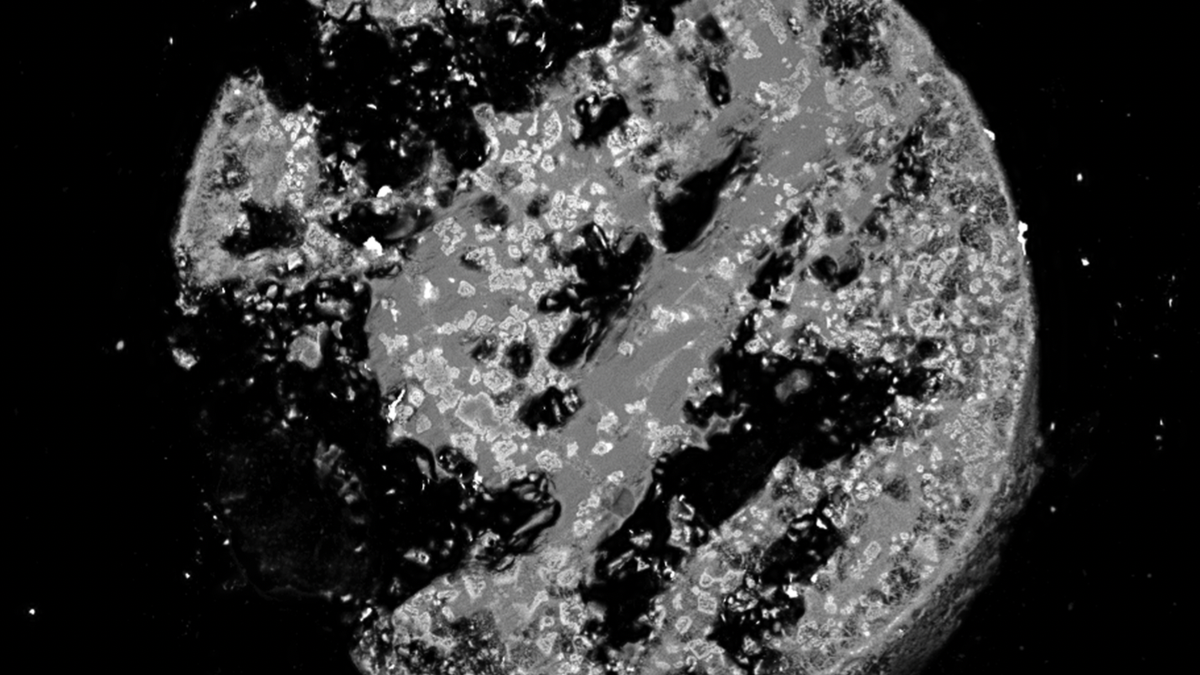
Researchers discovered a previously unknown metal alloy embedded within glass beads recovered from Hiroshima Bay, formed by ultrafast quenching during the 1945 atomic bomb blast. Published in Science Advances on July 29, 2026, the finding reveals how extreme nuclear plasma events create unique crystal structures impossible to replicate in standard laboratories.
An eighty-year-old scientific mystery has yielded a microscopic secret from the closing days of World War II. Researchers examining materials recovered from the site of the first atomic detonation have identified a never-before-seen metallic alloy, offering an unprecedented look at matter forged under extreme pressures and temperatures.
The discovery centers on tiny, glass-like beads known as hiroshimaites, which were gathered from the beach sands of Hiroshima Bay. These unusual formations were born in the fraction of a second following the August 6, 1945, bombing, when the immense heat of the blast vaporized local soil, building materials, and metals. As that vaporized plume cooled and fell back to earth, it solidified into the glassy droplets that preserve a snapshot of the catastrophe.
Microscopic Metal Grains Found in Hiroshima Bay Glass Beads
When scientists analyzed the recovered hiroshimaites using advanced imaging techniques, they spotted a micrometer-sized metallic grain trapped inside the glass matrix. Further examination revealed a complex, highly unusual chemical composition. According to reporting from The Hindu, the grain consists of a tightly bound mix of iron, chromium, nickel, manganese, molybdenum, silicon, and aluminum configured into a distinct crystal structure.
Moneycontrol noted that the find opens a fresh chapter in the field by demonstrating how cataclysmic energy levels can force elemental combinations that ordinary laboratory synthesis cannot achieve.
Ultrafast Quenching Inside a 7,000-Degree Fireball
The formation mechanism behind the alloy relies on extreme thermal dynamics. The research team calculated that the nuclear fireball reached temperatures exceeding 7,000 degrees Celsius, instantly turning urban infrastructure—including construction steel and aluminum fixtures—into a swirling metallic vapor.
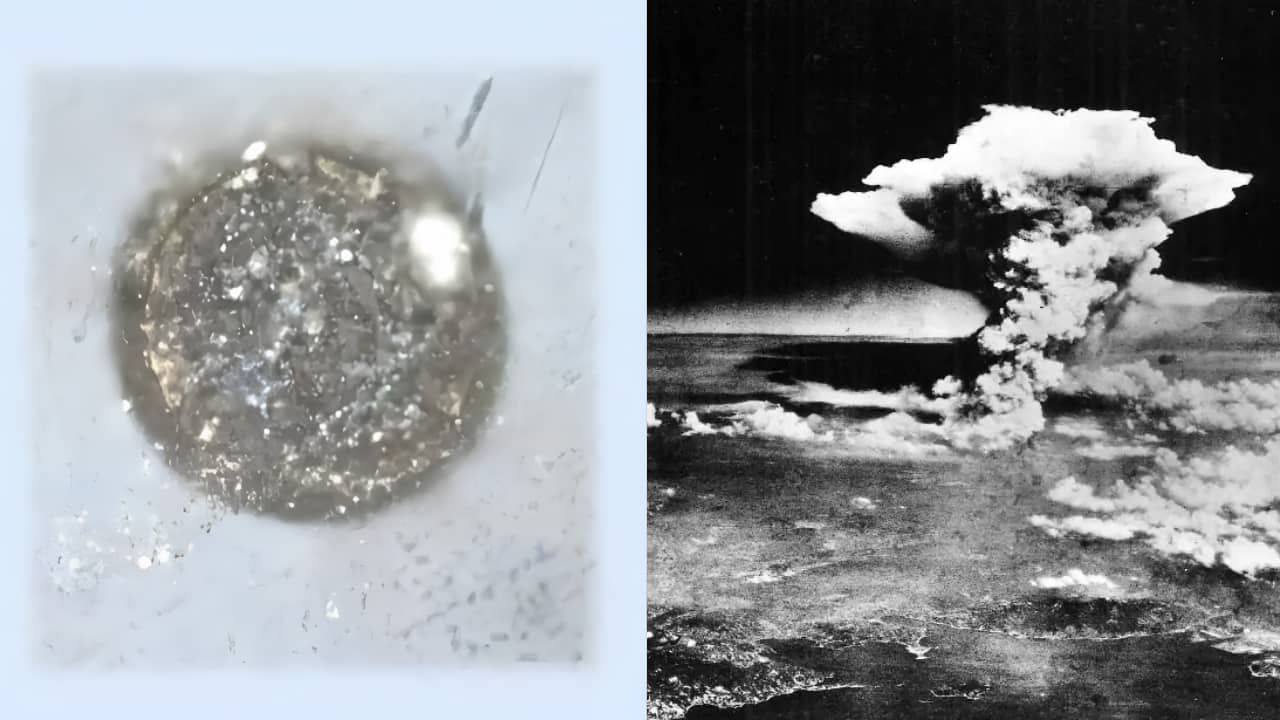
As the fireball expanded outward, it underwent a process known as ultrafast quenching. The surrounding environment cooled so rapidly that the vaporized elements were trapped together before they could separate into conventional phases, locking them into a stable, highly complex structure. The researchers described these glassy beads not merely as melted debris, but as natural archives of the explosion.
The study emphasizes that every tiny droplet effectively operated as an independent experiment in physical chemistry. The team noted that if this broader formation pattern holds true across other violent phenomena, atomic-blast debris could help researchers uncover fundamental rules of matter formation applicable far beyond wartime destruction.
Implications for High-Entropy Alloys and Materials Science
The newly identified alloy shares key structural characteristics with high-entropy alloys and quasicrystals, classes of materials that engineers prize for exceptional strength and stability under stress. By revealing that high-energy plasma events can serve as natural laboratories, the findings suggest that researchers looking for novel industrial compounds might benefit from examining extreme geological and historical environments.
Keep reading