
For decades, the global medical community has viewed HIV as a manageable chronic condition rather than a curable disease. While antiretroviral therapy (ART) has transformed a once-fatal diagnosis into a livable one, the requirement for lifelong daily medication remains a significant burden for millions. However, a new frontier in medical science is shifting the conversation from lifelong suppression to the possibility of a “functional cure.”
The emergence of cellular therapy—specifically the use of genetically modified immune cells—represents one of the most promising leaps in infectious disease research. By engineering the body’s own defense mechanisms to recognize and destroy the latent reservoirs where HIV hides, researchers are attempting to eliminate the virus entirely or render it permanently dormant without the need for continuous drug intervention.
As a physician and journalist, I have followed the trajectory of these innovations closely. The transition from chemical suppression to biological engineering marks a fundamental change in strategy. We are no longer just blocking the virus from replicating; we are attempting to reprogram the human immune system to hunt the virus down.
The Mechanics of Cellular Therapy: Engineering a Hunter
At the heart of this breakthrough is the concept of CAR-T cell therapy. Originally developed to treat certain types of leukemia and lymphoma, Chimeric Antigen Receptor (CAR) T-cell therapy involves extracting a patient’s own T-cells—the “soldiers” of the immune system—and modifying them in a laboratory to express a specific receptor that can identify and bind to a target on a cancer cell or, in this case, an HIV-infected cell.
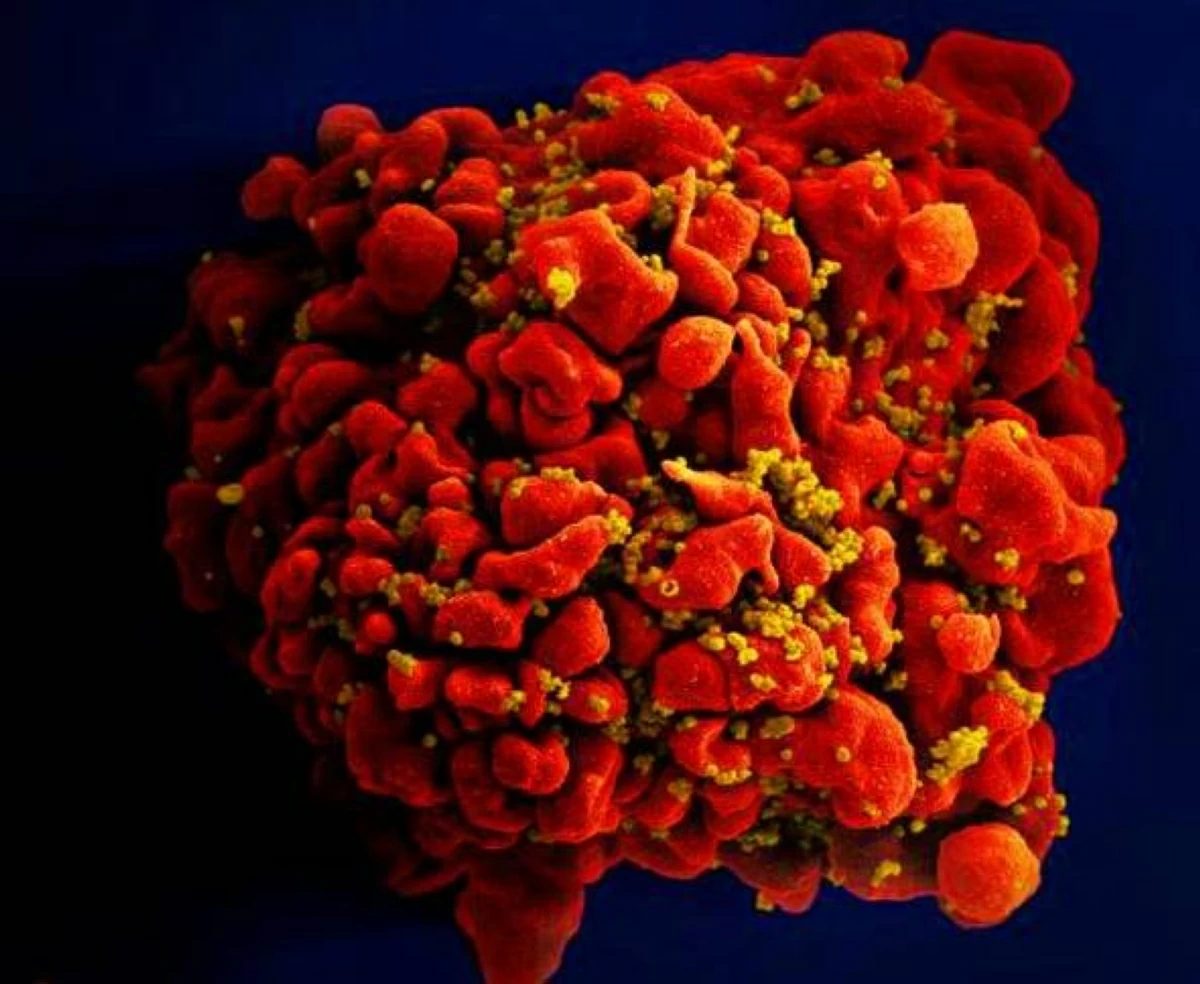
In the context of HIV, the challenge is the “latent reservoir.” HIV integrates its genetic material into the DNA of resting CD4+ T-cells, where it can remain invisible to both the immune system and standard ART for years. Cellular therapies are being designed to target these reservoirs. By equipping T-cells with receptors that recognize HIV-specific proteins on the surface of infected cells, scientists aim to create a targeted strike force capable of clearing the virus from the body.
According to research published in high-impact medical journals and tracked via ClinicalTrials.gov, these modified cells are designed to seek out the virus even when We see not actively replicating, potentially addressing the primary obstacle that has prevented a total cure for forty years.
Gene Editing and the CCR5 Gateway
Parallel to CAR-T therapy is the application of CRISPR-Cas9 gene editing. To understand this approach, one must understand the CCR5 receptor. The CCR5 protein acts as a “doorway” that the majority of HIV strains use to enter and infect immune cells. A minor percentage of the global population is born with a natural mutation, known as CCR5-delta 32, which effectively locks this door, making them virtually immune to most strains of the virus.
Modern cellular therapy aims to replicate this natural resistance. Using gene-editing tools, researchers are working to “knock out” or disable the CCR5 gene in a patient’s own hematopoietic stem cells or T-cells. Once these edited cells are infused back into the patient, they provide a population of immune cells that the virus cannot infect.
One notable avenue of this research involves therapies like EBT-101, a CRISPR-based approach designed to excise the HIV DNA from the human genome. While still in the clinical trial phase, this method represents a shift toward genomic surgery—physically removing the viral blueprint from the patient’s DNA rather than simply suppressing its expression.
From Rare Successes to Scalable Solutions
The possibility of a cellular cure is not purely theoretical; it has been proven in a handful of extraordinary cases. Patients known as the “Berlin Patient,” the “London Patient,” and the “Dusseldorf Patient” achieved HIV remission after receiving stem cell transplants for leukemia. Crucially, these patients received stem cells from donors who possessed the rare CCR5-delta 32 mutation.
However, these cases are not currently viable as a general public health strategy. Bone marrow transplants carry immense risks, including graft-versus-host disease, and are typically reserved for patients with life-threatening cancers. The goal of current cellular therapy research is to achieve the same “door-locking” effect of the CCR5 mutation without the need for a high-risk transplant.
The focus has shifted toward ex vivo modification—taking cells out, editing them, and putting them back—which is significantly safer than a full bone marrow replacement. This approach aims to provide the benefits of the stem cell cures while making the treatment accessible to a broader population of people living with HIV.
The Concept of the “Functional Cure”
It is important to distinguish between a “sterilizing cure” and a “functional cure.” A sterilizing cure would mean the complete eradication of every single copy of the virus from the body—a feat that remains elusive due to the deep hiding places of the viral reservoir.
A functional cure, however, is a more immediate and realistic goal. In this scenario, the virus remains in the body, but the immune system is so effectively engineered—via cellular therapy or gene editing—that the virus is kept under permanent control without the need for daily medication. The patient remains HIV-positive by a laboratory definition, but they are clinically healthy, non-infectious, and free from the side effects and burdens of lifelong ART.
This shift in definition is critical for managing expectations. The “revolution” in HIV treatment is not necessarily about a single magic pill, but about a sophisticated biological intervention that restores the body’s innate ability to manage the infection.
Addressing the “Single Pill” Narrative
There has been significant discussion regarding the transition from complex medication schedules to simplified regimens, including long-acting injectables and the potential for ultra-long-acting formulations. While some reports suggest a “single pill” could end the struggle of complex dosing, it is vital to clarify that these are advancements in delivery, not necessarily a cure.
Long-acting antiretrovirals, such as lenacapavir, allow patients to move from daily pills to injections administered every six months. While this drastically improves quality of life and adherence, it is still a form of suppression, not the cellular destruction of the virus. The true “breakthrough” lies in the cellular therapies described above, which aim to change the biological status of the patient rather than just the frequency of their medication.
What This Means for Global Public Health
The implications of successful cellular therapy extend beyond the individual patient. If a functional cure becomes scalable, it could fundamentally alter the trajectory of the global HIV epidemic. The primary drivers of new infections are often linked to gaps in treatment adherence and the stigma associated with daily medication.
A one-time or infrequent cellular intervention would eliminate the “adherence gap,” ensuring that viral loads remain undetectable across diverse populations, regardless of socioeconomic status or access to daily pharmacies. This would effectively halt the chain of transmission, moving the world closer to the goal of ending the epidemic as a public health threat.
However, the challenge of “democratizing” this technology is immense. Cellular therapies are currently expensive and require sophisticated laboratory infrastructure. For these breakthroughs to be meaningful, the medical community must find ways to move from personalized, laboratory-intensive “boutique” medicine to standardized, affordable treatments that can be deployed in low- and middle-income countries, where the burden of HIV is highest.
Key Takeaways for Patients and Providers
- CAR-T Therapy: Uses engineered T-cells to actively seek and destroy HIV-infected cells in the latent reservoir.
- Gene Editing: Employs CRISPR technology to remove the CCR5 receptor, effectively “locking the door” against the virus.
- Functional Cure: The goal is long-term viral control without medication, rather than the total eradication of every viral particle.
- Scalability: While stem cell transplants have cured a few individuals, current research focuses on safer, ex vivo cell modifications.
- Delivery vs. Cure: Long-acting injectables improve quality of life but are distinct from cellular therapies that aim for a cure.
The Path Forward: What Happens Next?
The current phase of HIV research is centered on expanding clinical trials for both CAR-T and CRISPR-based therapies. The next critical checkpoints will be the release of data from mid-stage trials focusing on the durability of these treatments—specifically, how long patients can remain off ART after receiving cellular therapy before the virus begins to rebound.
We are also watching for advancements in “off-the-shelf” cellular therapies. Currently, most cellular treatments are autologous (using the patient’s own cells), which is time-consuming and costly. The development of allogeneic (donor-derived) modified cells could drastically accelerate the rollout of these treatments.
While we are not yet at the stage of prescribing a cellular cure in standard clinics, the scientific foundation has been laid. The transition from managing a virus to engineering its defeat is well underway.
Do you believe cellular therapy will be the definitive end to the HIV epidemic, or will long-acting suppression remain the gold standard? Share your thoughts in the comments below.