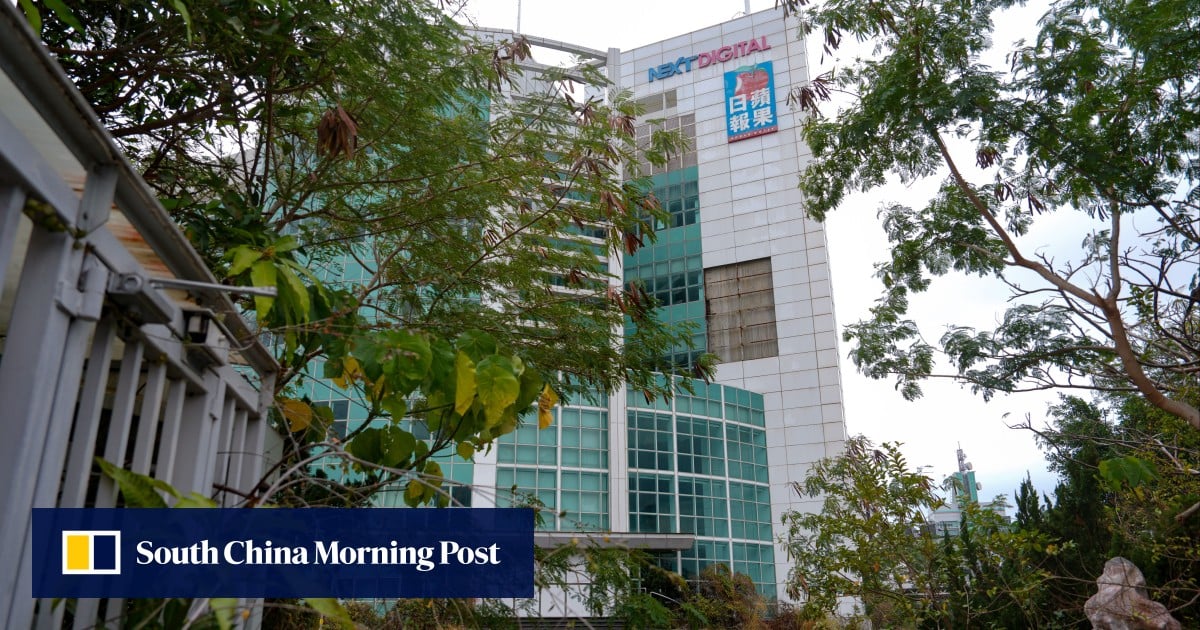
Hong Kong – A former senior executive at the now-defunct Apple Daily newspaper has launched an appeal against a 10-year prison sentence, marking the first challenge to convictions stemming from the landmark national security trial that gripped the city. Fung Wai-kong, who served as managing editor of Apple Daily’s English edition, filed the appeal with Hong Kong’s High Court on Monday, according to court documents reviewed by the South China Morning Post. The case is being closely watched as a bellwether for the future of press freedom and the application of national security laws in Hong Kong.
Fung was convicted last month of conspiracy to commit collusion with foreign forces, a charge leveled against several individuals associated with Apple Daily, including its founder, Jimmy Lai Chee-ying. The sweeping crackdown on the pro-democracy newspaper and its staff has drawn international condemnation, raising concerns about the erosion of civil liberties in the former British colony. The trial, which lasted over 18 months, concluded in December with Lai’s conviction and subsequent sentencing to 20 years in prison – a penalty widely criticized by human rights organizations and Western governments.
The appeal by Fung comes as the legal fallout from the Apple Daily case continues to unfold. Six other senior executives of the newspaper, along with three firms linked to the outlet and two activists, also received prison sentences in the same verdict. The severity of the sentences has been interpreted by many as a clear signal from Beijing that dissent will not be tolerated in Hong Kong, particularly following the imposition of the national security law in 2020. This law criminalizes secession, subversion, terrorism, and collusion with foreign forces, and has been used to silence critics of the government and suppress pro-democracy movements.
Background to the Apple Daily Case
Apple Daily, founded by Jimmy Lai in 1995, was a popular tabloid-style newspaper known for its outspoken pro-democracy stance and critical coverage of the Chinese government. For decades, it served as a vital platform for dissenting voices in Hong Kong, particularly during periods of political unrest. The newspaper’s popularity and influence made it a target for Beijing, which viewed its reporting as a threat to its authority.
The national security law provided the legal framework for the crackdown on Apple Daily. In June 2021, police raided the newspaper’s offices, arresting several executives and journalists. The authorities froze assets and ultimately forced the newspaper to cease operations in late June 2021. The arrests and subsequent trial were widely criticized for violating principles of press freedom and due process. The prosecution argued that Apple Daily’s reporting and editorial decisions constituted a conspiracy to collude with foreign forces, citing articles and statements that were deemed critical of the Chinese government.
Details of Fung Wai-kong’s Appeal
According to reports from the South China Morning Post, Fung Wai-kong’s appeal is based on arguments challenging the interpretation and application of the national security law. The specific grounds for the appeal have not been publicly disclosed, but legal experts suggest they may center on the fairness of the trial, the admissibility of evidence, and the proportionality of the sentence. Fung was among three former Apple Daily employees who chose not to testify as prosecution witnesses during the lengthy trial.
The appeal process is expected to be closely scrutinized by international observers. The outcome of the case could have significant implications for other individuals facing charges under the national security law, as well as for the future of journalism and freedom of expression in Hong Kong. The Hong Kong High Court will likely schedule a hearing date in the coming weeks, and the proceedings are expected to be lengthy and complex. The court will review the trial transcript, evidence presented, and legal arguments submitted by both the prosecution and the defense.
The Broader Implications for Hong Kong’s Media Landscape
The Apple Daily case represents a watershed moment for Hong Kong’s media landscape. The closure of the newspaper and the imprisonment of its executives have created a chilling effect on the industry, leading to self-censorship and a decline in independent reporting. Many journalists have left Hong Kong, fearing persecution and restrictions on their work. The Dimsumdaily.hk reports that the case has fundamentally altered the dynamics of media freedom in the city.
The imposition of the national security law has fundamentally reshaped the political and legal environment in Hong Kong. Critics argue that the law has been used to suppress dissent, stifle criticism, and erode the autonomy of the city. The Apple Daily case is seen as a prime example of how the law can be used to target individuals and organizations that are perceived as challenging the authority of the Chinese government. The case has also raised concerns about the independence of the judiciary in Hong Kong, with some observers questioning whether the courts are able to operate without political interference.
The situation has prompted international calls for the release of Jimmy Lai and other individuals imprisoned for their involvement with Apple Daily. Governments and human rights organizations have condemned the crackdown on press freedom and urged the Hong Kong authorities to uphold their commitments to protecting fundamental rights. The United States, the United Kingdom, and the European Union have all expressed concerns about the deteriorating human rights situation in Hong Kong and have imposed sanctions on officials deemed responsible for the crackdown.
Sentencing and Previous Convictions
As reported by the New York Times, the sentencing in the Apple Daily case was particularly harsh. Jimmy Lai received a 20-year prison sentence, while other senior executives were sentenced to terms ranging from 10 to 14 years. The court also imposed fines on the newspaper’s firms and activists associated with the outlet. The severity of the sentences sent a clear message that the authorities are determined to suppress dissent and maintain control over the media landscape.
The convictions were based on charges of conspiracy to commit collusion with foreign forces, which carries a maximum sentence of life imprisonment. The prosecution presented evidence of articles and statements published by Apple Daily that were deemed critical of the Chinese government, as well as communications between Lai and foreign officials. The defense argued that the charges were politically motivated and that the defendants were simply exercising their right to freedom of expression. However, the court sided with the prosecution, finding that the defendants had engaged in a conspiracy to undermine national security.
The case has also highlighted the challenges faced by journalists and media organizations operating in Hong Kong. The national security law has created a climate of fear and self-censorship, making it difficult for journalists to report freely and independently. Many media organizations have been forced to scale back their operations or close down altogether, leading to a decline in the diversity and quality of news coverage.
The appeal filed by Fung Wai-kong represents a crucial test of the national security law and its impact on press freedom in Hong Kong. The outcome of the appeal could set a precedent for future cases and determine the extent to which the law will be used to suppress dissent and control the media. The international community will be watching closely as the case unfolds, and the outcome is likely to have far-reaching implications for the future of Hong Kong.
The next step in the legal process is for the Hong Kong High Court to schedule a hearing date for Fung Wai-kong’s appeal. The court will then review the arguments presented by both the prosecution and the defense and issue a ruling. The timing of the ruling is uncertain, but it is expected to be issued within the next several months. The case remains a focal point for those concerned about the erosion of civil liberties and the future of press freedom in Hong Kong.
What are your thoughts on the Apple Daily case and its implications for Hong Kong? Share your comments below and let us know what you feel.
Related reading