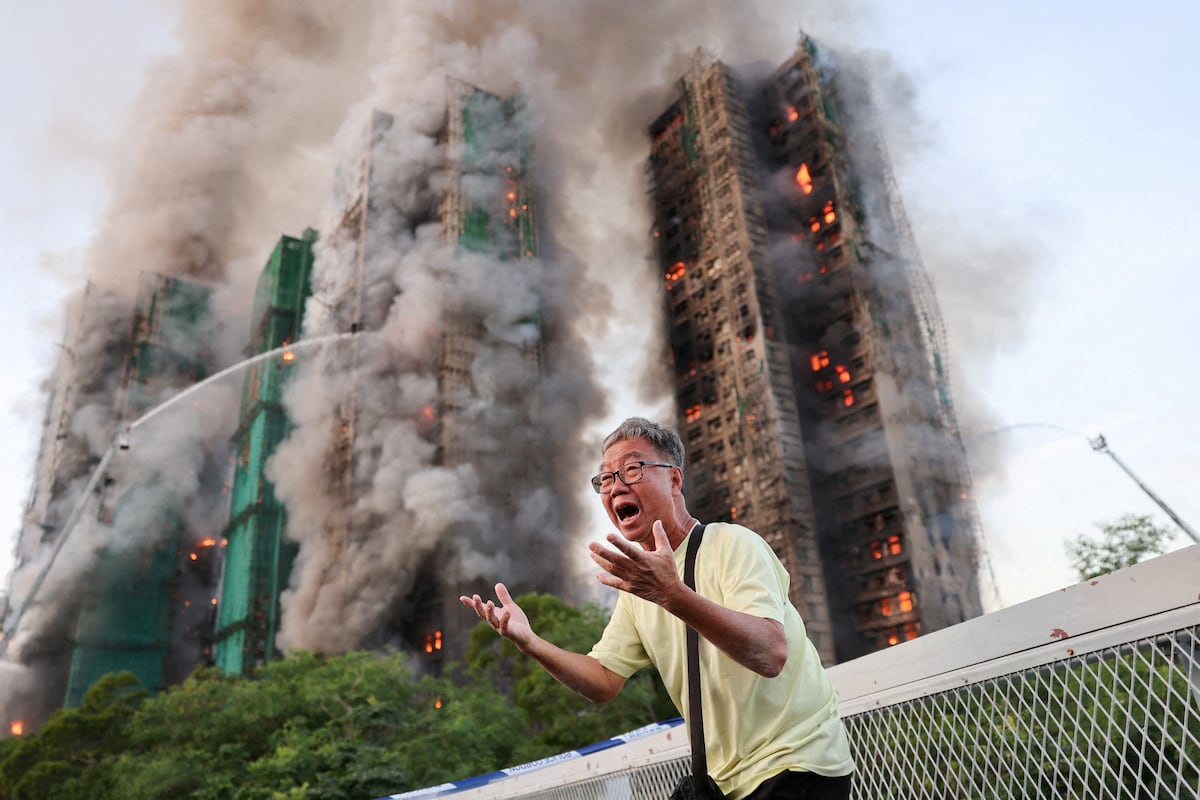
Devastating Hong Kong Fire Highlights Building Safety Concerns
A massive fire ripped through a residential complex in Hong Kong’s Tai Po district this week, leaving a trail of tragedy and sparking urgent questions about building safety standards. Teh blaze, declared a Level 5 incident – the highest possible – resulted in multiple fatalities and injuries, and displaced hundreds of residents. This is the frist time Hong Kong has issued such a high-level alert in 17 years, underscoring the severity of the situation.
What Happened?
The fire erupted at the Wang Fuk Court complex, a sprawling housing estate home to approximately 4,600 people.initial reports suggest the rapid spread of flames was fueled by scaffolding constructed from bamboo – a customary, yet increasingly scrutinized, building material in the city. Residents reported limited time to evacuate, compounding the disaster.
The government swiftly responded, convening an emergency cabinet meeting and establishing shelters for those displaced. Currently, over 1,000 individuals are receiving assistance. John Lee, the chief Executive of Hong Kong, expressed his deep sorrow and condolences to the affected families.
Why is This Notable?
Hong Kong’s unique urban landscape – characterized by high-density living and closely packed buildings – amplifies the risks associated with fires. You can imagine how quickly flames can jump from one structure to another in such an environment. This incident serves as a stark reminder of the collective vulnerability inherent in the city’s infrastructure.
Consider the living conditions within Wang Fuk Court itself. Apartments are relatively small, averaging between 37 and 46 square meters, and the complex has been occupied since 1983. Affordable homeownership remains a distant dream for many Hong Kong residents,facing one of the world’s moast expensive property markets and soaring rental costs.
The Bamboo Scaffolding Issue
Hong Kong is one of the few places globally where bamboo scaffolding remains prevalent. however, concerns about its safety have been growing. Just this past March, the government pledged to phase out its use, citing safety concerns and announcing a plan to require at least 50% of public works projects to utilize metal structures instead.
This fire has reignited the debate. Fay Siu Sin-man, of the Association for the Rights of Victims of Industrial Accidents, is calling for a thorough investigation into the fire’s origin and points to previous incidents this year involving bamboo scaffolding that resulted in five deaths.
A History of Concern
This isn’t the first time Hong Kong has faced a major building fire.In 2008, the Cornwall Court building, a landmark structure in Mong Kok, was engulfed in flames, resulting in four fatalities. That incident, like this one, highlighted the potential for rapid fire spread in densely populated areas.
What’s Next?
The immediate focus remains on supporting those affected by the fire and ensuring their safety and well-being. However, a extensive review of building safety regulations, especially concerning scaffolding materials and evacuation procedures, is now critical.
You deserve to live in a safe environment, and this tragedy underscores the need for proactive measures to prevent similar incidents in the future. A thorough investigation, coupled with decisive action, is essential to protect the residents of Hong Kong and ensure a more secure future for all.
Worth a look
- Keiko Fujimori visita el VRAEM: supervisa operaciones militares y ratifica respaldo a las FF. AA.
- Should You Be Worried About Strasbourg? – L’After Foot Analysis
- Hong Young-ki Attracts Attention with Unique Outfit in Paris with Eiffel Tower View (newsdirectory3.com)
- Baidu Apollo Go Expands Robotaxi Tests to London and Hong Kong (archynewsy.com)